
Technical column
The Cell Bank Is the Entry Ticket for MSC and EV Drug INDs: RoosterBio's Three Tiers from Research Grade to cGMP CliniControl, Checked Item by Item Against CDE Testing Requirements
A December 2025 review by CDE experts stressed that establishing a cell bank is the entry ticket for an IND, and that cell bank characterization and passage stability are key review concerns. This article maps RoosterBio's cell bank system by project stage — QuickShip research grade, DEV+ preclinical development grade (same donor as the clinical bank, 10M cells per vial) and cGMP CliniControl clinical grade (20M per vial, supported by an FDA Type II Master File) — lists CliniControl's release tests and PDL usage limits by tissue source, and compares them item by item with CDE requirements on MCB/WCB tiers, donor screening and cell bank testing, helping cell therapy teams plan their cell raw-material path from development to the clinic.
Definition
A clinical-grade cell bank is a master cell bank (MCB) and working cell bank (WCB) established under cGMP from compliantly collected donor tissue and fully tested, serving as the standardized starting material for cell therapy and EV drug manufacturing, with cell age controlled by metrics such as population doubling level (PDL).
In December 2025, a review by Dr Cheng Suyuan of the CDE and colleagues in the Chinese Journal of New Drugs again stressed the central role of CMC for cell therapy products: "establishing a cell bank is the entry ticket for an IND, and cell bank characterization and passage stability are key features the CDE focuses on." For cell therapy companies, the compliance, traceability and scalability of the cell bank directly determine how the whole project progresses.
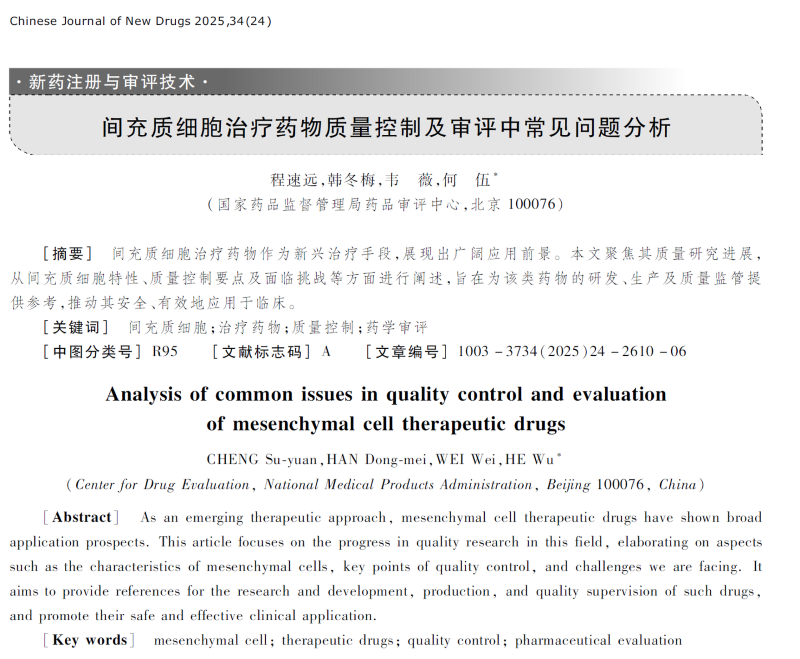
Figure 1. Review in the Chinese Journal of New Drugs: analysis of common issues in quality control and review of mesenchymal cell therapy products
This article walks through RoosterBio's cell bank portfolio against CDE regulatory requirements, giving development and manufacturing teams a stage-by-stage guide to choosing a cell bank.
1. RoosterBio's Cell Bank System: Choose the Grade by Project Stage
According to RoosterBio, its cell banks cover everything from early research to cGMP clinical-grade manufacturing: teams can choose the seed bank grade that matches their project stage, reducing the long timelines and high characterization costs of building their own banks, with standardized culture SOPs supporting 2D/3D culture and bioreactor scale-up.
QuickShip Research-Grade Cell Banks (RUO)
The QuickShip series is an off-the-shelf research-stage cell bank covering bone marrow, adipose, umbilical cord and other cells, offered in both "serum culture" and "xeno-free" process versions.
DEV+ Development-Grade Cell Banks
DEV+ banks are preclinical development-grade, serum-free and xeno-free cryopreserved working cell banks: donor tissue is collected under GTP (good tissue practice) in line with 21 CFR Part 1271, with 10M cells per vial. They are expanded from the clinical bank's MCB and share the same donor as the clinical bank; positioned for research use only, they serve as standardized cell material for early process development, and once the process is fixed a team can move to the RoosterBio GMP (CliniControl) bank for clinical trial manufacturing.
cGMP CliniControl Clinical-Grade Cell Banks
CliniControl is RoosterBio's cell bank line designed for cGMP clinical-grade manufacturing. It is supported by a US FDA Type II Drug Master File, labelled "For Further Manufacturing Use Only", can be cross-referenced in IND submissions, and can support material planning for dual China–US filings. All CliniControl banks contain 20M cells per vial.
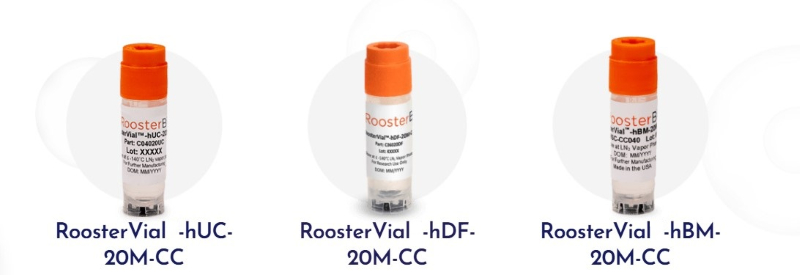
Figure 2. RoosterBio cGMP CliniControl clinical-grade cell banks
hTERT-Modified Immortalized hMSC Lines
Beyond primary cells, RoosterBio offers engineered hTERT-modified hMSC lines that overcome the limited passaging of primary cells, for applications needing high expansion numbers and a stable cell phenotype.
2. CliniControl Clinical-Grade Cell Banks in Detail
CliniControl is a key part of RoosterBio's portfolio and the product line that cell therapy companies map most directly to IND requirements.
| Product | RoosterVial-hBM-20M-CC | RoosterVial-hUC-20M-CC | RoosterVial-hAD-20M-CC | RoosterVial-hDF-20M-CC |
|---|---|---|---|---|
| Source | Human bone marrow | Perivascular region of human umbilical cord Wharton's jelly | Subcutaneous adipose tissue of healthy adults | Neonatal foreskin |
| Size | 20M | 20M | 20M | 20M |
| Grade | CliniControl | CliniControl | CliniControl | CliniControl |
Table 1. RoosterBio clinical-grade cell banks
- Manufacturing standard: cGMP manufacturing; donor tissue collected to GTP standards (21 CFR Part 1271);
- Manufacturing site: ISO 9001 certified;
- Regulatory support: FDA Type II Master File established;
- Culture system: xeno-free.
Release Testing
According to RoosterBio, CliniControl's complete release testing covers:
- Cell count and viability: post-thaw viability;
- Flow cytometry markers: CD73+, CD105+, CD90+; CD34−, CD45−;
- Safety testing: sterility, endotoxin, mycoplasma and in vitro adventitious agents;
- Master cell bank (MCB) viral screening: additional viral testing according to the FDA draft guidance "Safety Testing of Human Allogeneic Cells Expanded for Use in Cell-Based Medical Products";
- Karyotyping: G-banded karyotype analysis;
- Population doubling level (PDL): lot-to-lot consistency;
- Immunomodulatory potential: IDO enzyme activity (IDO increased under IFN-γ stimulation);
- Cytokine secretion profile: bFGF, HGF, IL-8, TIMP-1, TIMP-2, VEGF;
- Trilineage differentiation potential: adipogenic, osteogenic and chondrogenic.
PDL: Controlling Cell Age by Doublings
Population doubling level (PDL) is the "cell age" metric for clinical cell banks, and RoosterBio treats PDL as a key banking and release parameter in its white papers and product documentation [2]. According to RoosterBio, its cGMP banks support >20 PDL of expansion after thawing, with lot consistency verified by G-banded karyotyping and PDL monitoring. PDL and recommended usage limits for working cell banks (WCB) by tissue source are:
| Cell type | WCB PDL | Recommended usage limit |
|---|---|---|
| hAD-MSC (human adipose-derived) and hBM-MSC (human bone marrow-derived) | About 8–10 | No more than 8–10 additional PDL after thawing (total PDL ≤18–20) |
| hUC-MSC (human umbilical cord-derived, Wharton's jelly) | About 14–18 | No more than 8–10 additional PDL after thawing (total PDL ≤24–28) |
| hDF (human dermal fibroblasts) | About 15–20 | More than 20 additional PDL after thawing (total PDL up to 35–40) |
Table 2. PDL and recommended usage limits by tissue source (manufacturer recommendations)
3. What the CDE Requires: Compliance Points for Clinical Cell Banks
Since issuing the Technical Guidelines for Research and Evaluation of Cell Therapy Products (Trial) in 2017, the CDE has released documents including the Guidelines for Good Manufacturing Practice of Cell Therapy Products (Trial) and the Technical Guidelines for Pharmaceutical Research and Evaluation of Human Stem Cell Products (Trial) (April 2023), building a CMC regulatory framework for cell therapy [3][4].
Cell Bank Tiers: MCB Plus WCB
The CDE requires the master cell bank (MCB) to be expanded from rigorously screened initial cells and fully tested for identity, viability, purity, microbial contamination and genetic stability. Cell bank tiers can be set up as follows:
- Master cell bank (MCB): expanded from hMSCs of the initial donor source and cryopreserved after full characterization;
- Working cell bank (WCB): further expanded from the MCB and used for production batches;
- Storage: kept at separate locations, with the necessary long-term stability studies [3].
Donor Screening: Mandatory Tests and Ethics
Compliance of donor material is an important hurdle in CDE review [3]:
- Mandatory tests: HIV-1/2, HBV, HCV and Treponema pallidum;
- Leukocyte-rich donors: additional testing for HTLV-1/2, CMV and others;
- Window-period management: kits approved by regulatory authorities are recommended;
- Ethics: complete informed consent and ethics review documentation;
- Traceability: donor sex, age and medical history traceable, with identifiers maintained through the whole chain.
Cell Bank Testing Requirements
According to the source material's summary of the Technical Guidelines for Pharmaceutical Research and Evaluation of Human Stem Cell Products (Trial), cell banks must be fully tested, including [4]:
| Testing dimension | Specific items |
|---|---|
| Microbial safety | Sterility, mycoplasma, endotoxin, adventitious viral agents |
| Cell identity | STR (short tandem repeat) profile, MSC surface-marker flow cytometry (CD73/CD90/CD105 ≥95%, CD14/CD19 ≤2%) |
| Biological activity | Trilineage differentiation (if stem cell identity is claimed), immunomodulatory potency (IDO activity), cytokine secretion profile |
| Genetic stability | G-banded karyotyping, passage stability |
| Viral screening | Additional viral testing of the MCB per FDA guidance (HIV/HBV/HCV/HAV/Parvovirus B19 and others) |
Table 3. CDE cell bank testing requirements
CliniControl Against CDE Requirements, Item by Item
According to the source material's comparison, the CliniControl clinical-grade bank corresponds to CDE requirements in several dimensions:
| CDE requirement | RoosterBio CliniControl |
|---|---|
| cGMP manufacturing | cGMP manufacturing at an ISO 9001 certified site |
| GTP collection | 21 CFR Part 1271 GTP standard |
| Xeno-free process | Xeno-free process across the line |
| MSC surface markers | CD90+/CD105+/CD73+ (positive), CD34−/CD45− (negative) |
| Safety testing | Full sterility, endotoxin, mycoplasma and adventitious-agent testing |
| Genetic stability | G-banded karyotyping plus PDL monitoring |
| Potency testing | Trilineage differentiation plus IDO activity plus cytokine profile |
| Process stability | >10-fold expansion in 4–5 days |
Table 4. RoosterBio CliniControl clinical-grade cell banks compared with CDE requirements
Note that this is a material-level comparison: a cell bank meeting these tests does not mean the sponsor's product and process meet every requirement; items such as STR identity still need to be confirmed within the sponsor's own testing plan.
4. What CliniControl Brings to Clinical Translation
For cell therapy companies planning an IND, choosing CliniControl means gaining not only starting material but also regulatory support files and a supply chain.
FDA Type II Master File: Less Duplicate Submission
RoosterBio has submitted a Type II Master File to the FDA, which IND sponsors can cross-reference instead of resubmitting the cell bank's manufacturing and QC data, helping to shorten submission preparation. Cross-referencing does not imply a review outcome, and the sponsor still has to complete its own process and product studies.
Xeno-Free Plus cGMP: Lower Xenogeneic Risk
Cell banks made with serum or animal-derived components carry risks of residual xenogeneic protein and transmission of unknown pathogens in clinical use. According to RoosterBio, the whole CliniControl line uses xeno-free, cGMP processes, lowering xenogeneic risk at the raw-material level in line with international regulatory trends.
Proven Scale: From 2D to 3D Bioreactors
According to RoosterBio, its products have supported scale-up from 2D multilayer vessels to 3D bioreactors, providing a complete process path for clinical programmes that need billions of cells a year.
About RoosterBio
Founded in 2013 and headquartered in Maryland, USA, RoosterBio focuses on hMSC cell banks, bioprocess media and exosome production solutions. Its media portfolio covers MSC upstream expansion, EV collection, 3D scale-up and clinical filing support:
- Product lines: bone marrow, adipose and umbilical cord hMSC banks, Rooster Nourish no-medium-change expansion medium, Rooster Replenish bioreactor feed, Rooster Collect-EV exosome collection medium and Rooster HD-EV integrated expansion and collection medium;
- Grades: RUO and cGMP in parallel;
- Regulatory support: according to RoosterBio, an FDA Type II Master File and international regulatory support files that can be cross-referenced in submissions.
The no-medium-change expansion of Rooster Nourish applies within compatible culture workflows; it does not mean any culture condition needs no medium change.
Let TechWave Help You Plan Your Cell Bank Path
If your MSC or EV drug programme is preparing an IND, or needs to move smoothly from research-grade cells to a clinical-grade cell bank, contact TechWave. We can help gather specifications, release testing items and Master File information for RoosterBio QuickShip, DEV+ and CliniControl banks, map selection to your tissue source and process stage, and arrange a quotation.
References
- Dominici M, Le Blanc K, Mueller I, et al. Minimal criteria for defining multipotent mesenchymal stromal cells. Cytotherapy. 2006;8(4):315-317.
- RoosterBio, Inc. What Is Population Doubling Level (PDL) & Why Is It Important for Cell Age? Blog, 2021.
- China Food and Drug Administration. Technical Guidelines for Research and Evaluation of Cell Therapy Products (Trial). 2017.
- Center for Drug Evaluation, National Medical Products Administration. Technical Guidelines for Pharmaceutical Research and Evaluation of Human Stem Cell Products (Trial). 2023.
Uses and applicable scenarios
- Planning cell raw materials before IND submission for MSC and EV drugs
- Stage-appropriate selection from research-grade and development-grade to clinical-grade cell banks
- Mapping cell bank testing items against CDE requirements
- Setting PDL usage limits and passaging strategy by tissue source
Limitations
- Master File cross-referencing and product testing do not mean IND approval or a review outcome; the sponsor must still complete its own process and product studies
- PDL usage limits are manufacturer recommendations and must be confirmed with process-specific product quality data
- CDE requirements follow the current official documents; this article summarizes key points
Related brands
Related products
- RoosterHD™-EV
- prcRoosterNourish™-MSC-CC
- AgentV™-DSP
- RoosterCollect™-EV-CC
- RoosterVial hUC-MSC Cell Banks (Umbilical Cord MSC: XF, DEV+, cGMP CC)
- RoosterVial hBM-MSC Cell Banks (Bone Marrow MSC: XF, DEV+, cGMP CC)
- RoosterVial hAD-MSC Cell Banks (Adipose MSC, Xeno-Free)
- RoosterVial hDF Neonatal Dermal Fibroblast Cell Banks (XF, DEV+, cGMP CC)
- RoosterNourish-MSC-XF Serum-Free, Xeno-Free hMSC Expansion Medium
- RoosterReplenish-MSC-XF Xeno-Free Bioreactor Feed
- RoosterCollect-EV Chemically Defined EV Collection Medium (RUO)