
Technical column
Is Differentiation Purity Stuck? After Rounds of Factor and Medium Changes, the Overlooked Variable May Be the Matrix: Matrigel, Vitronectin, E8 Fragments and Full-Length Laminins Compared, Plus 11 Biolaminin Products by Lineage
In directed iPSC differentiation, teams often titrate cytokine gradients for several rounds and try several media, yet target-cell purity will not rise, and results shift again with a new cell batch or matrix lot. The matrix may be the problem. Developmental biology shows that the extracellular matrix is a key signalling carrier that regulates cell-fate decisions, orderly differentiation and functional maturation: different laminin isoforms activate distinct signals through different integrin receptors and work with soluble factors to guide lineage differentiation. This article compares the limitations of Matrigel (mouse-derived, mismatched isoform, endogenous growth factors), vitronectin/RGD matrices (adhesion signals only) and laminin E8 fragments (missing N-terminal domains), explains the role of full-length recombinant laminins in isoform matching, cell polarity, defined composition and functional maturation, and gives stage-based selection advice and 11 Biolaminin products.
Definition
Full-length recombinant laminins are human recombinant extracellular matrix proteins that retain all functional domains of the native α, β and γ trimer; they self-assemble basement membrane networks and bind receptors such as integrins and dystroglycan, providing defined, physiologically relevant signals for stem cell expansion and directed lineage differentiation.
Most researchers doing directed iPSC differentiation have hit this wall: several rounds of cytokine concentration gradients, several media tried, and target-cell purity still will not rise; switch to a new cell batch or a new matrix lot and results shift again.
Most people blame cell-line state, factor activity or technique, and rarely look hard at the matrix. Many researchers see the matrix as a coating that simply lets cells attach: if the cells stick, differentiation is unaffected. Developmental biology says the opposite. The extracellular matrix is a key component of the stem cell microenvironment and a key signalling carrier that regulates cell-fate decisions, orderly differentiation and functional maturation [3]. If purity is stuck and lot-to-lot variation is large, the root cause may be the matrix you chose.
1. The Matrix Is the Hidden Conductor of Directed Differentiation
Go back to the logic of development. As stem cells in the human embryo differentiate into different lineages, the composition of their basement membrane changes dynamically: LN521 dominates at the inner cell mass stage, LN111 is enriched during neural development, and LN411 and LN511 dominate during vascular and islet development [2]. Different laminin isoforms bind different integrin receptors on the cell surface and activate distinct downstream signalling pathways, working with soluble cytokines to guide cells in an orderly way toward a specific lineage [3].
In other words, cytokines are the instruction signals of differentiation and the matrix is its environmental foundation. Without a matching foundation, instruction signals are transmitted poorly, cells cannot start their differentiation programme effectively, and the result is low efficiency, poor purity and high heterogeneity.
Three points decide whether a matrix can support robust differentiation:
- Isoform match: does it correspond to the native basement membrane composition during development of the target lineage?
- Signal completeness: can it provide complete cell–matrix interaction signals and induce correct cell polarity?
- Compositional purity: does it contain contaminating proteins and endogenous growth factors that interfere with differentiation pathways?
2. Limitations of Three Common Matrices in Differentiation
According to BioLamina's analysis, the three commonly used matrix types each have built-in limitations on these three points.
Matrigel: Contaminating Factors Plus Isoform Mismatch
As an early, undefined classic matrix, Matrigel is widely used in all kinds of differentiation experiments, but it is also a common cause of unstable differentiation and purity that will not improve.
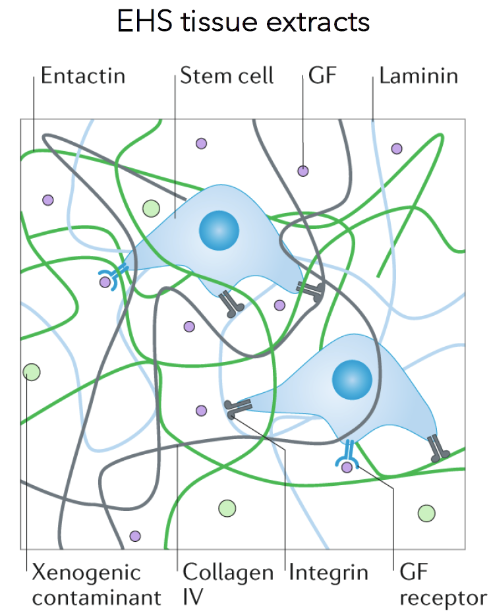
Figure 1. Main components of EHS tissue extract
The first issue is composition mismatch. Matrigel comes from mouse EHS sarcoma tissue and its core laminin isoform is LN111, an extra-embryonic basement membrane component that is neither a native part of the human stem cell niche nor a match for the basement membranes of most adult tissues [1]. Supporting differentiation on a matrix that does not match developmental physiology is like sowing seeds in the wrong soil.
The second is contaminating factors. Matrigel contains variable amounts of endogenous growth factors such as TGF-β, BMP and EGF that interfere directly with induction pathways: contaminating TGF-β antagonizes neural induction signals, and unknown growth factors make mesoderm induction uneven during cardiomyocyte differentiation. The potential result is low purity and many off-target cells, and lot-to-lot differences in these factors affect reproducibility [1].
According to an industry survey cited by BioLamina, 40% of researchers use undefined extract-based matrices and 88% have experienced spontaneous differentiation or fluctuating differentiation efficiency, with the undefined composition of extracts a main cause [1]. To stabilize results, many teams stockpile a full year's supply of a single lot, tying up money and storage space.
Vitronectin/RGD Matrices: Adhesion Without Differentiation Instructions
To work serum-free and defined, many teams choose vitronectin or other RGD-motif matrices, but biologically these struggle to support robust directed differentiation.
Vitronectin binds αvβ5 integrin on the cell surface only through a short RGD peptide, transmitting a basic "attach and survive" signal without lineage-directing capacity [1]. Think of differentiation as an orienteering race: cytokines are the map and the matrix is the terrain and the signposts. An RGD matrix only keeps cells standing on the ground; with no signposts, cells differentiate at random and purity is hard to raise. RGD matrices also cannot induce correct apical–basal polarity, which is a prerequisite for starting orderly differentiation and forming functional tissue. Without polarity constraints, phenotypes are highly heterogeneous, and even marker-positive cells may lack functional maturity.
Laminin E8 Fragments: Missing Domains Limit Polarity and Maturation
Compared with vitronectin, E8 fragments target the integrin-binding region of laminin and give better adhesion and stemness support, but their fit for differentiation needs consideration.
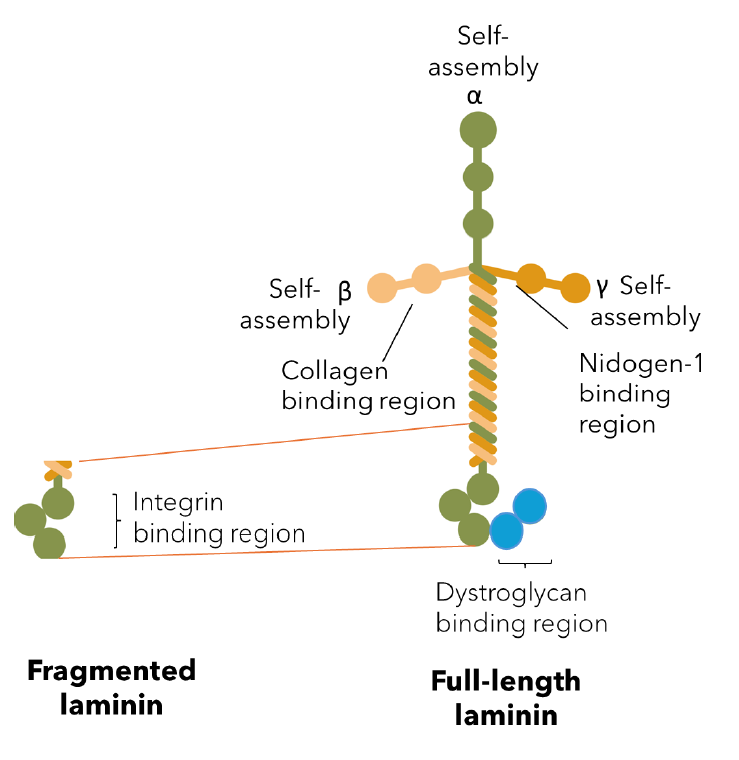
Figure 2. Structure of fragment-type laminins versus full-length laminins
An E8 fragment keeps only the C-terminal region of laminin responsible for integrin binding and lacks many N-terminal functional domains involved in basement membrane network assembly, polarity regulation and growth factor binding [1]. It makes cells attach more firmly and provides basic stemness signals, but it cannot mediate complete basement membrane assembly or induce correct spatial polarity.
According to the source material, these bottlenecks tend to appear in mid-to-late differentiation: in neural differentiation, neuroepithelium struggles to form orderly neural tube-like structures and neuronal maturation markers are unevenly expressed; in islet differentiation, cells struggle to establish secretory polarity, with weaker insulin secretion and glucose response; in cardiomyocyte differentiation, myofilaments are disorganized and beating rhythm and maturity fall below physiological levels.
3. Full-Length Laminins: Raising Efficiency and Purity at the Matrix Level
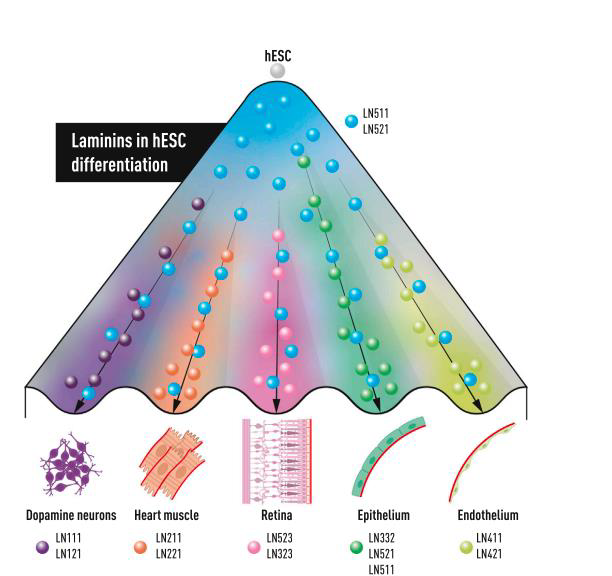
Figure 3. Dynamic distribution and functional roles of laminin isoforms as human embryonic stem cells (hESCs) differentiate into downstream tissue cells
Isoform Matching: The Right Laminin for Each Lineage
Instead of one matrix for every differentiation, full-length laminins can be matched by isoform to provide physiologically relevant matrix signals for each lineage. Based on the native basement membrane composition of different human tissues, Biolaminin covers 9+ human laminin isoforms [2].
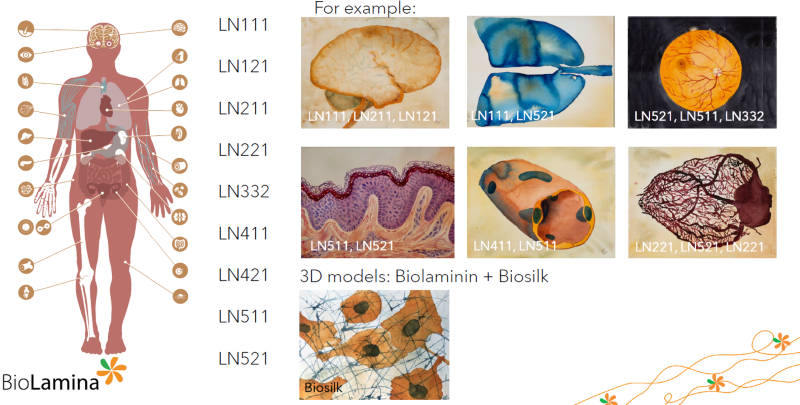
Figure 4. Expression of native full-length laminins in different cells and tissues
According to BioLamina, typical isoform choices by lineage are [4]: LN521 for iPSC expansion and maintenance, matching the native embryonic stem cell niche and keeping uniform stemness; LN521 and LN111 as core isoforms for neural differentiation, with LN211, LN121 and others, supporting neuroepithelial induction, dopaminergic neuron maturation and self-assembly and function of 3D brain organoids; LN521, LN511 and LN411 for endothelial and islet differentiation, matching vascular and endocrine basement membranes to improve functional maturity; and LN332 for epithelial and skin differentiation, reproducing the epidermal basement membrane and supporting epithelial polarity and stratified structure.
Using the matching full-length isoform from expansion through differentiation recreates the continuous matrix environment of in vivo development and makes differentiation signalling more physiologically relevant.
Complete Structure Induces Polarity and Starts Orderly Differentiation
Differentiation is not just marker expression; it is an ordered process from fate decision to tissue structure, and establishing cell polarity is a key switch. Laminin is a key protein for basement membrane formation and cell binding in vivo: by binding specific cell-surface receptors it triggers physiological responses and plays key regulatory roles in cell anchorage, survival, proliferation, migration, tissue assembly and cell specialization (differentiation).
Full-length laminins retain all functional domains of the native trimer. Their N-terminal domains self-assemble into a continuous basement membrane network, and they bind receptors such as integrins and dystroglycan to induce apical–basal polarity [3]. Guided by uniform polarity signals, the cell population starts its differentiation programme in step, differentiation paths become more consistent, off-target cells decrease, and population uniformity and purity rise. According to user experience reported in the source material, switching from another matrix to a full-length laminin with the same cytokine protocol raised target-cell purity by 15%–30%, with more regular morphology and more ordered structure; this range needs to be verified in the specific cell line and protocol.
Fully Defined Composition, No Contaminating Factors
Full-length laminins produced in a recombinant expression system are chemically fully defined, with no animal-derived components, no unknown contaminating proteins and no endogenous growth factors to interfere with induction pathways [3]. According to BioLamina, every lot passes multi-parameter QC for purity, trimer integrity, bioactivity and endotoxin, with high lot-to-lot consistency. For process development and high-throughput screening, a stable matrix means reproducible differentiation and transferable process parameters, without re-optimizing conditions every time a lot change breaks the protocol.
Beyond Purity: Driving Functional Maturation
The goal of good differentiation is not marker positivity but cells whose function approaches primary cells in vivo. According to the source material, the physiological-like microenvironment of full-length laminins can drive functional maturation: neurons form more complex synaptic connections with more stable electrophysiology; islet β cells show clearer glucose-stimulated insulin secretion; cardiomyocytes have more regular sarcomeres and more stable beating rhythm [2]. Disease models and drug screening systems built this way are more physiologically relevant.
4. Matrix Selection by Project Stage
There is no black-and-white answer in matrix selection; the key is matching the stage and needs of the project:
- Pilot experiments and early protocol exploration: Matrigel can be used for early exploration, with attention to lot screening; rigorous conclusions about differentiation efficiency should not be drawn from it.
- Only verifying differentiation markers, with modest demands on function and purity: vitronectin or E8 fragments can serve as a low-cost option, but assess the impact of cell heterogeneity and functional defects in advance.
- Demanding disease models, drug screening and functional mechanism studies: prefer the matching full-length laminin isoform to raise purity and functional maturity and keep results reliable and reproducible [3].
- Process development, cell therapy pipelines and IND projects: full-length laminins are recommended; according to BioLamina, its grade system of research-grade LN, translational MX and cell therapy CTG supports the bridge from research to the clinic and makes earlier process data easier to carry forward [3].
Many teams spend heavily on imported cytokines and months tuning induction timing, yet compromise on the matrix. The matrix is the foundation of the differentiation system; if the foundation is weak, no amount of refinement in factors, timing and media will break through the ceiling on purity and function. When purity is low and results are unstable, start with the matrix as the underlying variable. Keep in mind that the matrix is only one variable; factors, timing and cell state still need to be optimized together.
Biolaminin Product Overview
| Product | Catalogue no. | Size | Use and features |
|---|---|---|---|
| Biolaminin 521 CTG (Clinical) | CT521-0501 | 500 μg | Feeder-free culture of human PSCs, MSCs and most anchorage-dependent progenitor cell types |
| Biolaminin 521 MX (Pre-clinical) | MX521-0501 | 500 μg | Transition from LN521 to CT521; supports self-renewal of human ESCs and iPSCs |
| Biolaminin 521 LN (RUO) | LN521-02/05 | 100 μg/500 μg | Single-cell passaging of PSCs without apoptosis inhibitors; supports self-renewal of human ESCs and iPSCs |
| Biolaminin 511 LN | LN511-0202/0502 | 100 μg/500 μg | Culture of mouse embryonic stem cells and iPSCs, maintaining pluripotency |
| Biolaminin 421 LN | LN421-02/0501 | 100 μg/500 μg | Culture of endothelial and mesangial cells and maturation of neuromuscular junctions |
| Biolaminin 411 LN | LN411-02/0501 | 100 μg/500 μg | Culture of islet cells, endothelial cells, adipocytes and epidermal cells (vascular, immune, nervous and haematopoietic systems) |
| Biolaminin 332 LN | LN332-0202/0502 | 100 μg/500 μg | Culture of keratinocytes, RPE cells and hair follicle stem cells; strongly influences keratinocyte proliferation |
| Biolaminin 221 LN | LN221-02/0501 | 100 μg/500 μg | Growth, survival and differentiation of many tissue-specific cells, including cardiomyocytes and skeletal muscle cells |
| Biolaminin 211 LN | LN211-02/0501 | 100 μg/500 μg | Growth, survival and differentiation of many tissue-specific cells, including motor neurons, cardiomyocytes and skeletal muscle cells |
| Biolaminin 121 LN | LN121-02/0501 | 100 μg/500 μg | General cell culture matrix; a universal attachment protein for most cell types in vitro |
| Biolaminin 111 LN | LN111-02/0501 | 100 μg/500 μg | General cell culture matrix, successfully used in liver and neural differentiation |
Let TechWave Help You Match the Laminin to Your Lineage
If your iPSC differentiation project is stuck on purity or lot-to-lot consistency, or you plan to move from a research-grade matrix to a process that can bridge to the clinic, contact TechWave. We can help compare Biolaminin isoforms and LN, MX and CTG grades for your target lineage and project stage, and arrange samples and quotations.
References
- BioLamina AB. Stem Cell Culture Matrices: A Practical Guide [Technical Handbook]. Sundbyberg, Sweden: BioLamina AB; 2019.
- BioLamina AB. Tissue-specific Cell Culture Matrices [Infographic]. Sundbyberg, Sweden: BioLamina AB; 2024.
- BioLamina AB. Official Website. Sundbyberg, Sweden: BioLamina AB; 2026.
- BioLamina AB. Tissue-specific Cell Culture Matrices [Infographic]. Sundbyberg, Sweden: BioLamina AB; 2024.
Uses and applicable scenarios
- Matrix selection for directed differentiation of iPSCs and hESCs
- Optimizing neural, cardiomyocyte, islet, endothelial and other lineage differentiation systems
- Controlling differentiation consistency in disease modelling and drug screening
- Differentiation process development from research to cell therapy
Limitations
- Experience figures such as purity gains come from manufacturer material and user feedback and must be verified in the specific cell line and differentiation protocol
- Isoform choice should be based on the target lineage and experimental data; no single matrix suits every differentiation
- The matrix is only one variable in a differentiation system; factors, timing and cell state still need to be optimized together