
Technical column
Give β-cells a real basement membrane: BioLamina full-length laminins deliver 3.9-fold higher SC-islet insulin secretion, 20–25% more NKX6.1/NEUROD1 cells and 3- to 4-fold primary-islet expansion versus tissue-extracted matrix
β-cell polarity, maturation and insulin secretion depend on contact with the basement membrane. BioLamina full-length human recombinant laminins bring that contact into the dish. On Biolaminin 521 (LN521), PSCs progress through definitive endoderm, primitive gut tube, posterior foregut, pancreatic progenitors, endocrine progenitors and immature to maturing SC-islets; stage-4 day-11 progenitors express PDX1 and NKX6.1, and day-63 (41+15+7) multihormonal islets contain β-, δ- and α-cells. At endocrine-progenitor stage 5, LN521 yields 20–25% more NKX6.1/NEUROD1 double-positive cells than tissue-extract Matrigel in HS980 and H1 embryonic stem-cell lines. SC-islets on LN511 rebuild apical–basal polarity through focal adhesion and show a 3.9-fold increase in glucose-mediated insulin secretion versus free-floating spheroids. Primary murine islets expand 3- to 4-fold on LN521 over 5 or 21 days versus tissue-extracted matrix, and hypoxic primary human islets on LN521, LN511 and LN411 maintain viability, show lower ROS and secrete more insulin.
Definition
Full-length human recombinant laminins are basement-membrane proteins that retain the complete ~800 kDa heterotrimer and serve as culture matrices giving stem-cell-derived and primary islets in vivo-like cell–matrix interactions.
β-cell projects tend to stall in two places. Stem-cell-derived islets differentiate inconsistently and secrete too little insulin once mature; primary islets fail to attach, survive or expand after isolation. Both problems often share a root cause: the culture lacks the basement membrane that β-cells depend on in vivo.
BioLamina closes that gap with full-length human recombinant laminins, and the numbers show it. LN521 yields 20–25% more NKX6.1/NEUROD1 double-positive endocrine progenitors than tissue-extract Matrigel, LN511 lifts glucose-mediated insulin secretion of stem-cell-derived islets 3.9-fold over free-floating spheroids, LN521 expands primary murine islets 3- to 4-fold, and LN521, LN511 and LN411 protect the survival and function of primary human islets under hypoxia.
Which laminin answers which β-cell question
| Goal | Matrix | Key result | Model |
|---|---|---|---|
| PSC-derived islet differentiation | LN521 | PDX1/NKX6.1-positive stage-4 progenitors; day-63 multihormonal islets with β-, δ- and α-cells | Human pluripotent stem-cell workflow |
| Neuroendocrine specification | LN521 | 20–25% more NKX6.1/NEUROD1 double-positive cells than Matrigel | HS980 and H1 embryonic stem-cell lines, stage 5 |
| Polarity and GSIS | LN511 | 3.9-fold higher glucose-mediated insulin secretion than free-floating spheroids | Stem-cell-derived islets |
| Primary-islet adhesion and expansion | LN521 | 3- to 4-fold expansion at 5 or 21 days versus tissue-extracted matrix | Primary murine islets |
| Survival and function under hypoxia | LN521, LN511, LN411 | Maintained viability, lower ROS, higher insulin secretion | Primary human islets |
Why β-cells need full-length laminin
Laminins are extracellular-matrix proteins concentrated in basement membranes, with 16 isoforms. β-cell interaction with basement-membrane components shapes development, mature structure and function, and laminin deposition influences the fate of bipotent pancreatic progenitors and their neuroendocrine differentiation.
Inside the islet, β-cells sit in close contact with endothelial cells, and that contact underpins islet microarchitecture and endocrine function. β-cells rely on basement-membrane components secreted by the capillaries, where LAMA4 and LAMA5 are the predominant laminin chains.
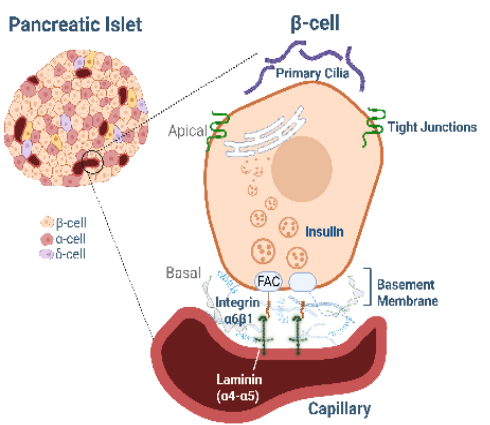
Figure 1. Islet–capillary organization and β-cell polarity supported by the laminin basement membrane.
Human pancreas data show LAMA4 enriched around fetal islets, with LAMA5 becoming predominant as the pancreas matures. Whole-pancreas mass spectrometry measured total LAMA4/LAMA5 intensity (n=5–6), and immunofluorescence quantified islet/acinar intensity ratios at fetal, juvenile, young and old stages (n=3 per stage). These data map in vivo development and give a biological rationale for islet-relevant laminins; they do not rank culture substrates by performance.
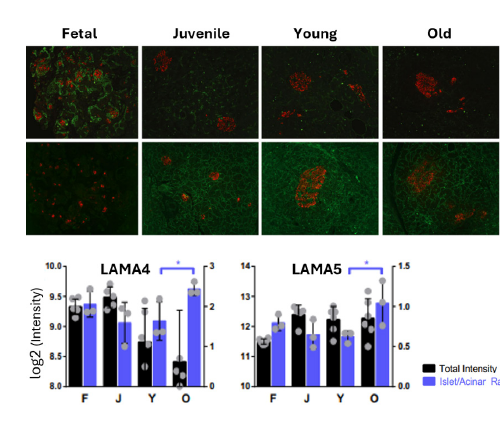
Figure 2. Temporal LAMA4/LAMA5 distribution with mass-spectrometry and immunofluorescence intensity measurements.
Full-length laminin is a large heterotrimeric protein of about 800 kDa that keeps its binding sites for cell receptors, growth factors and other ECM components intact. That complete structure is what lets full-length recombinant laminins such as Biolaminin 521 recreate authentic cell–matrix interactions and support polarity, glucose-stimulated insulin secretion and expansion of stem-cell-derived β-cells and primary islets.
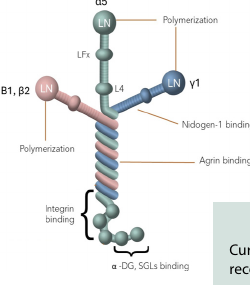
Figure 3. Full-length laminin structure, including the polymerization and receptor/ECM-binding regions.
LN521: a steady path from PSCs to multihormonal islets
On Biolaminin 521 (LN521), human pluripotent stem cells move through definitive endoderm, primitive gut tube, posterior foregut, pancreatic progenitors and endocrine progenitors to immature and then maturing stem-cell-derived islets (SC-islets). Stage-4 day-11 pancreatic progenitors express PDX1 and NKX6.1, and by day 41+15+7 (day 63) the multihormonal islets contain insulin-positive β-cells, somatostatin-positive δ-cells and glucagon-positive α-cells.
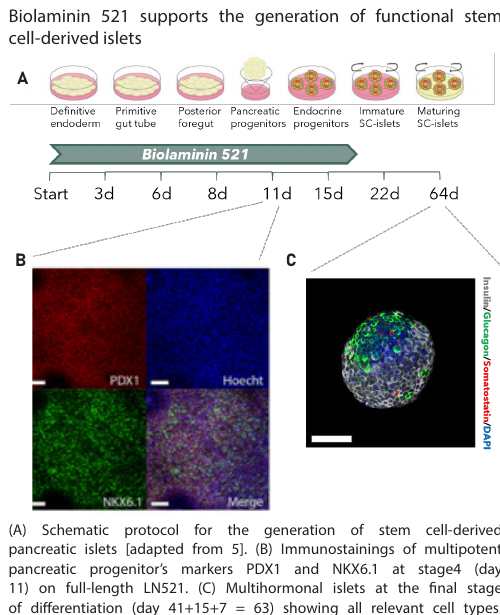
Figure 4. PSC-derived islet workflow on LN521, stage-4 pancreatic-progenitor staining and day-63 multihormonal islets.
The advantage carries into neuroendocrine specification. At endocrine-progenitor stage 5, LN521 produced 20–25% more NKX6.1/NEUROD1 double-positive cells than tissue-extract Matrigel, and it did so in both the HS980 and H1 embryonic stem-cell lines (mean ± SD, n=3 biological samples). For workflows looking to replace tissue-extracted matrix with a defined recombinant substrate, that is a data-backed option.
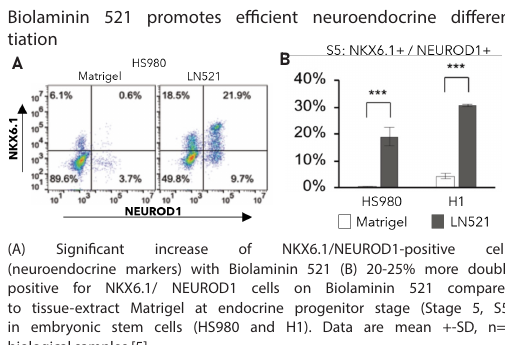
Figure 5. Stage-5 neuroendocrine differentiation on LN521 in HS980 and H1 cells.
LN511: rebuild polarity, unlock insulin secretion
Stem-cell-derived islets cultured on full-length LN511 recreate apical–basal polarity through focal adhesion and deliver a 3.9-fold increase in glucose-mediated insulin secretion versus free-floating spheroids (Figure 6). The source narrative separately describes roughly doubled insulin secretion versus floating spheroids or other commercially available substrates. The comparators differ: the 3.9-fold figure is against free-floating spheroids only, while the doubling is a narrative summary across spheroids and other commercial substrates, so the two should not be merged into a single multiple.
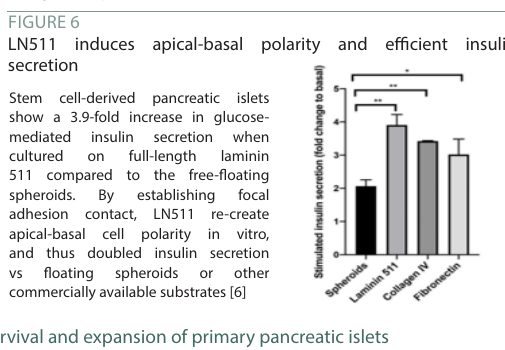
Figure 6. GSIS comparison for stem-cell-derived islets on LN511; the 3.9-fold comparator is free-floating spheroids.
Primary islets: LN521 drives expansion, three laminins guard against hypoxia
Attachment and proliferation after isolation are the first hurdle in many islet studies. LN521 supported adhesion and proliferation of primary murine islets, and after 5 or 21 days in culture expansion reached 3- to 4-fold that seen on tissue-extracted matrix. This result is from murine islets.
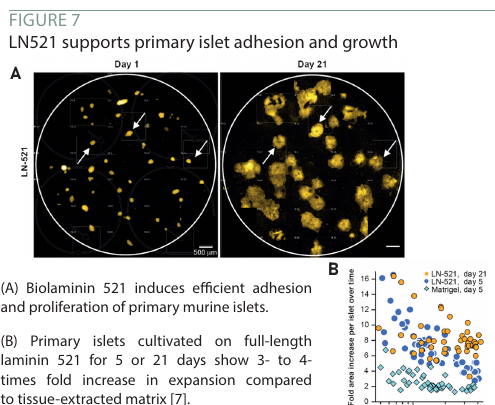
Figure 7. Primary murine-islet adhesion on LN521 and the 5-day/21-day expansion comparison.
Hypoxia is a routine stress in primary-islet culture and transplantation research. Primary human islets cultured under hypoxia on LN521, LN511 and LN411 maintained viability, showed reduced reactive oxygen species (ROS) and increased glucose-mediated insulin secretion compared with the control condition.
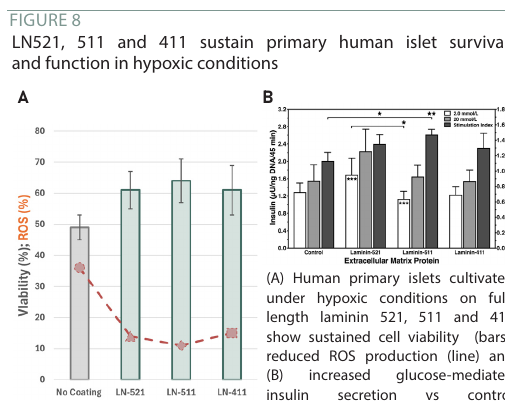
Figure 8. Viability/ROS and insulin-secretion readouts for primary human islets under hypoxic conditions.
Where each laminin fits
- PSC differentiation as the backbone: start with LN521. It covers the full workflow from definitive endoderm to maturing SC-islets and gives a higher stage-5 NKX6.1/NEUROD1 double-positive fraction than Matrigel.
- Maturation and GSIS as the endpoint: focus on LN511, which rebuilds apical–basal polarity through focal adhesion and raises insulin secretion 3.9-fold over free-floating spheroids.
- Primary islets as the model: prioritize LN521 for adhesion and expansion; screen LN521, LN511 and LN411 side by side for survival and function under hypoxia.
- Evidence boundaries: differentiation data come from the HS980 and H1 embryonic stem-cell lines, expansion data from primary murine islets and hypoxia data from primary human islets; these are not substitutes for one another. The LAMA4/LAMA5 developmental pattern explains the biology and is not a performance ranking of substrates.
- According to BioLamina, its full-length laminins are compatible with clinically-compliant protocols; this is the manufacturer's statement on workflow compatibility.
Let TechWave help you match the right laminin to your β-cell model
Whether you are building a PSC-derived islet differentiation workflow, improving SC-islet polarity and insulin secretion, or need primary islets that attach, expand and withstand hypoxia, contact TechWave. We can compare BioLamina Biolaminin 521 (LN521), LN511 and LN411 against your cell source and target readouts, share application data and literature, and arrange sample requests, technical consultation and quotations.
References
- Mamidi A, et al. Mechanosignalling via integrins directs fate decisions of pancreatic progenitors. Nature. 2018.
- Nikolova G, et al. The vascular basement membrane: a niche for insulin gene expression and Beta cell proliferation. Developmental Cell. 2006.
- Li J, et al. Proteome-wide and matrisome-specific alterations during human pancreas development and maturation. Nature Communications. 2021.
- Thorngren T, et al. Differentiation of human pluripotent stem cells into insulin-producing islet-like clusters using nanofiltered cell culture medium. Frontiers in Membrane Science and Technology. 2024.
- Kelly Blust. Advancing 3D cell cultures of stem cell derived pancreatic islets and breast cancer cells using recombinant functionalized spider silk. KTH doctoral thesis. 2024.
- Singh R, et al. Enhanced structure and function of human pluripotent stem cell-derived beta-cells cultured on extracellular matrix. STEM CELLS Translational Medicine. 2021.
- Sigmundsson K, et al. Culturing functional pancreatic islets on α5-laminins and curative transplantation to diabetic mice. Matrix Biology. 2018.
- Brandhorst H, et al. Basement membrane proteins improve human islet survival in hypoxia: implications for islet inflammation. Acta Biomaterialia. 2022.
Uses and applicable scenarios
- PSC-derived islet (SC-islet) differentiation and neuroendocrine specification on LN521
- β-cell apical–basal polarity and glucose-stimulated insulin secretion (GSIS) studies on LN511
- Primary murine-islet adhesion and expansion on LN521
- Survival and function of primary human islets under hypoxia on LN521, LN511 and LN411
Limitations
- Differentiation data come from the HS980 and H1 embryonic stem-cell lines at defined stages
- Expansion data come from primary murine islets and hypoxia data from primary human islets; the two are not interchangeable
- LAMA4/LAMA5 distribution describes pancreatic development, not a performance ranking of culture substrates
Frequently asked questions
Which laminin should I coat with to differentiate stem cells into islet β-cells?
According to BioLamina, for a PSC differentiation workflow, LN521 is the starting point: on LN521, human pluripotent stem cells progress from definitive endoderm to maturing stem-cell-derived islets (SC-islets), and day-63 multihormonal islets contain β-, δ- and α-cells. At endocrine-progenitor stage 5, LN521 gives 20–25% more NKX6.1/NEUROD1 double-positive cells than tissue-extract Matrigel. These differentiation data come from the HS980 and H1 embryonic stem-cell lines.
Which matrix should I look at to improve glucose-stimulated insulin secretion (GSIS) of SC-islets?
Focus on LN511: stem-cell-derived islets on full-length LN511 rebuild apical–basal polarity through focal adhesion, and glucose-mediated insulin secretion is 3.9-fold higher than in free-floating spheroids. The source also describes roughly doubled secretion, but that comparator covers spheroids or other commercial substrates, unlike the 3.9-fold figure, so the two numbers should not be merged into one general multiple.
Primary islets will not attach or expand after isolation. Which matrix should I try?
For attachment and expansion, look first at LN521: primary murine islets cultured on LN521 for 5 or 21 days expanded 3- to 4-fold relative to tissue-extracted matrix. Note that this result comes from mouse islets. For survival and function under hypoxia, screen LN521, LN511 and LN411 side by side; those data come from primary human islets.
What does full-length laminin do for islet and β-cell culture?
Full-length laminin is an ~800 kDa heterotrimer that keeps its binding sites for cell receptors, growth factors and other ECM components intact, recreating authentic cell–matrix interactions. β-cell development, polarity and function depend on contact with the basement membrane, and the capillary basement membrane in islets mainly expresses LAMA4 and LAMA5. Full-length recombinant laminin brings that contact back into culture.
Can LAMA4 and LAMA5 distribution data from pancreas development be used to rank laminin matrices?
No. LAMA4 is enriched around fetal islets and LAMA5 dominates as the pancreas matures; these data describe in vivo developmental distribution and give biological context for choosing islet-related laminins. They are not a performance ranking of culture matrices; choose a matrix from the differentiation, GSIS, expansion or hypoxia data matching your endpoint.