
Technical column
CAR-T moves beyond killing tumors: satri-cel, miv-cel and Tregzi mark three milestones for T-cell therapies in 2026
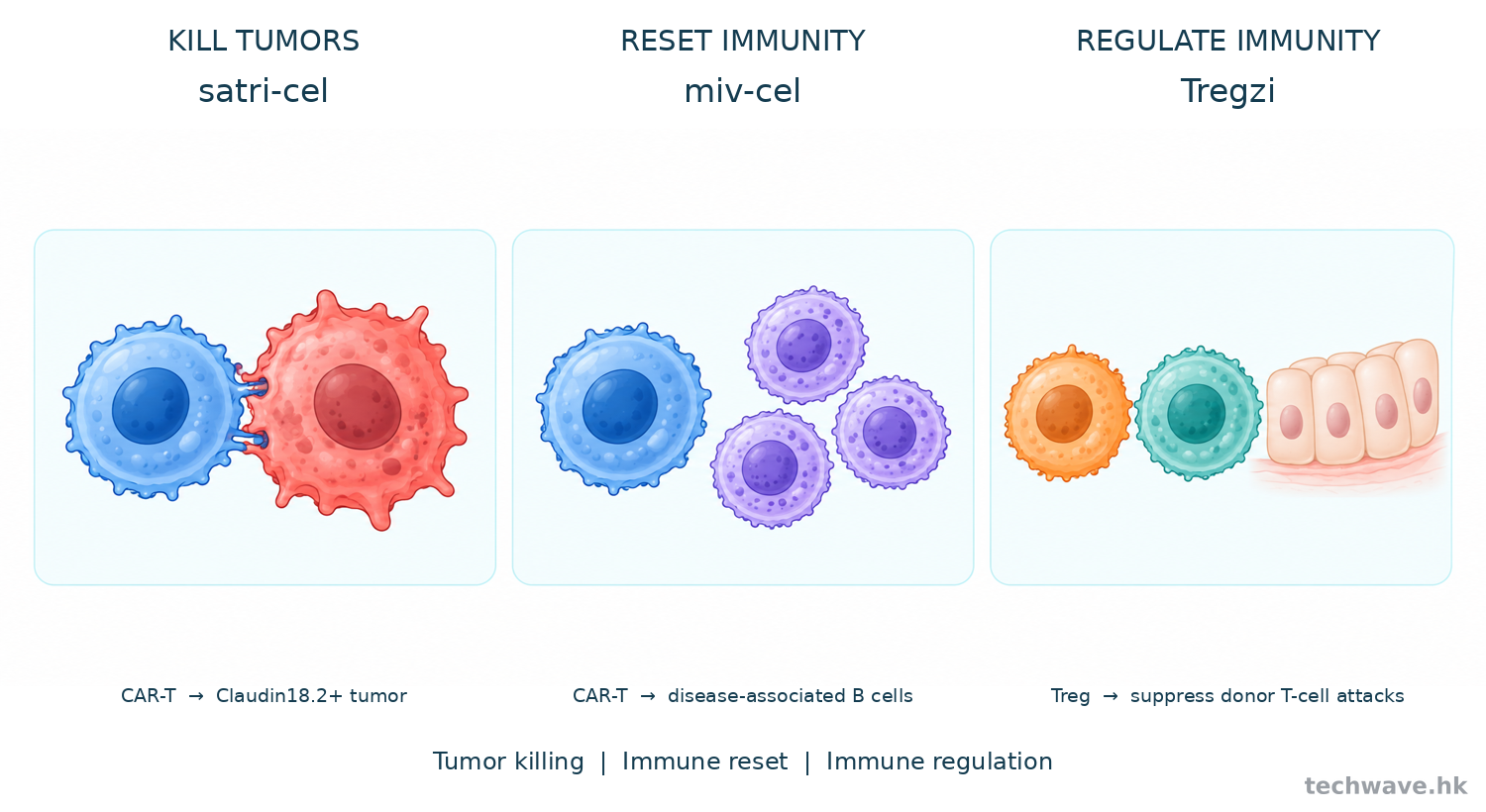
Three major milestones reshaped T-cell therapy in 2026. On June 22, CARsgen's Claudin18.2 CAR-T satri-cel received Chinese NMPA approval for advanced gastric cancer; the company calls it the world's first approved CAR-T for solid tumors. On June 30, the US FDA approved Orca Bio's regulatory T-cell therapy Tregzi (Orca-T) for matched-donor hematopoietic stem cell transplantation. On October 21, Kyverna's CAR-T miv-cel reported one-year registrational trial results in stiff person syndrome: all 26 patients completed follow-up and 92% were free of ongoing immunotherapy at one year. These developments illustrate three directions: killing tumors, resetting immunity and regulating immunity. We examine the designs, key results and limits of each, compare the strength of the evidence, and discuss the implications for T-cell process development and GMP raw-material selection.
Definition
T-cell therapies isolate, modify or sort a patient's own or a donor's T cells outside the body before infusion. CAR-T uses a chimeric antigen receptor to recognize a specific antigen, killing tumor cells or eliminating disease-associated B cells. Regulatory T-cell (Treg) therapies instead use Tregs' ability to suppress excessive immune responses to control immune dysregulation such as graft-versus-host disease.
In 2026, T-cell therapies delivered a remarkably concentrated series of advances.
On June 22, CARsgen announced Chinese National Medical Products Administration (NMPA) approval of its Claudin18.2 CAR-T satri-cel for advanced gastric and gastroesophageal junction adenocarcinoma. The company described it as the world's first approved CAR-T product for solid tumors [1]. Eight days later, on June 30, the US FDA approved Orca Bio's Tregzi, developed as Orca-T, a matched-donor hematopoietic stem cell transplantation therapy centered on regulatory T cells [4]. On October 21, the University of Colorado Anschutz School of Medicine reported one-year results for CAR-T therapy miv-cel in stiff person syndrome, with all 26 patients completing follow-up [3].
Each is a major industry headline. Together, they reveal a broader shift: T-cell therapies are moving beyond killing tumors toward resetting and regulating immunity.
Video explainer
Three T-Cell Jobs: Solid-Tumor CAR-T Approved, 1-Year Stiff Person Syndrome Data, Tregzi's Brakes
Watch on YouTube ↗Video transcript
In 2026, three big T-cell therapy stories arrived one after another. One announced the first approved CAR-T for solid tumors. Another reported that, a year later, most patients with a rare disease had put down their walking aids.
And the US FDA approved a T-cell therapy that knows how to hit the brakes. All from our T-cell family? Are we really that capable? Before we get excited, let’s read the original sources. Three stories, three routes, and very different weights of evidence.
First story. On June 22, 2026, China’s National Medical Products Administration approved CARsgen’s satri-cel. According to the company, this is the first approved CAR-T for solid tumors worldwide. Why is this so difficult? CAR-T has succeeded in blood cancers for years.
But a solid tumor is like a fortress: suitable targets are scarce, T cells struggle to get inside, and the surrounding environment can wear them down. satri-cel targets Claudin18.2. In normal tissue, it appears only on differentiated gastric mucosal epithelial cells, but gastric cancer cells can express it abundantly.
The approval is supported by a randomized controlled phase 2 trial published in The Lancet. It assigned 156 patients with advanced gastric cancer after failure of at least two prior lines, in a 2 to 1 ratio, to satri-cel or treatment of physician’s choice.
Median progression-free survival was 3.25 versus 1.77 months, with a hazard ratio of 0.37. Before we get excited: the risk of progression or death fell by more than sixty percent, a statistically clear result. But the absolute gain was about a month and a half.
Grade 3 or higher adverse events occurred in 99% of the satri-cel group versus 63% of controls. Cytokine release syndrome occurred in 95%. Another easily missed number: of 104 patients randomized to satri-cel, 88 actually received the infusion: 85%.
The abstract does not explain why. For patients with advanced cancer, every day between cell collection and infusion matters. And the indication is narrow: Claudin18.2-positive, HER2-negative advanced gastric or gastroesophageal junction adenocarcinoma after failure of at least two prior lines. This does not mean CAR-T is now an option for every solid tumor.
Second story, a different battlefield. Stiff person syndrome is a rare autoimmune neurological disease that causes severe muscle stiffness, painful spasms and difficulty walking. The news release says about 80% of patients eventually need walking aids or wheelchairs. There is currently no approved therapy.
Kyverna’s CAR-T, miv-cel, is not designed to kill tumors. It aims to clear disease-related B cells in one treatment, giving the immune system a fresh start. One-year data were announced on October 21, 2026. All 26 patients completed the one-year study. Median time on the 25-foot walk test fell by 49%.
Of 12 patients who originally needed walking aids for the test, 8 no longer needed them. At one year, 24 of 26 patients, or 92%, did not need ongoing immunosuppressive or immunomodulatory therapy directed at this disease.
Here is the intriguing part: in 65% of patients, the depleted immune cells had begun to return, but improvements persisted. This supports, but does not prove, an immune reset rather than temporary suppression. Before we get excited: 26 patients, a single-arm study, no control group, and only one year of follow-up.
miv-cel is not yet approved. The company plans to complete its rolling marketing application in the fourth quarter of 2026. Third story: meet the T-cell family’s brake operator. Allogeneic hematopoietic stem cell transplantation is important for many blood cancers.
But donor immune cells can attack the patient’s own body. That is graft-versus-host disease. Its chronic form can affect everyday life for a long time. On June 30, the US FDA approved Orca Bio’s Tregzi. Instead of relying only on suppressive drugs, this approach makes regulatory T cells, the cells that apply the brakes, part of the product itself.
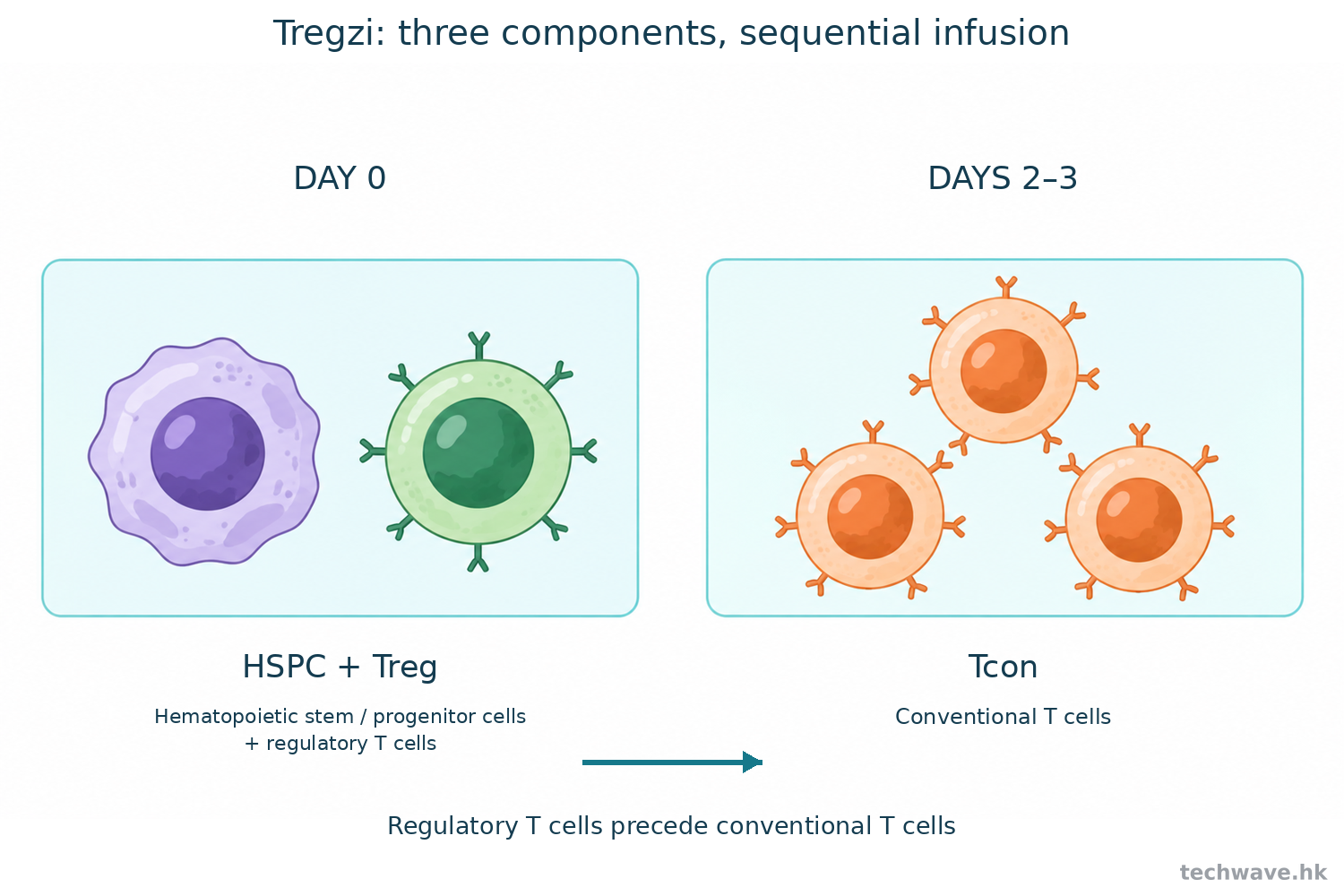
One product, three components, infused in sequence. On Day 0: hematopoietic stem and progenitor cells, plus regulatory T cells. On Day 2–3: conventional T cells. The brake operator arrives first, the advancing team follows.
The evidence is a multicenter randomized controlled trial of 187 patients. At 12 months, moderate to severe chronic graft-versus-host disease occurred in 12.6% of the Tregzi group versus 44.0% of controls. For the primary endpoint, survival free from chronic GVHD, the hazard ratio was 0.26.
All 88 treated patients reached an absolute neutrophil count of at least 500 per cubic millimeter within 28 days. Of course, the label also lists warnings: graft failure, graft-versus-host disease, infusion reactions, secondary or donor-derived malignancies, and transmission of infectious agents.
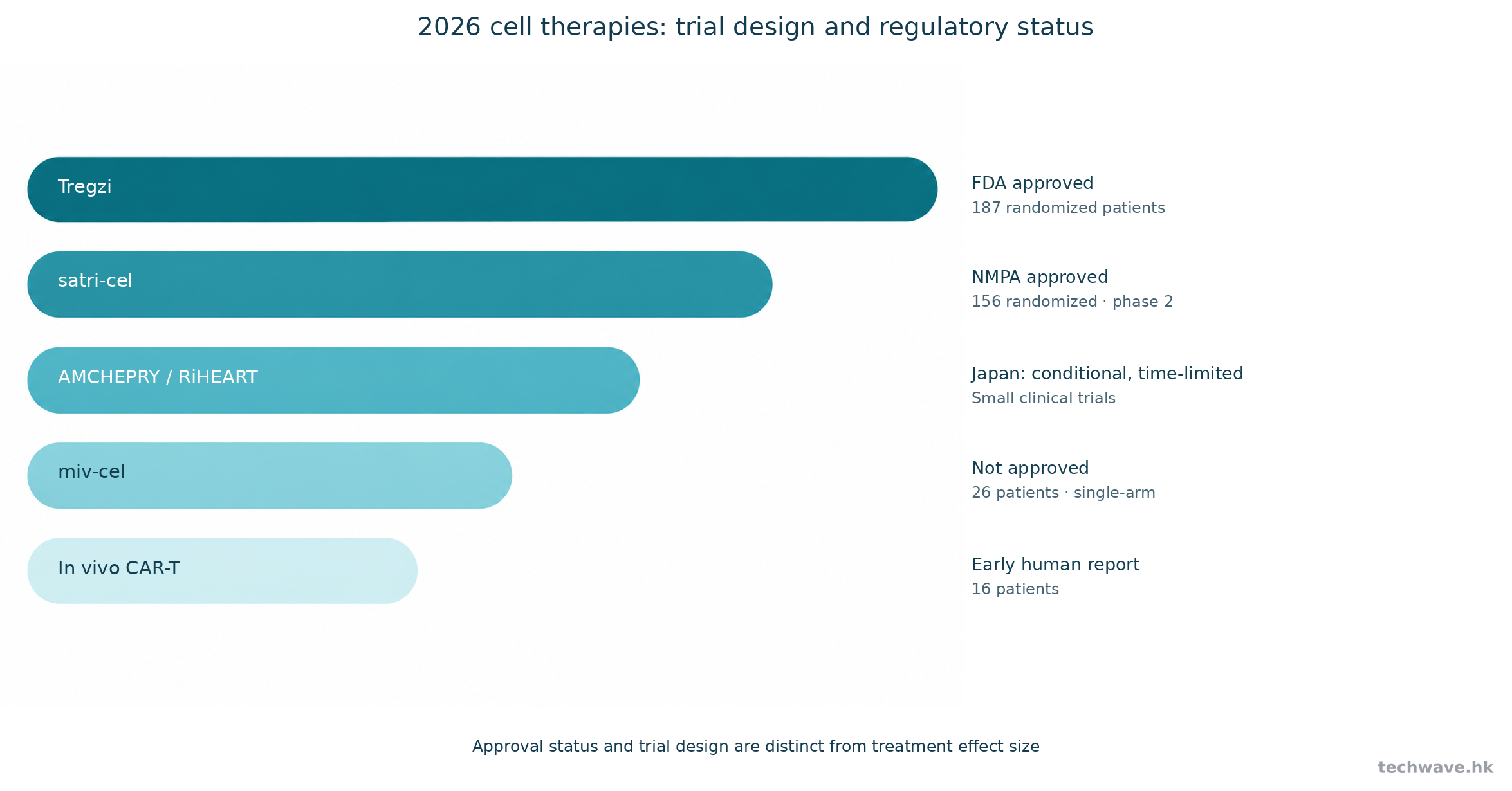
All three stories made headlines, but the evidence carries different weight. Here is a ruler to help. Strongest here is Tregzi: full FDA approval, with 187 patients in a randomized trial. Next is satri-cel: approval in China, with 156 patients in a randomized phase 2 trial.
Japan’s two iPS cell products received conditional and time-limited approval this year. Their evidence is moderate, with more confirmation needed after marketing. miv-cel is not yet approved: 26 patients in a single-arm trial, early but positive.
So when I read the news, I should ask three questions first? Exactly. Is it approved? Is there a control group? And how long is the follow-up? For T-cell process teams, these three stories carry the same message: more indications and more patients make stable processes and reliable raw materials increasingly important.
For autologous CAR-T, manufacturing time is the patient’s time. If autoimmune applications expand, larger patient populations will demand steadier supply chains. Regulatory T cells are sensitive to cytokines and culture systems.
Consistent raw-material activity is essential for reproducible results. TechWave offers Akron cGMP-grade recombinant human cytokines, human AB serum, human serum albumin and cryopreservation media, plus Sexton human platelet lysate and other T-cell process materials.
One important clarification: the raw materials used in these three therapies have not been disclosed. We are discussing general process needs. The full article and references are in the technical column at techwave.hk.
Produced by TechWave. For research reference only; not medical advice.
Three routes at a glance
| Route | Representative advance | What T cells do | Target disease |
|---|---|---|---|
| Kill tumors | satri-cel | CAR-T recognizes Claudin18.2 and kills tumor cells | Advanced gastric and gastroesophageal junction cancer |
| Reset immunity | miv-cel | CAR-T eliminates disease-associated B cells | Stiff person syndrome, an autoimmune neurological disease |
| Regulate immunity | Tregzi | Regulatory T cells suppress donor immune-cell attacks on the patient | Chronic graft-versus-host disease in transplantation for hematologic malignancies |
Milestone 1: satri-cel, the company's claimed first solid-tumor CAR-T approval
Why solid tumors are so difficult
CAR-T has succeeded in blood cancers for years, but solid tumors remain difficult: suitable targets are scarce, CAR-T cells struggle to enter tumors, and the tumor microenvironment suppresses T-cell function. satri-cel targets Claudin18.2, whose normal-tissue expression is restricted to differentiated gastric mucosal epithelial cells, whereas gastric cancer cells express high levels [1]. CARsgen says it was the first team worldwide to identify, validate and report Claudin18.2 as an effective CAR-T target [1].
satri-cel is an autologous CAR-T whose CAR includes a humanized Claudin18.2 single-chain antibody fragment and a CD28 costimulatory domain [1]. To address the tumor microenvironment, CARsgen added low-dose albumin-bound paclitaxel to conventional cyclophosphamide-plus-fludarabine lymphodepletion, aiming to enhance CAR-T infiltration and antitumor activity [1].
Pivotal trial: the first randomized CAR-T trial in solid tumors worldwide
The approval was supported by CT041-ST-01, published in The Lancet in 2025 [2]. The authors describe it as the world's first randomized controlled CAR-T trial in solid tumors [2].
| Item | Details |
|---|---|
| Design | Multicenter, open-label, randomized controlled phase 2 trial in China; satri-cel versus physician's choice, randomized 2:1 |
| Population | Claudin18.2-positive advanced gastric or gastroesophageal junction cancer, immunohistochemical intensity ≥2+ and positive tumor cells ≥40%, after failure of at least two prior lines |
| Control treatment | Physician-selected nivolumab, paclitaxel, docetaxel, irinotecan or apatinib |
| Size | 266 screened; 156 randomized: 104 to satri-cel and 52 to control |
| Primary endpoint | Progression-free survival assessed by an independent review committee |
| Result | Median progression-free survival 3.25 versus 1.77 months; hazard ratio 0.37 |
These results convey two points. First, satri-cel reduced the hazard of progression or death by more than 60%, a statistically clear effect. Second, the absolute benefit remained limited: median progression-free survival increased by approximately one and a half months. In patients who had failed at least two treatment lines, with peritoneal metastases in 69% of the satri-cel group and 60% of controls, this is meaningful progress, but still a long way from the deep remissions associated with CAR-T in blood cancers [2].
Safety: a high rate of grade 3 or higher treatment-emergent adverse events
In the safety analysis, 87 of 88 satri-cel recipients (99%) had grade 3 or higher treatment-emergent adverse events, versus 30 of 48 controls (63%). The most frequent grade 3 or higher treatment-related events were reduced lymphocyte counts (98%), white blood cell counts (77%) and neutrophil counts (66%); cytokine release syndrome occurred in 95% [2]. These findings underline the need for experienced medical centers and comprehensive adverse-reaction management.
An easily overlooked number: 85%
Of the 104 patients randomized to satri-cel, 88 (85%) ultimately received it; 48 of 52 controls (92%) received study treatment [2]. The abstract does not explain why the remaining patients did not receive treatment.
CARsgen says it is moving satri-cel into earlier-line and perioperative settings, including a phase 1 trial of adjuvant therapy for pancreatic cancer [1].
Milestone 2: miv-cel begins to reset autoimmunity
From eliminating tumors to eliminating disease-associated B cells
Stiff person syndrome is a rare, progressive autoimmune neurological disease causing severe muscle stiffness, painful spasms and walking difficulties. The University of Colorado release estimates that approximately 80% of patients eventually need walking aids or a wheelchair [3]. No therapy is currently approved for the disease [3].
Developed by Kyverna Therapeutics, miv-cel (mivocabtagene autoleucel) uses patients' own immune cells, modified to target cells involved in the disease [3]. The autoimmune CAR-T concept is to deeply eliminate B cells producing disease-associated autoantibodies in a single intervention, allowing the immune system to return to a healthier state as B cells reappear and potentially freeing patients from long-term medication.
One-year results
One-year findings from this Kyverna-sponsored registrational phase 2 trial, led by Amanda Piquet at the University of Colorado, were presented at MSToronto26 on October 21, 2026 [3]:
| Measure | Result at one year |
|---|---|
| Follow-up completion | All 26 patients completed the one-year study |
| 25-foot walking test | Median completion time decreased 49% from baseline |
| Dependence on walking aids | Of 12 patients needing an aid for the test before treatment, 8 (67%) no longer needed it |
| Walking speed | 35% completed the test in under 5 seconds, comparable to healthy adults |
| Immunotherapy dependence | 24 of 26 (92%) were free of ongoing SPS-directed immunosuppressive or immunomodulatory treatment |
| Targeted cell recovery | Targeted immune cells had begun returning in 65%, while clinical improvements persisted |
The final row is particularly interesting. By one year, targeted immune cells had begun returning in most patients, while improvements persisted. This supports the hypothesis of an immune reset rather than temporary suppression, but does not prove that the immune system has been permanently reset [3].
What is still needed
This was a 26-patient single-arm trial without a control group; functional measures such as walking tests may also be influenced by patient expectations. One year is insufficient to establish long-term freedom from relapse. Kyverna plans to finish submitting its BLA (Biologics License Application) on a rolling basis during the fourth quarter of 2026. An approval would make miv-cel the first FDA-approved stiff person syndrome therapy and the first CAR-T approved for an autoimmune disease [3].
Milestone 3: Tregzi puts the brakes on immune attacks
Transplantation's persistent problem: chronic graft-versus-host disease
Allogeneic hematopoietic stem cell transplantation can cure many blood cancers, but donor immune cells may attack the patient's tissues, causing graft-versus-host disease (GVHD). Chronic GVHD can impair quality of life for years. Conventional prevention relies on long-term post-transplant immunosuppressive medication.
Tregzi takes a different approach: rather than relying only on drugs, it administers regulatory T cells that suppress excessive immune responses as part of the product itself.
One product, three components
According to the FDA, Tregzi has three sequentially administered components: HSPCs (hematopoietic stem and progenitor cells), Tregs (regulatory T cells), and Tcons (conventional T cells). The HSPC and Treg components are infused intravenously on day 0, followed by Tcons on days 2–3 [4]. Giving Tregs before Tcons is part of the product design.
Pivotal trial: 187 randomized patients
FDA approval was based on Precision-T, an open-label controlled study across multiple centers, with random assignment of adults who had acute leukemias or myelodysplastic syndrome [4]:
| Item | Tregzi | Control |
|---|---|---|
| Randomized patients | 93 | 94 |
| Graft | Tregzi | Unmanipulated allograft |
| GVHD prophylaxis | Tacrolimus alone | Tacrolimus plus methotrexate |
| Median chronic GVHD-free survival | Not estimable (NE) | 7.3 months |
| Cumulative incidence of moderate-to-severe chronic GVHD at 12 months | 12.6% | 44.0% |
The trial's primary endpoint, chronic GVHD-free survival (cGFS), measures the time from hematopoietic stem cell transplantation until death from any cause or moderate-to-severe chronic GVHD. Chronic GVHD was assessed against NIH consensus criteria by a blinded independent endpoint review committee [4].
The hazard ratio for the primary endpoint, chronic GVHD-free survival, was 0.26; that for moderate-to-severe chronic GVHD was 0.19 [4]. All 88 treated Tregzi patients reached a neutrophil count of 500/mm³ within 28 days of infusion; 53 (60.2%) exceeded 500/mm³ on 3 consecutive days, confirming neutrophil recovery [4]. Warnings and precautions include graft failure, GVHD, infusion reactions, secondary malignancies and malignancies of donor origin, and transmission of infectious agents [4].
The FDA-approved indication is matched-donor hematopoietic stem cell transplantation with a myeloablative preparative regimen, for hematopoietic and immunologic reconstitution and improvement of chronic GVHD-free survival in adults with hematologic malignancies [4].
Comparing evidence: a yardstick for cell-therapy headlines
All three developments made headlines, but their evidentiary weight differs substantially. Several representative advances in 2026 put the differences into perspective:
| Advance | Regulatory status | Supporting evidence | Evidence strength |
|---|---|---|---|
| Tregzi | Full FDA approval | 187-patient multicenter randomized controlled trial | Strong |
| satri-cel | Chinese NMPA approval | 156-patient multicenter randomized controlled phase 2 trial | Relatively strong |
| AMCHEPRY and RiHEART, iPSC-derived products | Conditional and time-limited approval in Japan | Small clinical trials; efficacy and safety require continued post-marketing confirmation | Moderate |
| miv-cel | Not yet approved; rolling application planned | 26-patient single-arm registrational trial, one-year results | Early but positive |
| In vivo CAR-T | Investigational | Early 16-patient human report | Earliest-stage |
For the iPSC-derived products in the table, Japan's Ministry of Health, Labour and Welfare granted conditional and time-limited approval on March 6, 2026 to Sumitomo Pharma's Parkinson's cell product AMCHEPRY and Cuorips' cardiomyocyte sheet RiHEART [6][7]. Two other articles on this site examine the CiRA clinical-grade iPSC culture system behind these products and the two-decade development of iPSC therapies; we do not repeat that discussion here.
For in vivo CAR-T, a Tongji Hospital, Huazhong University of Science and Technology team published a correspondence in The New England Journal of Medicine in September 2026. This report included 16 patients with refractory neurological autoimmune diseases who received lentiviral-vector-generated in vivo CD19 CAR-T. The report described manageable adverse effects and complete B-cell depletion; clinical efficacy remains a preliminary observation [5]. If this direction matures, CAR-T could move from individually manufactured patient products toward off-the-shelf medicines, but routine clinical use remains distant.
What this means for T-cell process development
All three milestones point in the same direction: as T-cell therapies reach more indications and patients, process stability and raw-material reliability become increasingly important.
Autologous CAR-T: manufacturing time is the patient's time
For patients with advanced disease, shortening the time from cell collection to infusion is itself a process-development goal. Selecting GMP-grade cytokines and ancillary materials with consistent lots and comprehensive quality documentation during development can reduce variables during technology transfer and scale-up.
Autoimmune disease: larger populations raise supply-chain demands
If miv-cel and similar products are approved, autoimmune CAR-T may serve far larger populations than blood-cancer therapies. Long-term supply stability, traceability and registration-document support could shift from advantages to essentials.
Regulatory T cells: precise control of cell subsets
Tregzi combines HSPCs, Tregs and Tcons according to its product design [4]. For teams studying Tregs, isolation, culture and functional maintenance are sensitive to cytokines and culture systems. Many research protocols involving ex vivo Treg expansion rely on IL-2 for survival and proliferation; consistent raw-material activity directly affects reproducibility.
What TechWave can offer
TechWave offers Akron cGMP-grade recombinant human cytokines, including closed-system bag presentations of IL-2, IL-7, IL-15 and IL-21, human AB serum, human serum albumin and ready-to-use cell cryopreservation media, alongside Sexton human platelet lysate and other T-cell process materials. Existing articles discuss the functional comparability of Akron rhIL-2 and Proleukin, studies of human platelet lysate for T-cell and CAR-T expansion, and why human AB serum needs DMF support, providing further selection context.
Frequently asked questions
Does satri-cel approval mean CAR-T works against every solid tumor?
No. Its approved indication is Claudin18.2-positive, HER2-negative advanced gastric or gastroesophageal junction adenocarcinoma after failure of at least two prior lines [1]. Other solid tumors require their own targets and clinical evidence.
Does miv-cel's 92% freedom from ongoing immunotherapy mean cure?
No. These are one-year results from a 26-patient single-arm trial [3]. Most patients did not need ongoing SPS-directed immunotherapy at one year; whether this persists long term, and whether relapse occurs, require longer follow-up and larger studies.
How does Tregzi differ from conventional CAR-T?
Conventional CAR-T genetically modifies T cells to recognize a specific antigen and kill target cells. Tregzi's design is not CAR modification: donor-derived HSPCs, regulatory T cells and conventional T cells are combined and infused sequentially, using Tregs to control immune responses and reduce chronic GVHD [4].
Conclusion
Three milestones in 2026 pushed T-cell therapies into three new stages. satri-cel showed that CAR-T can gain solid-tumor approval supported by a randomized trial; Tregzi established regulatory T cells as part of an approved immune-regulating product; and miv-cel supplied more persuasive one-year findings for a one-time autoimmune reset. Distinguishing full approval, conditional approval and early human results—and then examining trial design, controls and follow-up—shows how close each advance is to patients. For process teams, more indications and patients make GMP raw-material consistency and traceability increasingly important.
Build your upstream T-cell process with TechWave
Developing CAR-T, Treg or another T-cell product? TechWave can provide product information on Akron cGMP cytokines, human AB serum, human serum albumin and cryopreservation media, plus Sexton human platelet lysate, to support stage-appropriate raw-material selection. Bring your cell type, culture scale and development stage to the discussion.
References
- CARsgen Therapeutics Holdings Limited. Inside information announcement: The NMPA approves the new drug application for the Claudin18.2 CAR T-cell therapy product satricabtagene autoleucel for the treatment of patients with Claudin18.2-positive, HER2-negative advanced gastric/gastroesophageal junction adenocarcinoma (G/GEJA) who have failed at least two prior lines of therapy. June 22, 2026.
- Qi C, Liu C, Peng Z, et al. Claudin-18 isoform 2-specific CAR T-cell therapy (satri-cel) versus treatment of physician's choice for previously treated advanced gastric or gastro-oesophageal junction cancer (CT041-ST-01): a randomised, open-label, phase 2 trial. Lancet. 2025;405(10494):2049–2060. doi:10.1016/S0140-6736(25)00860-8
- University of Colorado Anschutz. CAR T-Cell Therapy Shows Lasting Improvements in Stiff Person Syndrome, Study at CU Anschutz Finds. October 21, 2026.
- U.S. Food and Drug Administration. FDA approves allogeneic regulatory T cell-based immunotherapy with HSPC and T cells-vldq for use in matched donor hematopoietic stem cell transplantation for adults with hematologic malignancies. June 30, 2026.
- Cheng YH, Shang K, Qin C, et al. Lentiviral In Vivo CD19 CAR T-Cell Therapy in Neurologic Autoimmune Disorders. N Engl J Med. 2026;395(9):926–929. doi:10.1056/NEJMc2603114
- Sumitomo Pharma Co., Ltd.; RACTHERA Co., Ltd. Announcement on the Approval for Manufacturing and Marketing Authorization of the Allogeneic iPS Cell-Derived Dopaminergic Neural Progenitor Cell Product "AMCHEPRY®" in Japan. March 6, 2026.
- Cuorips Inc. Obtaining conditional and time-limited manufacturing and marketing approval for human (allogeneic) iPSC-derived cardiomyocyte sheets [in Japanese]. March 6, 2026.
Uses and applicable scenarios
- Track clinical and regulatory developments in solid-tumor CAR-T, autoimmune CAR-T and regulatory T-cell therapies
- Distinguish full approval, conditional approval and early human results behind cell-therapy headlines
- Plan GMP-grade cytokines, serum and cryopreservation systems for autologous CAR-T, Treg and other T-cell processes
- Assess raw-material consistency, traceability and supply stability as T-cell therapies reach larger patient populations
Limitations
- satri-cel is approved only for Claudin18.2-positive, HER2-negative advanced gastric or gastroesophageal junction adenocarcinoma after failure of at least two prior treatment lines; efficacy in other solid tumors has no corresponding approval
- miv-cel's one-year results come from a conference report and institutional release on a 26-patient single-arm trial; it is not FDA approved, and longer follow-up is needed for long-term outcomes
- The in vivo CAR-T report discussed here included 16 patients; clinical efficacy remains a preliminary observation, and safety and durability require further study
- The approved products discussed here have not disclosed the specific manufacturing raw materials used; TechWave products mentioned are general options for T-cell processes, not materials established as used in these therapies