
Technical column
Behind the first approved iPSC regenerative medicines: Kyoto University's CiRA clinical iPSC stock and the StemFit AK03N + iMatrix-511 culture system
On March 6, 2026, Japan granted conditional, time-limited approval to two allogeneic iPSC-derived regenerative medicines: Sumitomo Pharma's dopaminergic neural progenitor product AMCHEPRY for Parkinson's disease and Cuorips' cardiomyocyte sheet RiHEART. Their published background connects a 2014 feeder-free, xeno-free derivation and expansion method using StemFit and recombinant laminin-511 E8 (LN511-E8, the component of iMatrix-511), CiRA's clinical iPSC stock expanded using StemFit AK03 and iMatrix-511, and the Kyoto Parkinson's trial whose QHJI01s04 cells were maintained in StemFit AK03N on iMatrix. Ajinomoto's October 2026 announcement separately confirms StemFit AK03N in RiHEART development and manufacturing. This article follows the method, stock, trial and approved products while distinguishing the materials disclosed at each stage.
Definition
StemFit AK03N is Ajinomoto's feeder-free medium for human ES/iPS cells. iMatrix-511 is a recombinant human laminin-511 E8 fragment (LN511-E8) substrate used to coat culture vessels and support single-cell attachment and expansion of human pluripotent stem cells. The combination underpins CiRA Foundation's published feeder-free iPSC culture protocol.
On March 6, 2026, Japan's Ministry of Health, Labour and Welfare granted conditional, time-limited approval to two iPSC-derived regenerative medicines: Sumitomo Pharma and RACTHERA's Parkinson's cell product AMCHEPRY® (international non-proprietary name: raguneprocel) and Cuorips' iPSC-derived cardiomyocyte sheet RiHEART® (Japanese name: リハート) [5][6][8]. Sumitomo Pharma describes AMCHEPRY as the world's first iPSC-derived regenerative medicine [5]. In September 2026, RiHEART was transplanted into a patient for the first time after approval [6].
For teams developing upstream iPSC culture, the practical question is what sustained these cells at the beginning. Published method papers, stock records, trial methods and manufacturer announcements repeatedly point to StemFit and laminin-511 E8 fragments (LN511-E8, the component of iMatrix-511).
Video explainer
iPSC therapies and the clinical cell stock
Watch on YouTube ↗Video transcript
On March 6, 2026, Japan approved two regenerative medicine products derived from iPS cells on the very same day. One targets Parkinson’s disease; the other is a cardiomyocyte sheet. Crucially, these received conditional and time-limited approval.
Wait! Where did these cells grow up? And what were they fed? Great question. Let’s play detective and follow the public papers and announcements, one link at a time. Before we get excited, let’s read the original sources.
The old way to grow iPS cells used a layer of mouse feeder cells. Those feeder cells themselves needed medium containing fetal bovine serum. For clinical-grade cells intended for patients, the aim is to remove these animal-derived components.
In their 2014 paper, Masato Nakagawa’s team at CiRA described trying almost every commercially available matrix and xeno-free medium, without finding a combination that really worked well. Welcome to our matchmaking show: Who can catch a single cell?
Three candidate floors, please catch our lonely Little i! When cells were dissociated and seeded individually, only LN511-E8 supported efficient colony formation. The other two candidates had to leave the stage. Round two: choose the food. On LN511-E8, they tested commercial xeno-free media.
TeSR2 failed to maintain the cells. NutriStem produced flatter colonies. Mixing the two produced more typical colonies, but the cells had many granules and poor morphology. Then came Ajinomoto’s newly developed StemFit. Colonies looked just like those grown on feeder cells.
We have a winner! They also tested the opposite. Changing one key amino acid in the E8 fragment prevented integrin binding, and colonies stopped forming. Strong attachment depended on that specific interaction. Here is the scorecard. Single-cell passaging, with precise cell counts for seeding.
Confluence in 8 to 10 days. An average 132-fold expansion per passage. A doubling time of 28.34 hours. A split ratio approaching 1:100. Stable growth for 20 to 30 passages, and differentiation into all three germ layers even at passage 54.
In essence, the authors wanted iPS cell culture to become as routine as growing 293 or HeLa cells, so cell processing centers could produce large, standardized banks of early-passage cells. One detail matters. The StemFit described in 2014 contained human albumin.
Ajinomoto’s 2026 announcement says StemFit contains no human- or animal-derived raw materials. These are products from different periods. Check the latest documentation when choosing. The 2014 paper ended with a next step: build an HLA-homozygous iPS cell bank to reduce immune rejection after transplantation.
A few years later, that bank became a reality. Donors needed to be homozygous at all three loci: HLA-A, HLA-B and HLA-DR. By the 2019 review, 36 donors had agreed to participate. Here is the key sentence. After reprogramming, the cells were expanded using StemFit AK03 medium and iMatrix-511.
iPS colonies appeared in about 25 days. The stock had two levels. First, all cells were frozen as a primary stock. After thawing, 12 to 15 clones were selected. At passage 7, about 70 vials were frozen as a secondary stock.
Release testing checked identity, sterility, viruses, endotoxin and mycoplasma, with whole-genome analysis among the reference tests. The first clinical-grade stock, QHJI, was released in August 2015. By the review, 21 clones had been released, covering about 32% of Japan’s population.
QHJI was also used in the world’s first allogeneic iPS-derived retinal cell transplant in 2017. The review was also candid. Similar lines from the same donor still showed different differentiation efficiencies at different institutions, for reasons not fully understood. That makes a standardized upstream culture system particularly valuable.
In 2025, Kyoto University published its phase I/II Parkinson’s disease trial results in Nature. A detective’s favorite section? The methods. It is there in black and white. The clinical-grade iPS cell line QHJI01s04 was maintained with StemFit AK03N on iMatrix-coated plates.
On day 0 of dopaminergic progenitor induction, cells were also seeded on laminin 511-E8-coated plates. For each patient, the cells were induced from a single thawed vial of the master cell bank. Seven patients received transplants. No tumor formation was observed over 24 months.
Among six evaluable patients, motor scores improved on average by about 20% off medication and 36% on medication. Before we get excited: this was a single-center, small open-label trial without a control group. All seven patients had adverse events, mostly mild, and dyskinesia worsened in most.
Placebo effects and observer bias could influence improvement. Larger controlled studies are still needed. Sumitomo Pharma submitted these trial data in August 2025. Conditional and time-limited approval followed in March 2026.
Post-marketing studies are still required to obtain full approval within the specified period. The second product is RiHEART, Cuorips’ iPS-derived cardiomyocyte sheet. In September 2026, it was transplanted into a patient for the first time after approval.
In October 2026, Ajinomoto announced that StemFit AK03N was used as the iPS cell culture medium in RiHEART’s development and manufacturing. StemFit was also registered as a raw material with Japan’s PMDA. But notice what is missing. The announcement does not disclose the matrix.
If the source does not say it, we will not fill in the blank. Case closed. From the 2014 methods paper, through the CiRA cell stock, to the Parkinson’s disease trial, public sources repeatedly describe the same upstream combination: StemFit medium plus LN511-E8, the iMatrix-511 matrix.
So using the same medium means you can make the same therapy? No! The approved products are cell therapies, not culture media. The culture system is only one upstream step. Cell source, differentiation protocols, quality testing and process control also determine the final outcome.
But if you are planning an iPS cell process with clinical applications in mind, this is one of the upstream systems with the most complete public evidence. And CiRA has published its protocol for you to follow. The article and all references are in TechWave’s technical column. This video is produced by TechWave.
We supply StemFit media and iMatrix matrices. Contact us for help choosing a product. See you next time!
iPSC-derived therapies
Watch on YouTube ↗Video transcript
Japan has approved iPS cell medicines. Does that mean the culture medium was approved too? No. In March 2026, two cell therapy products received conditional and time-limited approval. The approvals were for the cell products, not the medium.
So what culture systems did they use? The Parkinson’s trial paper reports that the cells were maintained in StemFit AK03N on iMatrix-coated plates. For the cardiac cell sheet RiHEART, Ajinomoto’s announcement says StemFit AK03N was used in development and manufacturing. The matrix was not disclosed.
If I use the same system, will I get the same results? Not necessarily. CiRA reports that even similar cell lines from the same donor can differentiate with different efficiencies at different institutions. Differentiation protocols, quality control, and manufacturing processes matter too.
For planning upstream culture for clinical development, this is one of the systems with the most complete publicly available evidence. Watch EP01 for the full evidence trail.
The clinical iPSC stock
Watch on YouTube ↗Video transcript
The CiRA Foundation at Kyoto University has published its iPS cell culture protocol. Let’s work through it. For StemFit AK03N, mix solution A, 400 milliliters; solution B, 100 milliliters; and solution C, 2 milliliters. For coating, add 9.2 microliters of iMatrix-511 to 1.5 milliliters of PBS per well.
Incubate at 37 degrees for at least 1 hour. Rinse with medium before seeding. After thawing, seed 65,000 viable cells per well in a 6-well plate. Add 10 micromolar Y-27632 to the medium. The next day, switch to StemFit without Y-27632, 3 milliliters per well.
Schedule later medium changes around your passage day. Passage on day 6 or 7. Treat with 0.5-fold TrypLE Select plus EDTA for up to 10 minutes. Then use a cell scraper, pipette 10 times, and seed 13,000 cells per well. Cells attach firmly to E8, so scraping is needed.
For freezing, use 240,000 cells and 200 microliters of STEM-CELLBANKER per vial. Place in a controlled-cooling container at minus 80 degrees, then transfer to liquid nitrogen within a few days. Find the full parameter table in the TechWave technical column.
Next time: how to skip the pre-coating step.
Produced by TechWave. For research reference only; not medical advice.
Four links in the evidence chain
| Time | Stage | Culture system disclosed |
|---|---|---|
| 2014 | CiRA publishes a feeder-free, xeno-free iPSC derivation and expansion method | StemFit + recombinant LN511-E8 [1] |
| From August 2015 | CiRA supplies clinical-grade iPSC stocks, starting with QHJI | Expansion using StemFit AK03 and the iMatrix-511 system [2] |
| Trial begins in 2018; published in 2025 | Kyoto University Hospital phase I/II Parkinson's trial | QHJI01s04 maintained in StemFit AK03N on iMatrix; differentiation day 0 on LN511-E8-coated plates [3] |
| March 2026 | Conditional, time-limited approval of AMCHEPRY and RiHEART | AMCHEPRY application based on that trial [5]; Ajinomoto confirms StemFit AK03N for RiHEART development and manufacturing [6] |
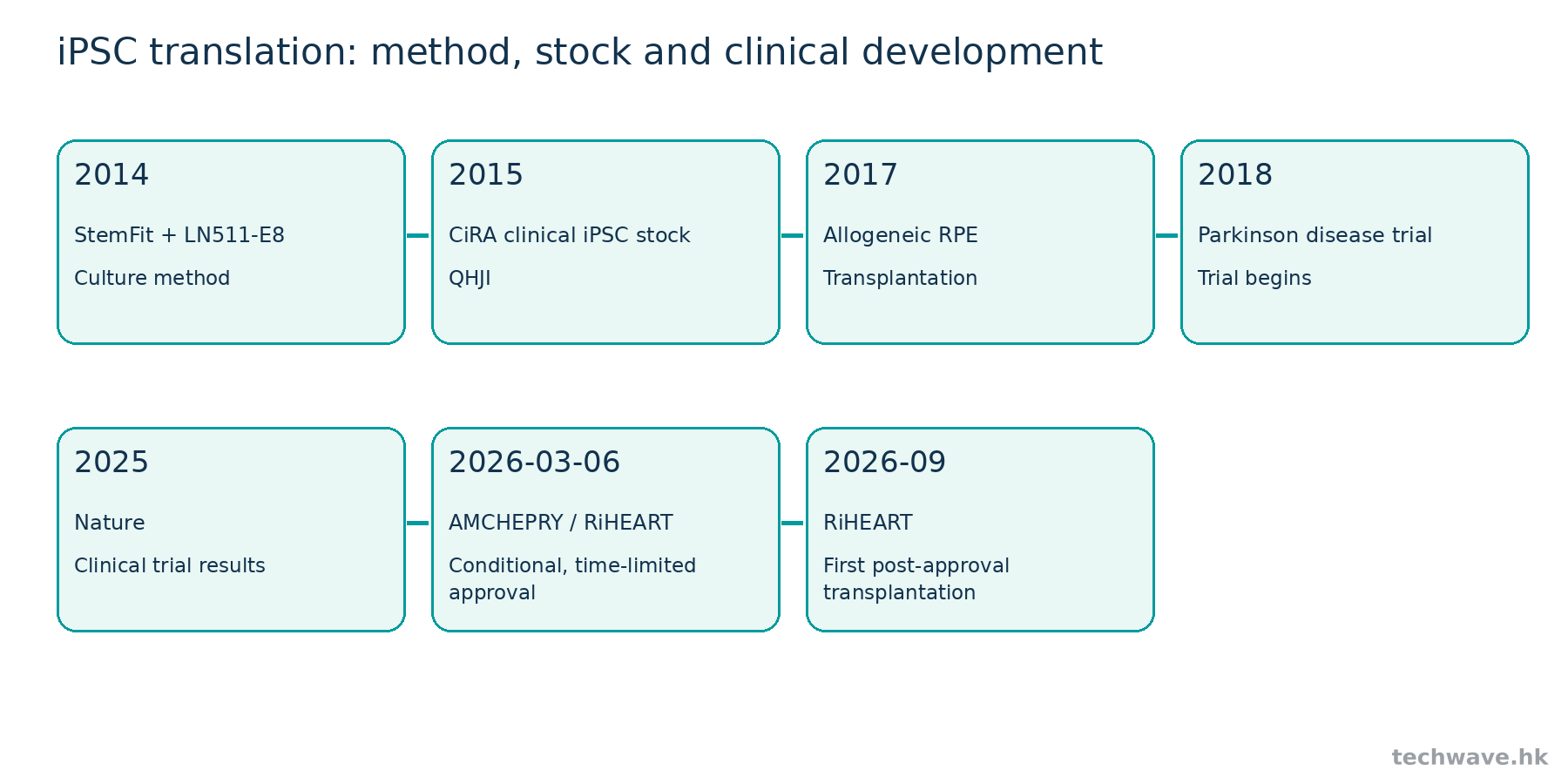
The specific culture-system versions and applications unfold from method development through stock production and clinical testing.
Link 1: the 2014 culture system designed for clinical-grade cells
Why replace feeders and Matrigel?
Conventional human ES/iPS culture relies on mouse feeder cells, themselves usually prepared in fetal-bovine-serum-containing medium. Clinical-grade cell production calls for reducing or removing serum and animal-derived materials [1]. Nakagawa and colleagues at CiRA reported testing most available substrates and xeno-free media in their laboratory without finding an effective combination [1].
Substrate screening selects LN511-E8; medium screening selects StemFit
- Substrates: Matrigel, CELLstart and recombinant LN511-E8 were compared. Single dissociated H9 human ES cells efficiently formed colonies only on LN511-E8, not on the other two substrates [1].
- Media: on LN511-E8, TeSR2 failed to maintain iPSCs; NutriStem produced flattened colonies. Their mixture supported ES-like colonies but left abundant intracellular granules and poor morphology. Newly developed Ajinomoto StemFit produced colonies resembling feeder-grown cells [1].
- Mechanism: replacing the C-terminal glutamate of the laminin γ1 chain with glutamine (the EQ mutant) abolishes LN511-E8 integrin binding. 201B7 iPSCs did not form colonies on EQ-mutant-coated plates [1], supporting a requirement for specific LN511-E8–integrin binding.
Key data: making iPSC culture more like routine cell-line culture
| Measure | Result [1] |
|---|---|
| Passaging | Single-cell dissociation and repeat seeding by exact cell count |
| Time to confluence | 8–10 days after seeding |
| Mean expansion per passage | 132-fold |
| Mean doubling time | 28.34 hours, faster than feeder culture |
| Split ratio | High viability allowed nearly 1:100 |
| Cryopreservation | Standard slow freezing at −80 °C, thawing in a 37 °C water bath |
| Long-term stability | Stable for 20–30 passages, retaining Oct3/4 and TRA-1-60; 201B7 at passage 54 retained three-germ-layer differentiation |
| Versus the earlier LN511-E8 method | Significantly better attachment at 6 hours after seeding |
The authors describe an easy-to-use, expandable and reproducible system that makes previously complex iPSC culture more like routine 293 or HeLa cell culture. It supports standardized operating procedures (SOPs) in cell processing centers (CPCs) and preparation of large early-passage clinical-grade stocks at one time [1]. Several other Japanese laboratories obtained similar results [1].
Deriving lines directly from somatic cells
Using episomal vectors in the same system, the researchers derived iPSCs from skin fibroblasts, peripheral-blood T cells, peripheral-blood non-T cells and cord blood. Clone morphology, pluripotency-marker expression and long-term stability resembled fibroblast-derived clones; karyotypes were normal. Teratomas demonstrated differentiation into all three germ layers [1]. Directed differentiation yielded TH-, Tuj1-, Nurr1- and Foxa2-expressing dopaminergic neurons under xeno-free conditions, as well as blood cells and insulin-producing cells [1].
One formulation detail matters: the 2014 StemFit contained human albumin, which the authors suggested might explain some performance differences from albumin-free E8 medium [1]. Ajinomoto's 2026 announcement describes StemFit as free of human- and animal-derived raw materials, with all components and concentrations defined [6]. These statements concern different product eras; selection should follow the current documentation for the purchased model.
Link 2: CiRA's clinical-grade iPSC stock
The 2014 discussion already proposed an HLA-homozygous iPSC bank to reduce immune rejection after transplantation [1]. CiRA's 2019 stock overview documents the implementation [2]:
- Donors: healthy individuals homozygous at HLA-A, HLA-B and HLA-DR, providing peripheral-blood mononuclear cells or cord blood. At publication, 36 donors representing 24 haplotypes had consented [2].
- Culture: after somatic-cell reprogramming, expansion used StemFit AK03 and the iMatrix-511 system; several iPSC colonies could be confirmed in approximately 25 days [2].
- Two-tier banking: all colonies were frozen at passage 1 as primary cell stock (PCS). Thawed PCS underwent single-cell or small-number clonal selection; 12–15 lines were selected and dispensed into approximately 70 vials at passage 7 as secondary cell stock (SCS) [2].
- Release and reference testing: release tests included morphology, HLA and STR identity, sterility, viruses, endotoxin (≤5 EU/mL) and mycoplasma. Reference assays included pluripotency markers, whole-exome/whole-genome sequencing and SNP arrays for SNV/Indel and CNV, karyotypes, residual vectors, post-thaw cell count and viability, and doubling time [2].
- Progress: the first clinical-grade stock, QHJI, carrying Japan's most frequent HLA haplotype, was released in August 2015. When the 2019 review was published, 21 clones from 5 donors were available, covering approximately 32% of Japan's population. Clinical-grade stocks served 12 academic and company projects, and research-grade stocks a further 32. The first allogeneic iPSC-derived retinal pigment epithelial transplantation in March 2017 used QHJI [2].
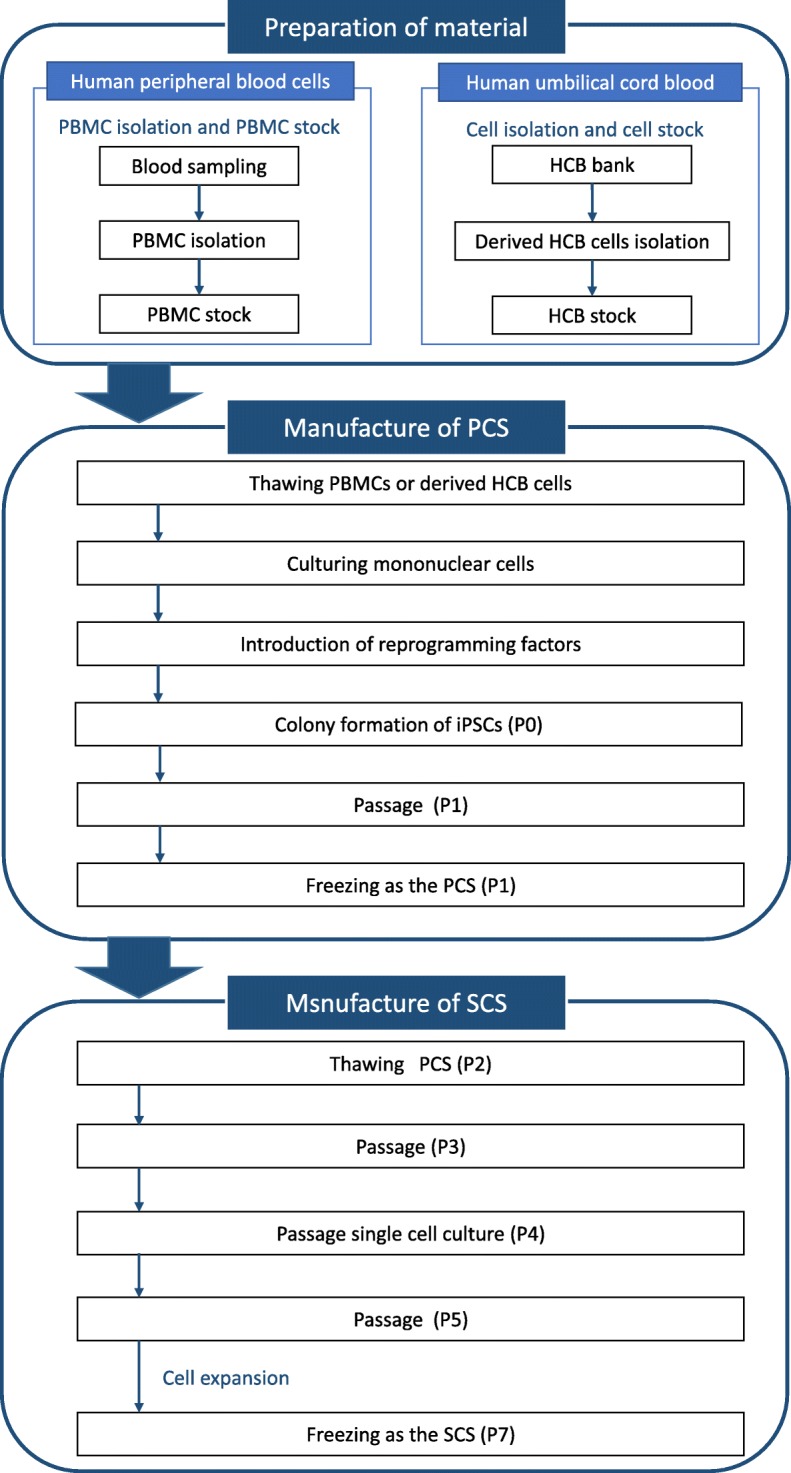
The CiRA review also identifies an unresolved issue: partner institutions using their own differentiation protocols observed differences in differentiation efficacy and potency even among the same donor and similar lines. Donor, cell-line and institutional culture techniques may contribute, but the details remain unclear [2]. This is precisely where standardized upstream culture offers value.
CiRA Foundation's published daily culture protocol
The Foundation's feeder-free protocol, created in 2021 and revised in November 2023, translates this system into practical culture steps [4]:
| Step | Protocol parameters [4] |
|---|---|
| Medium | StemFit AK03N: mix A, 400 mL; B, 100 mL; C, 2 mL |
| Coating | Per well, 1.5 mL PBS with 9.2 µL iMatrix-511; at least 1 hour at 37 °C; rinse with 0.75 mL StemFit and aspirate before seeding |
| Seeding after thawing | 65,000 viable cells per 6-well-plate well, with 10 µM Y-27632 |
| Medium exchange | Next day, Y-27632-free StemFit, 3 mL/well; exchange on days 1, 4 and 5 for day-6 passage, or days 1, 4 and 6 for day-7 passage |
| Passage | Usually day 6 or 7; a 0.5× working solution prepared by mixing stock TrypLE Select solution 1:1 with 0.5 mM EDTA/PBS, for up to 10 minutes; PBS wash, scrape in StemFit and pipette 10 times; seed 13,000 viable cells/well in a 6-well plate |
| Freezing | 2.4E5 cells/vial, resuspended at 1.2E6 cells/mL in STEM-CELLBANKER; 200 µL/vial, −80 °C in a controlled-cooling container, transfer to liquid nitrogen within a few days |
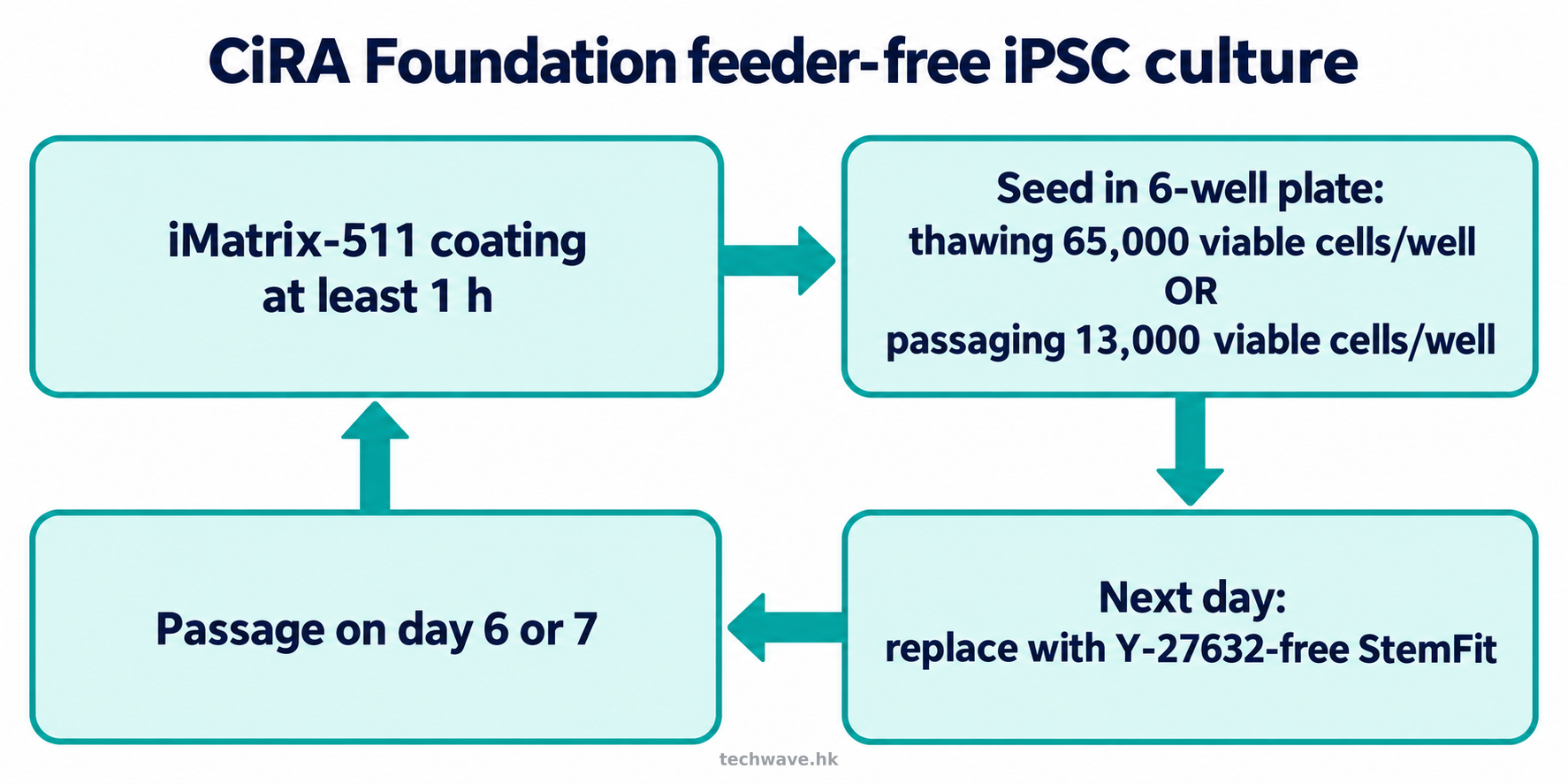
The cell scraper is worth noting: iPSCs attach firmly to LN511-E8 and usually require mechanical collection after enzyme treatment. Strong attachment is an asset, and a practical step to optimize.
Link 3: the Parkinson's trial specifies its culture system
Kyoto University's phase I/II Parkinson's trial was published in Nature in 2025 [3]. Its methods specify:
- Clinical-grade QHJI01s04 originated from peripheral blood of a healthy donor homozygous for Japan's most frequent HLA haplotype, matching approximately 17% of the population.
- A master cell bank (MCB) was created; one vial was thawed to induce cells for each patient.
- Human iPSCs were maintained in StemFit AK03N on iMatrix-coated 6-well plates.
- At differentiation day 0, iPSCs were seeded at 5.3E5 cells/cm² on laminin-511 E8-coated plates; CORIN-positive sorting enriched dopaminergic progenitors after 11–13 days [3].
Both stock maintenance and differentiation initiation therefore used StemFit/LN511-E8 upstream. Cells for PD01–PD03 were manufactured at Kyoto University, and those for PD04–PD08 at Sumitomo Pharma (raguneprocel) [3].
Seven patients aged 50–69 received bilateral transplantation and 24-month follow-up. No tumors were observed, and MRI showed no graft overgrowth. Among six efficacy-evaluable patients, four improved on MDS-UPDRS part III OFF and five on ON scores. Mean improvements were 9.5 points (20.4%) OFF and 4.3 points (35.7%) ON. Mean putaminal ¹⁸F-DOPA influx rate constant (Ki) increased by 44.7%, with larger increases in the high-dose group [3].
This was a single-center, small-sample, open-label trial without a control group. Safety was the primary endpoint: all 7 patients experienced adverse events, with 73 events recorded (72 mild and 1 moderate) and no serious adverse events; dyskinesia worsened in most patients. Placebo effects and observer bias may have influenced the improvements, which require confirmation in larger, multicenter studies with appropriate controls [3].
Sumitomo Pharma applied on August 5, 2025 using this investigator-initiated trial's data, receiving conditional, time-limited approval on March 6, 2026. Sumitomo Pharma is responsible for marketing and S-RACMO for manufacturing; post-marketing clinical study and surveillance are planned to obtain full approval within the designated period [5].
Link 4: RiHEART and StemFit AK03N
Ajinomoto's October 16, 2026 announcement states [6]:
- Since 2015, it has supplied StemFit for research and practical implementation of iPSC regenerative medicine and cell therapy.
- Cuorips' iPSC-derived cardiomyocyte sheet RiHEART received conditional, time-limited approval. StemFit AK03N was used as the iPSC culture medium in development and manufacturing, and the first transplantation took place in September 2026.
- StemFit is registered in PMDA's master-file (MF) system. Ajinomoto also offers regulatory support: information required for applications and assistance responding to review inquiries.
Applications of the culture system and cell-therapy products
| Application stage | Disclosed scope |
|---|---|
| CiRA clinical iPSC stock | StemFit AK03 and iMatrix-511 [2]; the 2026 approvals concern cell-therapy products [5][6][8] |
| Parkinson's clinical trial | Clinical cells maintained with StemFit AK03N + iMatrix and differentiation initiated on LN511-E8 [3]; individual commercial AMCHEPRY manufacturing materials are not publicly disclosed |
| RiHEART development and manufacturing | Ajinomoto confirms StemFit AK03N, without disclosing the substrate [6] |
| Medium regulatory-document support | Ajinomoto reports PMDA MF registration and support with application information and review inquiries [6] |
What the chain means for your project
- Clinical-translation-oriented iPSC projects: StemFit AK03N + iMatrix-511 has an upstream precedent in Kyoto's trial; approved RiHEART separately has confirmed StemFit AK03N use in development and manufacturing. The published CiRA protocol and research offer a direct starting point and reduce method-development work.
- Single-cell passaging with precise counts: LN511-E8 attachment supports count-based seeding and near-1:100 splitting [1], fitting standardized, comparable cell-bank production.
- Differentiation: the Parkinson's trial also used LN511-E8 on day 0 [3], extending its application beyond maintenance into differentiation initiation; the specific differentiation protocol still depends on the target cell.
- Regulatory documentation: discuss the corresponding model's MF registration and available supporting documents with the manufacturer during selection [6].
Frequently asked questions
How do StemFit AK03 and AK03N differ?
The CiRA stock overview specifies AK03 [2]; the Parkinson's paper and current Foundation protocol specify AK03N [3][4], as does Ajinomoto for RiHEART [6]. They are different versions in the same series. Formulation differences should follow Ajinomoto's product documentation; a new project can generally start from the current AK03N protocol.
How does iMatrix-511 differ from full-length laminin-511?
iMatrix-511 contains the laminin-511 E8 fragment, the key integrin-binding region. The 2014 paper states that recombinant LN511-E8 is easier to isolate and gives greater yield and purity than full-length laminin-511 [1]. Earlier research established efficient attachment and expansion of dissociated human pluripotent cells using LN511-E8 [7].
Does the same culture system produce the same clinical outcome?
No. Culture is only one upstream component. The CiRA overview notes institutional differentiation differences even among the same donor and similar cell lines [2]. Cell origin, differentiation, quality testing and process control also determine the final product.
Conclusion
From the 2014 method to CiRA's clinical iPSC stock and Kyoto's Parkinson's trial, published records repeatedly identify StemFit medium and LN511-E8 (iMatrix-511). The two approvals in 2026 give this chain an industrial endpoint: AMCHEPRY's application relied on a trial that specifies the system, while RiHEART development and manufacturing used StemFit AK03N. For teams planning clinical-grade iPSC processes, this is one of the most fully documented upstream approaches currently available.
Plan your upstream iPSC system with TechWave
Developing a clinical-grade or GMP-oriented iPSC process? TechWave can provide Ajinomoto StemFit and Matrixome iMatrix laminin-fragment product information and help compare model selection, coating quantities and passage parameters with CiRA's published protocol. Bring your cell source, culture scale and differentiation target to the discussion.
References
- Nakagawa M, Taniguchi Y, Senda S, et al. A novel efficient feeder-free culture system for the derivation of human induced pluripotent stem cells. Sci Rep. 2014;4:3594. doi:10.1038/srep03594
- Umekage M, Sato Y, Takasu N. Overview: an iPS cell stock at CiRA. Inflamm Regen. 2019;39:17. doi:10.1186/s41232-019-0106-0
- Sawamoto N, Doi D, Nakanishi E, et al. Phase I/II trial of iPS-cell-derived dopaminergic cells for Parkinson's disease. Nature. 2025;641:971–977. doi:10.1038/s41586-025-08700-0
- CiRA Foundation. Protocol for Feeder-Free culturing of human iPS cells. Created August 4, 2021; revised November 30, 2023.
- Sumitomo Pharma Co., Ltd.; RACTHERA Co., Ltd. Announcement on the Approval for Manufacturing and Marketing Authorization of the Allogeneic iPS Cell-Derived Dopaminergic Neural Progenitor Cell Product "AMCHEPRY®" in Japan. March 6, 2026.
- Ajinomoto Co., Inc. Contribution to the practical implementation of Cuorips' iPSC-derived cardiomyocyte sheet through iPSC culture-medium technology. October 16, 2026.
- Miyazaki T, Futaki S, Suemori H, et al. Laminin E8 fragments support efficient adhesion and expansion of dissociated human pluripotent stem cells. Nat Commun. 2012;3:1236. doi:10.1038/ncomms2231
- Cuorips Inc. Notice of conditional and time-limited manufacturing and marketing approval for the human (allogeneic) iPS cell-derived cardiomyocyte sheet [in Japanese]. March 6, 2026. https://tdnet-pdf.kabutan.jp/20260306/140120260306577169.pdf
Uses and applicable scenarios
- Derivation, expansion and cryopreservation of clinical-grade or GMP-oriented iPSC stocks
- Standardized iPSC maintenance based on single-cell passaging and precise seeding counts
- Upstream culture for cell-therapy development requiring raw-material traceability and regulatory documentation
- Directed differentiation from pluripotent cells, including dopaminergic neural progenitors and cardiomyocytes
Limitations
- AMCHEPRY's application relied on the Kyoto University Hospital investigator-initiated trial, whose paper specifies cell maintenance conditions; individual materials used in commercial manufacturing have not been publicly disclosed
- Ajinomoto confirms StemFit AK03N in RiHEART development and manufacturing but does not disclose the culture substrate
- Doubling time and expansion data from the 2014 paper concern the then-current StemFit formulation and research recombinant LN511-E8, not specifications of every current product model