
Technical column
Human AB Serum Sits Upstream, Yet It Can Still Stall a CGT IND or BLA: What a DMF Does, What It Cannot Do for You, and GeminiBio's Path from Research-Grade to Clinical-Grade Serum and Documentation
In cell and gene therapy (CGT) programmes, human AB serum is often used to culture and expand T cells, NK cells and other cells. Although it sits upstream, the FDA treats it as a reagent/ancillary material that may affect final-product safety, potency and purity, and looks at donor source, screening, testing and traceability. A Drug Master File (DMF) lets a supplier submit confidential manufacturing and quality information directly to the FDA, which sponsors can cross-reference with a letter of authorization (LOA), reducing duplicated preparation of underlying data; but a DMF is not separately approved by the FDA and does not replace the sponsor's own account of use, amount, incoming inspection and change control. GeminiBio submitted a DMF for its cGMP-grade human serum to the FDA in 2025 and offers a human AB serum range from research grade to clinical/commercial grade.
Definition
A Drug Master File (DMF) is a confidential technical submission made directly to the FDA by a raw-material or related manufacturer; with a letter of authorization (LOA) it can be cross-referenced by IND, BLA and other submissions, but it is not a standalone marketing application and is not separately approved or rejected by the FDA.
In human cell and gene therapy (CGT) programmes, human AB serum is often used to culture and expand T cells, NK cells and other cells. It sits upstream in the process, but that does not mean regulators pay it less attention — the closer a programme gets to the clinic and commercialization, the more its source, quality and change control need an auditable, traceable documentation chain.
1. Where Human AB Serum Sits in CGT CMC Regulation
In its CMC guidance for human gene therapy INDs, the FDA classes serum, media, cytokines, enzymes, antibodies and similar materials as reagents/ancillary materials used in manufacturing, noting that they can affect final-product safety, potency, purity and process reproducibility through adventitious agents, impurities or lot-to-lot variation [1].
For human-derived materials, regulatory attention usually extends further to donor source, collection facility, donor screening, pathogen testing, manufacturing, lot release and traceability. The FDA's guidance for somatic cell therapy INDs also states that CMC information should list the reagents used in manufacturing with their suppliers, sources and quality certification; for human AB serum, the serum source and donor criteria need attention [2].
The key question for human AB serum is therefore not whether it remains in the final cell product, but whether it is an important input that could affect manufacturing and final-product quality.
2. What a DMF Does, and Where Its Responsibility Ends
A Drug Master File (DMF) is a confidential technical submission made directly to the FDA by a raw-material or related manufacturer. The FDA's current description states that a DMF can provide detailed confidential information about facilities, processes or materials used in manufacturing, processing, packaging and storing drugs, and can be referenced by IND, BLA and other submissions; a DMF is not itself a standalone marketing application and is not separately "approved" or "rejected" by the FDA [3][4].
The mechanism is just as useful for human AB serum: cell therapy developers must describe the quality and safety of the serum they use to the FDA, while serum suppliers generally cannot hand every customer their full manufacturing process, supply-chain details and internal quality-system documents. The main value of a DMF is that the supplier submits sensitive information directly to the FDA, and customers, once authorized, cross-reference it in their submissions — protecting trade secrets while letting reviewers see the full underlying quality data.
A DMF Reduces Duplicated Work but Does Not Replace the Sponsor's Responsibility
"Supported by a DMF" and "the submission meets regulatory requirements" must be kept apart. A DMF addresses how data are organized, kept confidential and referenced; it does not mean a CGT programme using the material is automatically accepted. The sponsor still has to describe the serum's use in its own process, the stage at which it is used, the addition ratio or amount, the rationale for supplier selection, incoming inspection, storage conditions, change management and the material's potential impact on the cells' critical quality attributes and final-product quality.
| Submission focus | What the sponsor prepares | What a DMF can support |
|---|---|---|
| Material identity and use | Product name, catalogue number, supplier, manufacturing step used | Supplier's underlying product and manufacturing information |
| Source and safety | Human origin, donor/collection and pathogen risk assessment | Confidential source-control, manufacturing and testing data |
| Lot quality | CoA, incoming release, key attributes and lot trends | Supplier specifications, test methods and quality-system information |
| Change control | Assessment and bridging strategy after supplier, catalogue or process changes | DMF holder maintains the file and updates the FDA |
| Regulatory communication | Explaining the reference and own risk controls in the IND/BLA | LOA authorizing the FDA to review the DMF |
3. GeminiBio's DMF Support for Human AB Serum
In 2025 GeminiBio publicly announced that it had submitted a DMF to the US FDA supporting its cGMP-grade human serum products, to help cell therapy developers reference supplier information on human serum manufacturing, quality and compliance in their IND and BLA files [5]. Its "Bench to BLA" programme also lists the clinical-grade human AB serum DMF, gamma-irradiation validation for catalogue bottled products and direct scientific support as regulatory support [6].
GeminiBio's range includes:
- Research grade: GemCell Human Serum AB (100-512);
- For clinical/commercial processes: Human Serum AB Off-The-Clot (100-318), GemCell Plus Xeno-Free (100-912) and GemCell Plus Xeno-Free, World Grade (100-916).
The point of this tiered range is not just different grades; it lets development teams consider their future raw-material path during research, reducing the risk of being forced to change serum after entering the clinic.
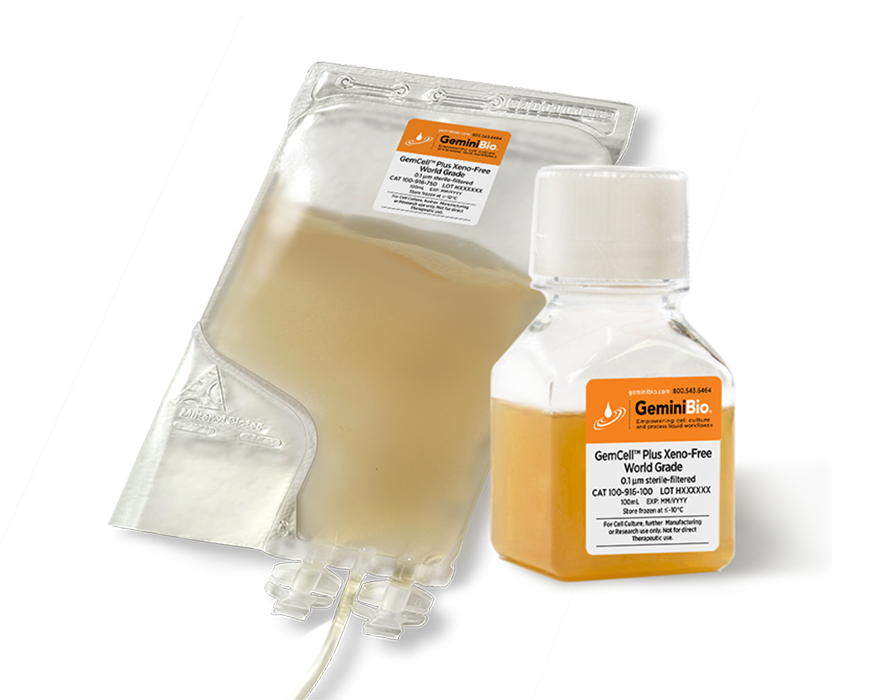
Figure 1. Examples of GeminiBio human AB serum products
4. From IND to BLA: Preparing Serum Documentation in Stages
CMC requirements for CGT products are not fixed at the outset. According to the source material, the FDA's final guidance published in 2026 on CMC flexibilities for developing CGT products for a BLA emphasizes that CMC requirements mature over the development life cycle: early stages allow some development flexibility, but as a programme advances, more mature process controls, specifications and validation evidence are needed [7].
For human AB serum selection and documentation, early development can first verify cell growth and process fit, but if the product is clearly headed for the clinic and commercialization, "future fileability" should become a selection criterion early. A more robust approach is to include donor source, animal-derived components, viral safety, lot size, packaging, supply stability and regulatory files such as DMF/LOA in selection, rather than checking supplier documents only at the Pre-IND or IND stage.
A complete serum documentation package should cover:
- Product technical information: product name, catalogue number, grade, source, manufacturing method, storage and use conditions;
- Lot quality information: CoA/CoO, release tests, key quality attributes and trend analysis where needed;
- Supplier quality information: quality system, manufacturing site, donor/raw-material source control, audit and change-notification arrangements;
- Risk information: pathogen risk of human material, donor-pool strategy, animal-derived component risk, gamma irradiation or other risk-reduction measures;
- Regulatory information: whether the DMF covers the intended clinical-grade product, the LOA process, and whether the supplier can respond to questions during review.
Conclusion
For CGT developers, choosing human AB serum cannot be only about cell expansion and purchase price. What determines how efficiently an IND or BLA advances is whether product performance, quality system, supply stability and regulatory documentation line up along one continuous path. A DMF is not an "FDA approval certificate", but it lets the supplier's confidential manufacturing and quality information enter the submission in a form regulators can review, reducing the burden of collecting and reorganizing underlying data yourself.
Let TechWave Help You Plan Your Human AB Serum Filing Path
If your T cell, NK cell or other CGT programme uses human AB serum and plans to advance an IND or BLA, contact TechWave. We can help compare specifications and quality documents for GeminiBio research-grade and clinical-grade human AB serum, map DMF coverage and the LOA process, plan a serum documentation package for your development stage, and arrange a quotation.
References
- FDA. Chemistry, Manufacturing, and Control (CMC) Information for Human Gene Therapy INDs.
- FDA. Content and Review of CMC Information for Human Somatic Cell Therapy INDs.
- FDA. Drug Master Files (DMFs).
- FDA. Guideline for Drug Master Files.
- GeminiBio. GeminiBio Submits Drug Master File (DMF) to FDA.
- GeminiBio. Bench to BLA: Clinical Grade Human AB Serum Regulatory Support.
- FDA. CMC Flexibilities for Developing Human CGT Products for a BLA.
Uses and applicable scenarios
- Selecting human AB serum and other human-derived raw materials for CGT programmes
- Preparing raw-material documentation packages for IND/BLA submissions
- Checking supplier DMFs and planning LOA-based cross-referencing
- Planning the raw-material path from research-grade to clinical-grade serum
Limitations
- DMF support does not mean a submission using the material already meets regulatory requirements
- The sponsor must still describe the serum's use, amount, incoming inspection and change control in its own process
- DMF coverage must be checked for each specific product intended for use