
Products
StemFit™ For Differentiation (GMP)
Defined, animal-origin-free 5× supplement for human ES/iPS differentiation, with basal-medium flexibility and evidence across three germ layers.
Product information
- Brand
- Ajinomoto StemFit
- Catalog no.
- StemFit™ For Differentiation
- Specification
- 100 mL, 5× concentrate
A defined bridge from hPSC expansion to differentiation
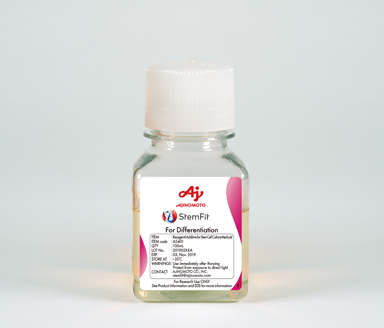
StemFit™ For Differentiation (GMP) is an animal-origin-free (AOF), defined supplement for human embryonic stem (ES) and induced pluripotent stem (iPS) cell differentiation. Combined with StemFit expansion media, it supports an AOF culture system spanning expansion and differentiation of hPSC-derived cells and tissues. The catalogue identifier is StemFit™ For Differentiation. It is for research and further manufacturing use.
Formulation and basal-medium choices
| Item | Specification |
|---|---|
| Catalogue identifier | StemFit™ For Differentiation |
| Volume | 100 mL |
| Concentration | 5× |
| Frozen storage | Below −20 °C |
| Usual final proportion | 20% |
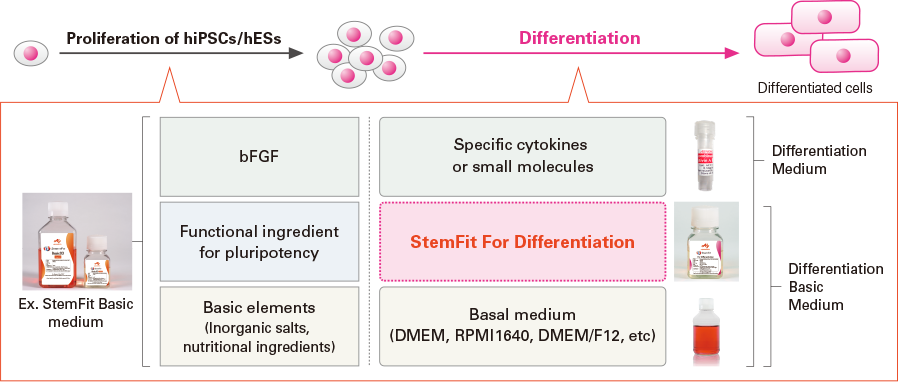
The formulation excludes serum and human- or animal-derived components. A defined composition reduces lot-to-lot variation associated with undefined supplements and lowers the risk of immunogenic contamination associated with those components. Basal-medium options include DMEM/F12, RPMI1640 and DMEM; lineage-specific cytokines or small molecules are selected separately. The supplement is not a complete, universal differentiation medium.


Hematopoietic progenitor-cell differentiation
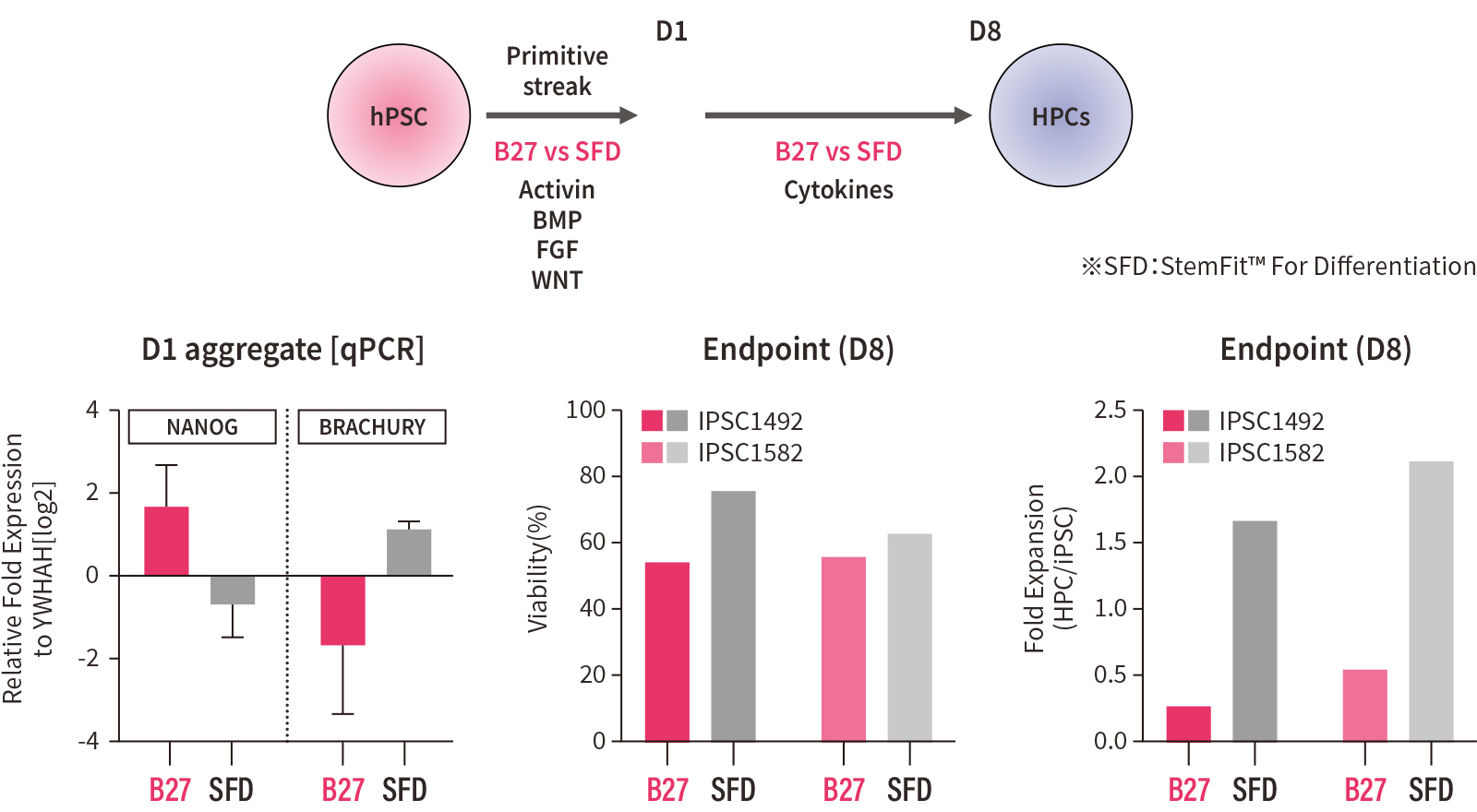
Century Therapeutics evaluated iPSC-to-hematopoietic progenitor cell (HPC) differentiation to improve downstream T-cell differentiation efficiency. In an 8-day comparison, StemFit For Differentiation increased HPC yield and supported lymphoid differentiation. The comparison covers IPSC1492 and IPSC1582, Day 1 NANOG/BRACHYURY expression, and Day 8 viability and HPC/iPSC fold expansion, with B27 as comparator.
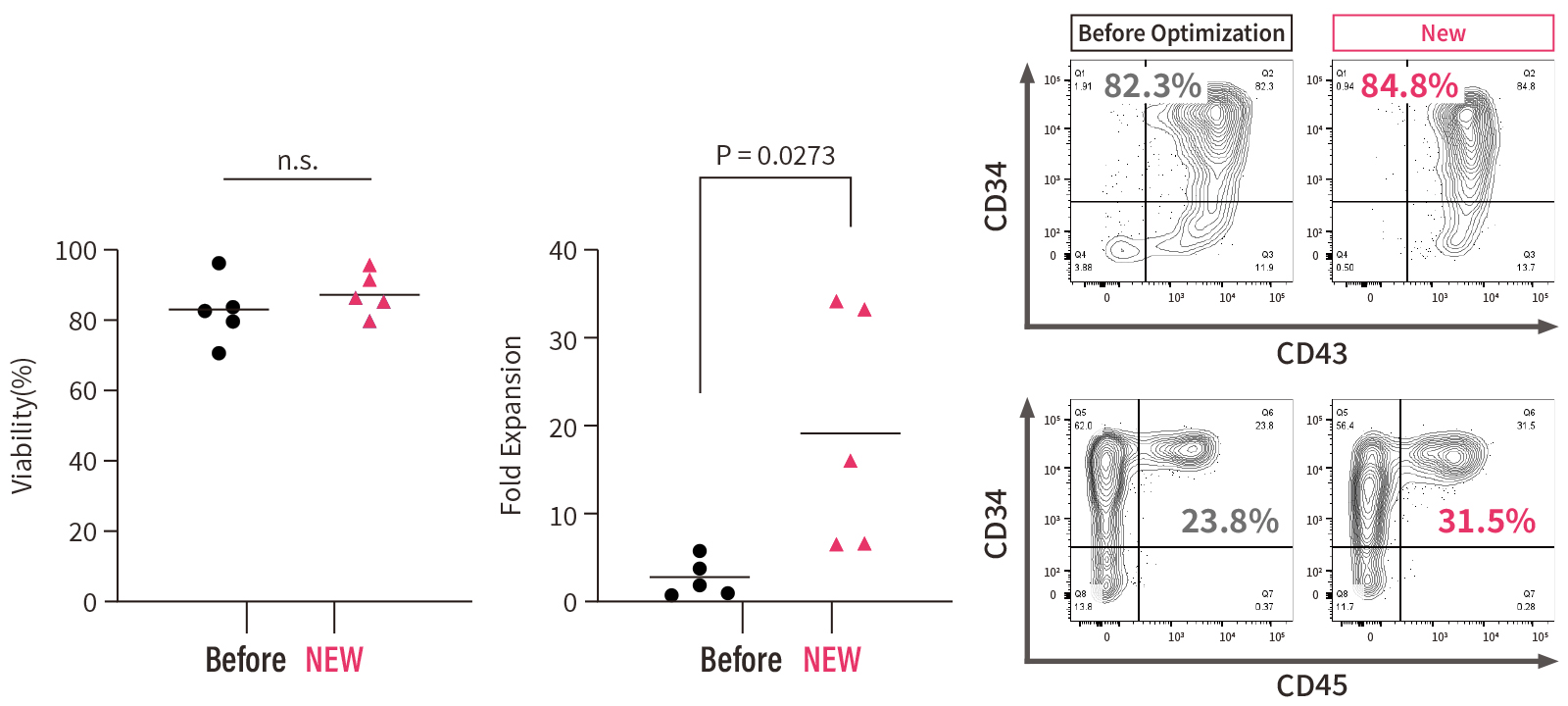
A subsequent optimized differentiation process increased HPC yield while maintaining viability and the CD34+CD43+ population. The trend was reproduced across multiple iPSC lines, including PiPSCs and TiPSCs, and operators with different experience levels. These are user-led differentiation results, not a universal yield specification.
Directed and spontaneous differentiation
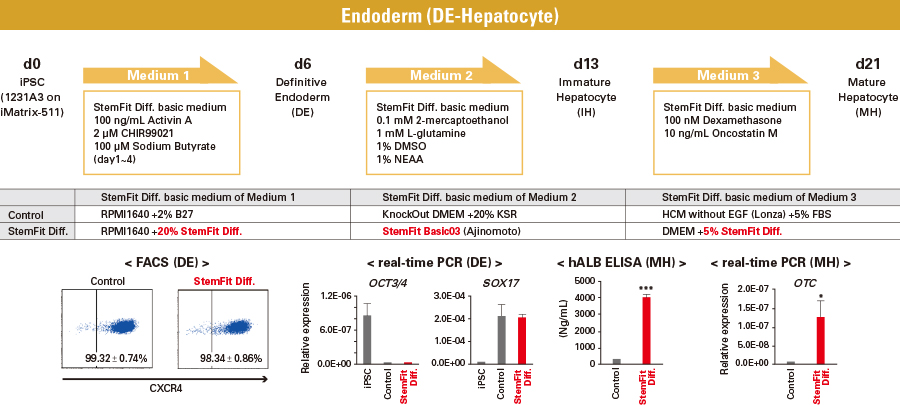
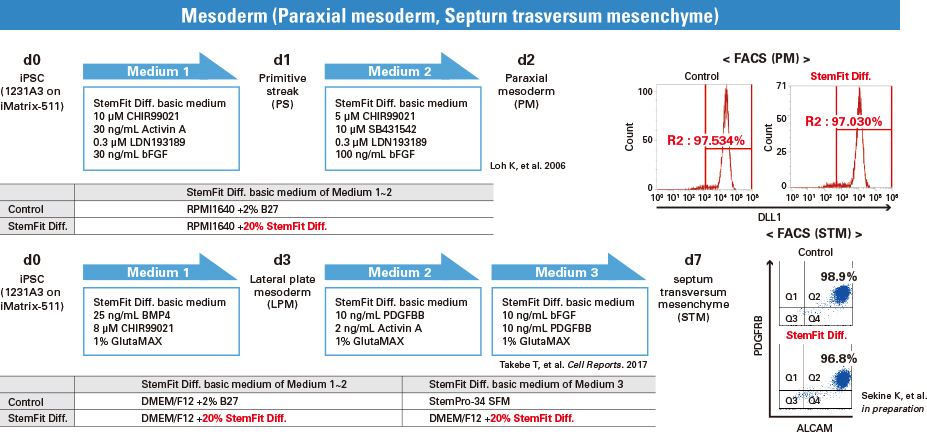
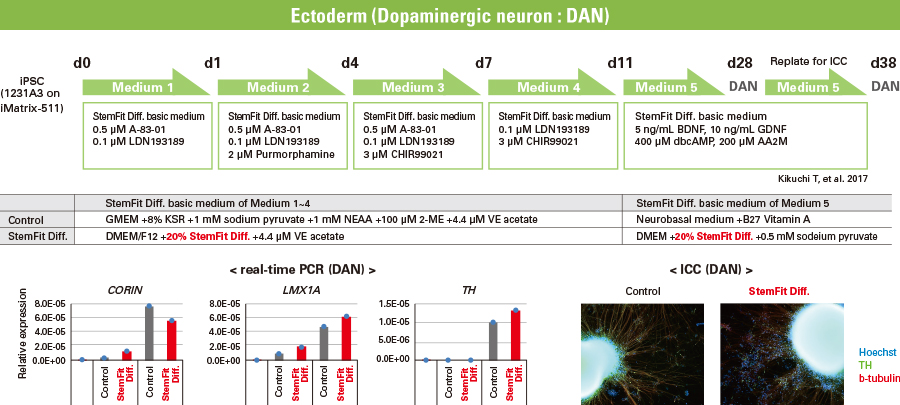
The supplement can replace a serum-free supplement in lineage-specific differentiation. Demonstrated examples include definitive endoderm and hepatocytes, paraxial mesoderm and septum transversum mesenchyme, and dopaminergic neurons. The individual applications use different basal media and induction factors; some protocols require optimization.
For endoderm/hepatocyte differentiation, the 1231A3 example follows definitive endoderm at day 6, immature hepatocytes at day 13 and mature hepatocytes at day 21. CXCR4 positivity is 99.32 ± 0.74% in the control and 98.34 ± 0.86% with StemFit Diff.; additional readouts include OCT3/4, SOX17, albumin, CYP3A4 and OTC. Mesoderm examples assess DLL1-positive paraxial mesoderm and PDGFRα/ALCAM-positive septum transversum mesenchyme. The neuronal example follows CORIN, LMX1A and TH expression and Hoechst/TH/β-tubulin staining.
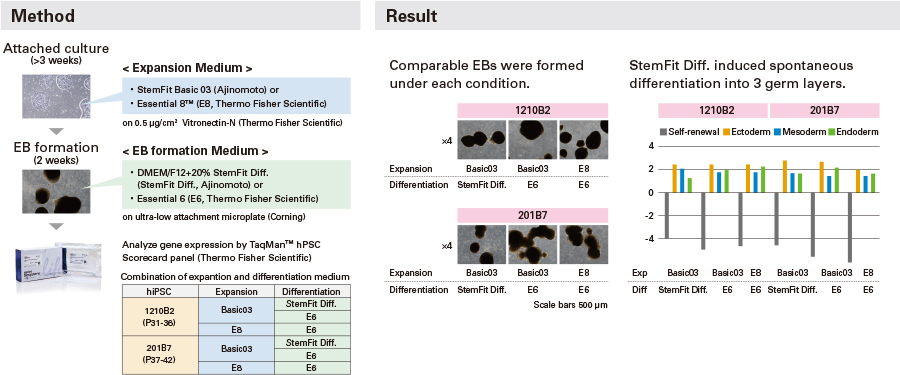
Spontaneous differentiation through embryoid body (EB) formation was evaluated in 1210B2 and 201B7. Cells expanded in Basic03 or Essential 8 were compared using StemFit Diff. or Essential 6 for EB formation. Comparable EBs and TaqMan hPSC ScoreCard results supported differentiation into all three germ layers.
Preparation, storage and quality
Thaw the frozen concentrate at 15–25 °C with occasional mixing, or overnight at 4 °C. Do not thaw at 37 °C. Mix 100 mL of 5× supplement with 400 mL basal medium to make 500 mL differentiation basal medium. If precipitation occurs, allow it to dissolve at room temperature. Add the induction factors appropriate to the intended lineage.
The concentrate and prepared basal medium may be aseptically aliquoted for storage below −20 °C. Once an aliquot is thawed, store at 2–8 °C for up to 2 weeks and do not refreeze. Protect from light. Bring the working aliquot to room temperature and use immediately.
The quality management system follows the Ajinomoto System of Quality Assurance (ASQUA). Manufacturing and product release testing are managed under Ajinomoto’s GMP standards for regenerative-medicine culture media, prepared with reference to ICH Q7 and PMDA guidance for aseptic manufacturing of regenerative-medicine products.
Product documents
- Publications using StemFit For Differentiation
- Brochure
- Safety data sheet
- GMP statement
- Product information and protocol