
Products
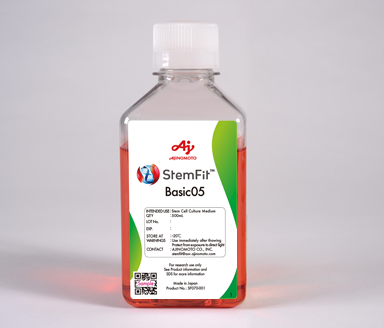
StemFit™ Basic05
Animal-origin-free, defined hPSC medium for 2D adherent and 3D suspension culture; 500 mL, without bFGF, for research use only.
Product information
- Brand
- Ajinomoto StemFit
- Catalog no.
- SF051-001
- Specification
- 500 mL
One medium for 2D and 3D hPSC culture
StemFit™ Basic05 is an animal-origin-free (AOF), defined medium for human pluripotent stem cell (hPSC) expansion. It supports both 2D adherent and 3D suspension culture, allowing the same basal medium to accompany early development and process scale-up. The intended benefits are reproducible growth, uniform spheroid formation, retained differentiation potential and less redevelopment when changing culture mode.
| Item | Specification |
|---|---|
| Catalogue number | SF051-001 |
| Volume | 500 mL |
| Frozen storage | −20 °C |
| bFGF / alternative peptide | Neither included |
| Intended use | Research use only |
Basic05 is not intended for human or animal diagnostic or therapeutic use. Its potential role in clinical-manufacturing process development does not change the RUO status of this product. Information on GMP-compliant products is available by enquiry.




Growth-factor supplementation and preparation
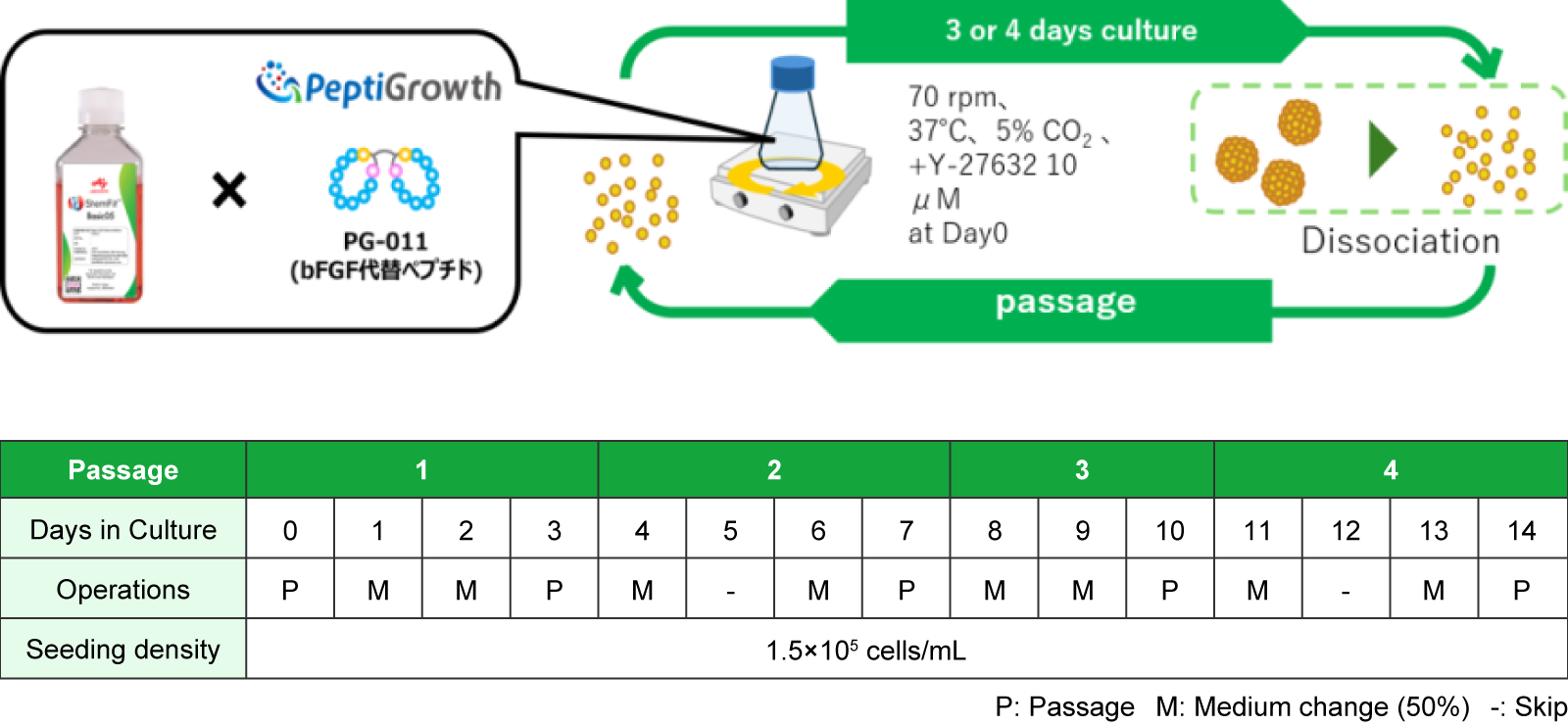
Maintenance of the undifferentiated state requires bFGF signalling. Add bFGF or the FGF2 alternative PG-011; neither is present in the supplied bottle. The product information recommends PG-011 at a final 10–30 ng/mL. PG-011 is a PeptiGrowth FGFR1c agonist peptide, available separately in research, bulk-supply and GMP-grade offerings for relevant applications; its suitability and grade are confirmed with PeptiGrowth.
Thaw Basic05 at 15–25 °C or overnight at 2–8 °C, mix thoroughly and dissolve precipitate at room temperature. Do not thaw at 37 °C. Aseptic aliquots may be stored at −20 °C; thawed medium may be held at 2–8 °C for up to 2 weeks. Protect from light, equilibrate the working portion to room temperature and use promptly.
Repeated 3D expansion and pluripotency
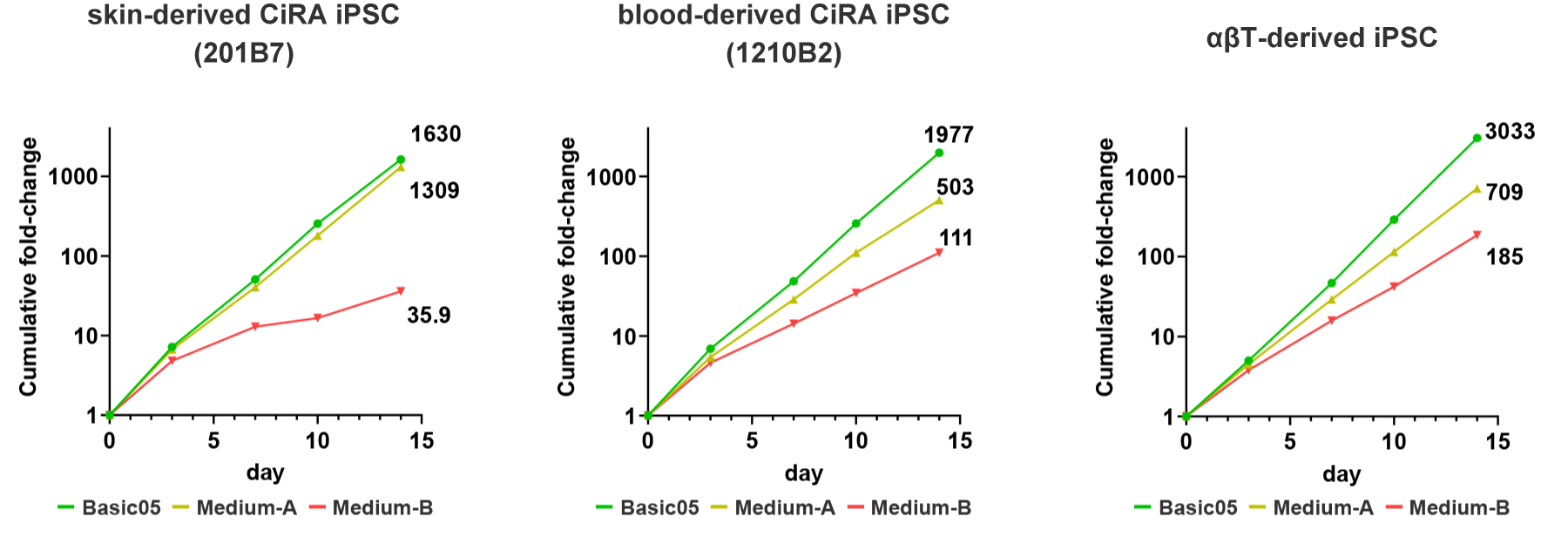
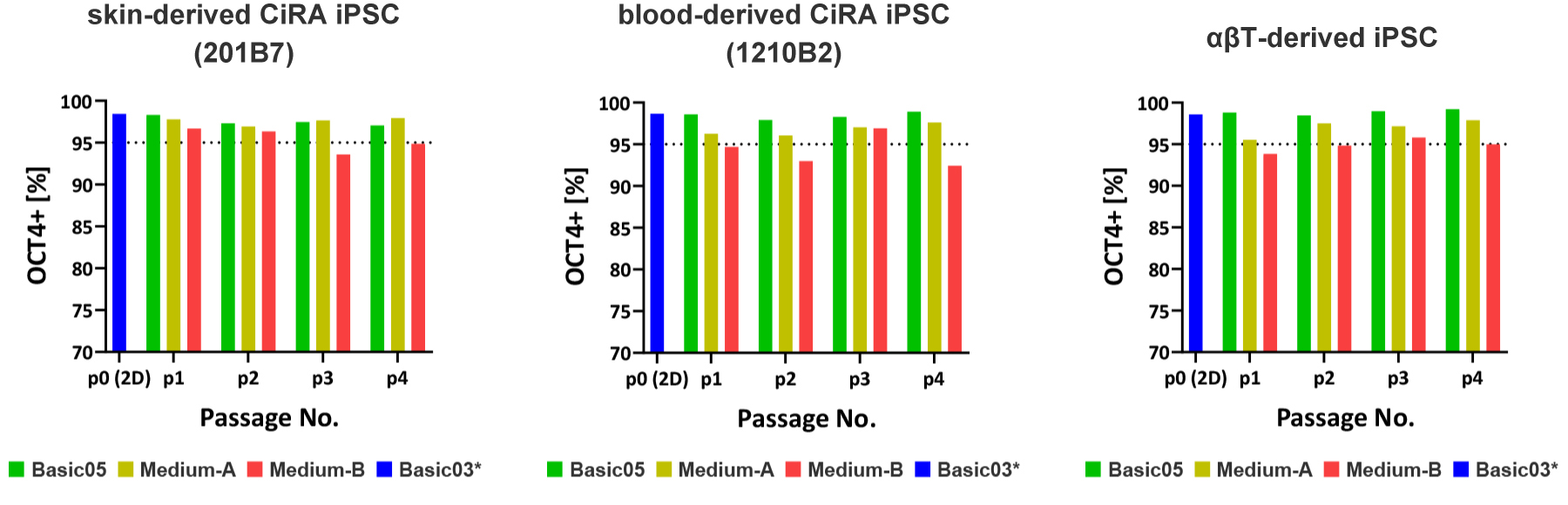
The 3D comparison uses Basic05 and two comparator media, Medium-A and Medium-B, in orbital-shaken 125 mL flasks over 4 passages. The growth panel labels 201B7, 1210B2 and an αβT-derived iPSC line. End-point cumulative expansion values for Basic05 / Medium-A / Medium-B are 1630 / 1309 / 35.9, 1977 / 503 / 111, and 3033 / 709 / 185 respectively. OCT4-positive fractions remain high across passages; Basic03 supplies the initial 2D reference. These values belong to this comparison, not a minimum expansion specification.
Viability, spheroid morphology and karyotype
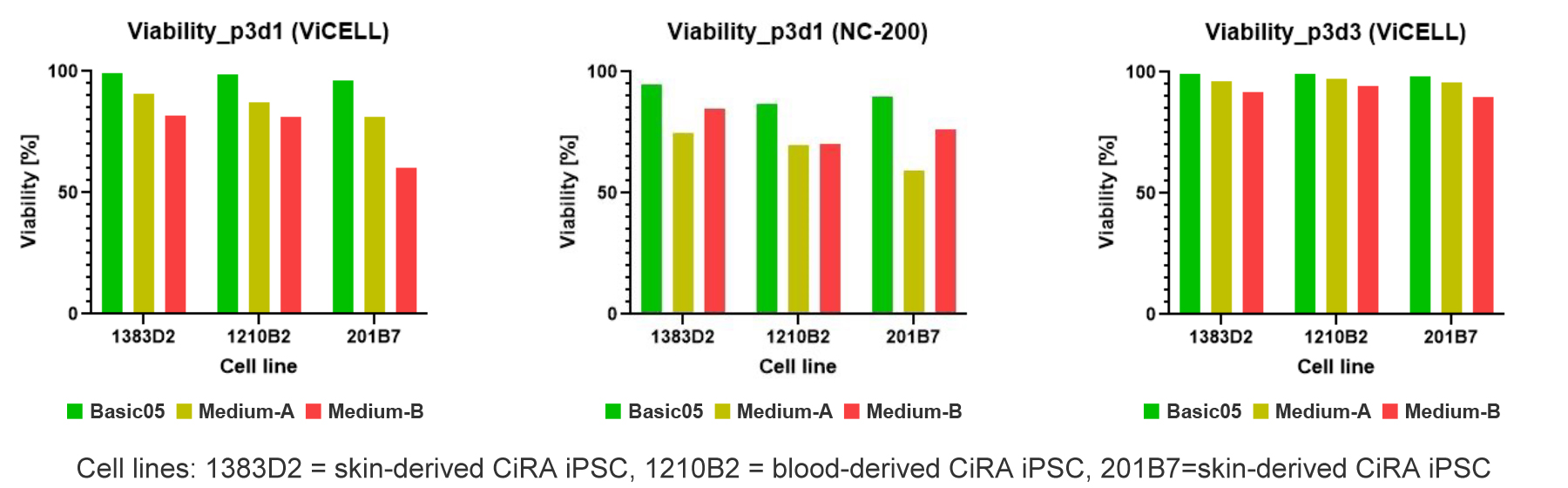
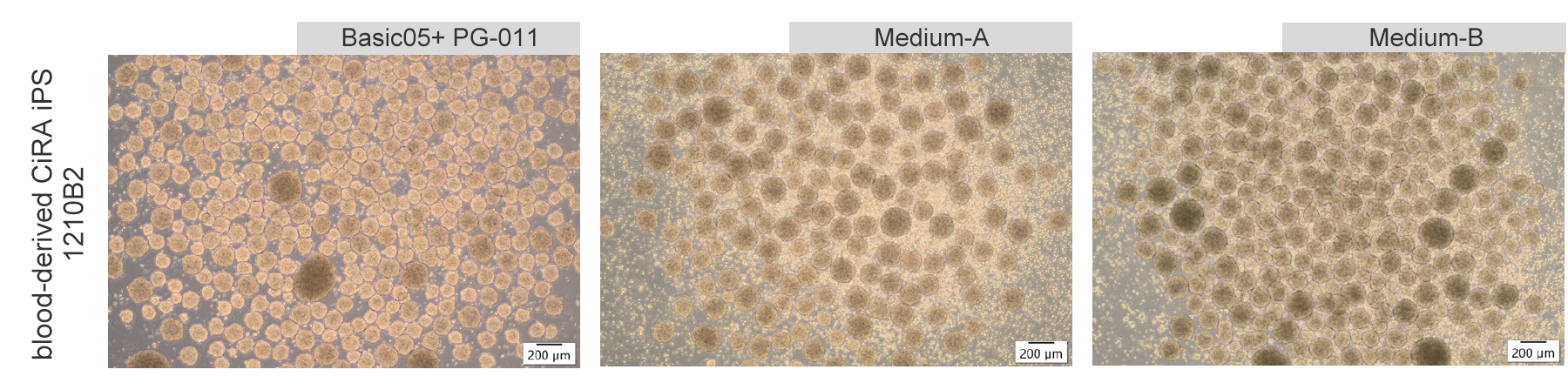
Viability was assessed with Vi-CELL and NC-200 at passage 3, day 1, and with Vi-CELL at passage 3, day 3. The viability panels label 1383D2, 1210B2 and 201B7; these labels differ from the αβT-labelled third line in the growth panel, so the panels should not be read as an identical three-line dataset. Basic05 shows high viability in these measurements. Representative 1210B2 micrographs show relatively uniform spheroids and fewer dead cells than the comparator conditions.
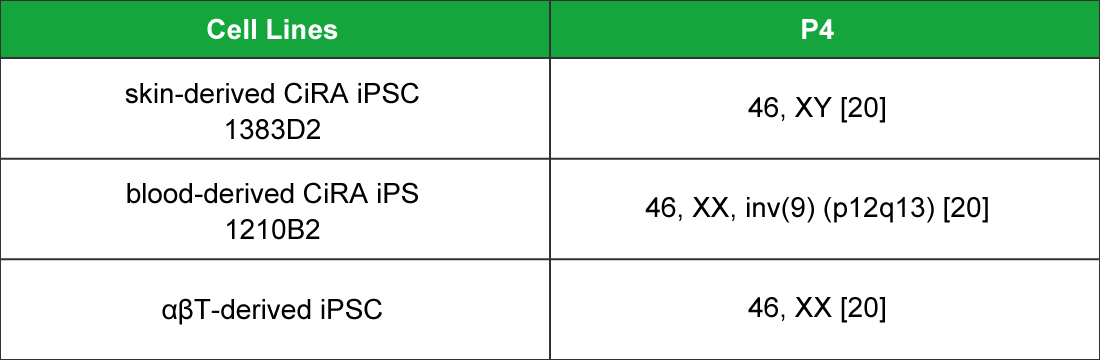
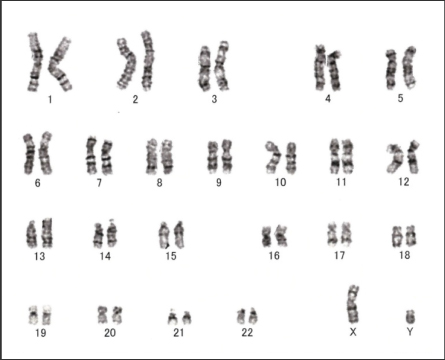
The passage 4 karyotype table reports 46, XY [20] for 1383D2; 46, XX, inv(9)(p12q13) [20] for 1210B2; and 46, XX [20] for the αβT-derived line. Although the manufacturer describes the results as normal, the explicit inversion notation for 1210B2 remains part of the reported result.
Flexible feeding schedules
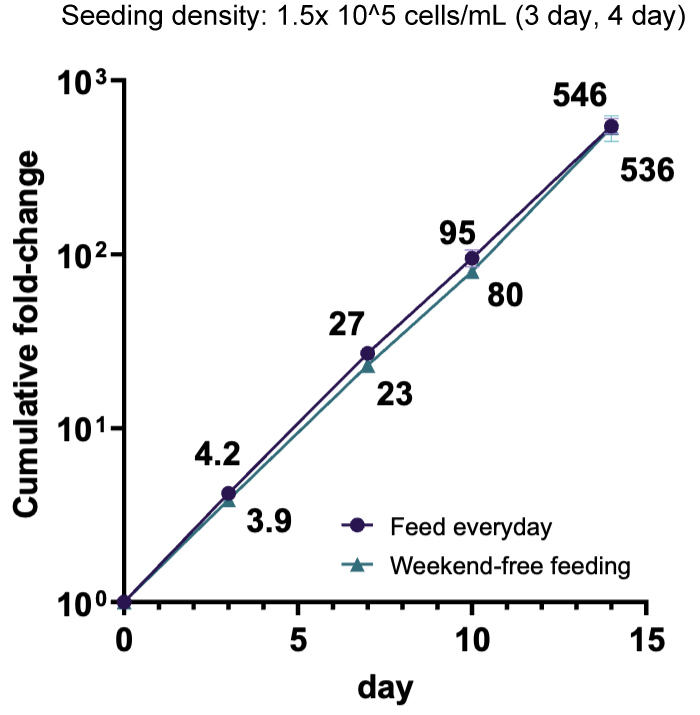
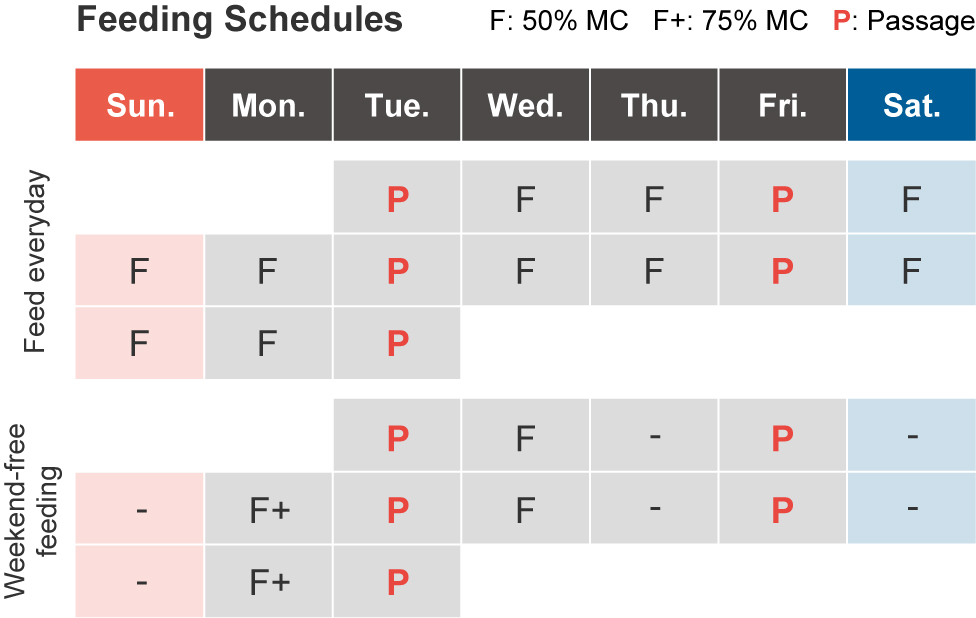
In the demonstrated comparison, daily feeding and weekend-free feeding produced similar expansion. Their cumulative end points are 546 and 536 respectively. This scheduling flexibility reflects both the medium and the thermal stability of PG-011. It is a tested scheduling option, not evidence that every cell line can omit the same feeds.
Scale-up across culture platforms
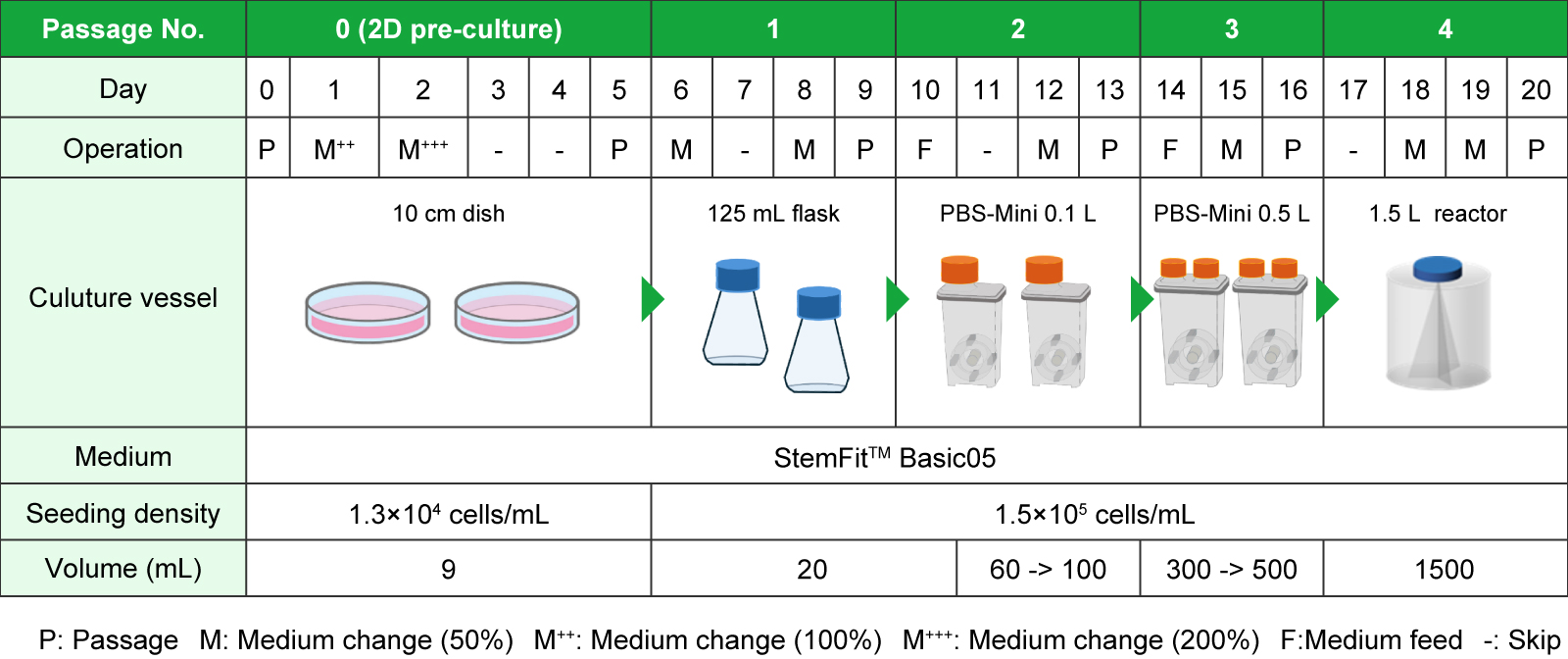
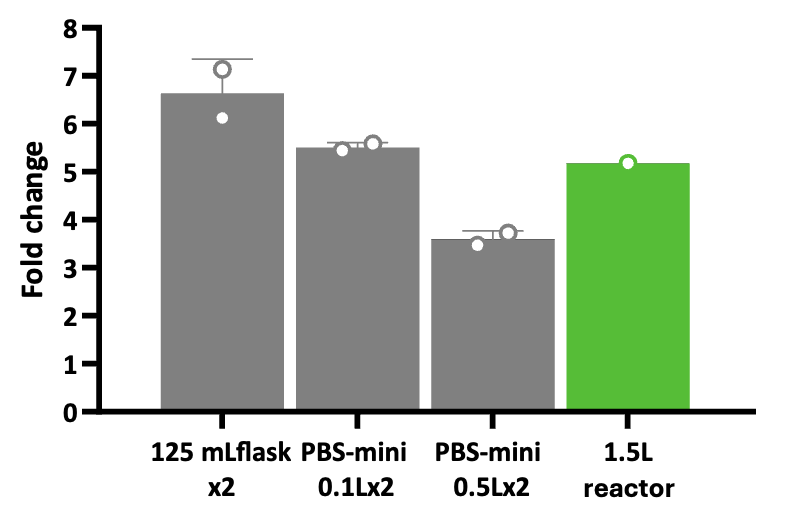
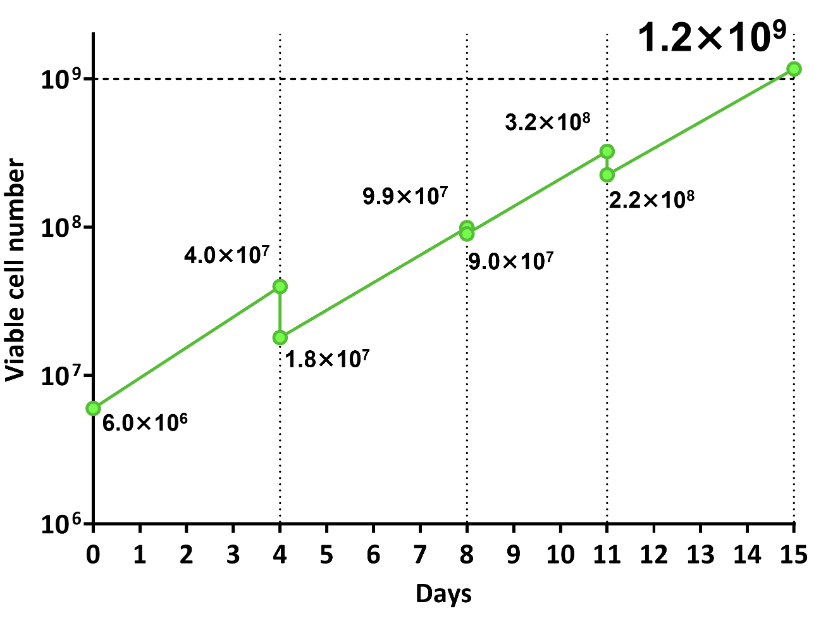
A 1383D2 evaluation links 2D preculture to suspension culture and a final 1.5 L reactor. The complete schedule spans 20 days, including 2D preculture, with 4 suspension passages and a 15-day suspension growth plot. Platforms include an orbital shaker, PBS-Mini vessels and the final reactor; other supported platform examples include stirred-tank and vertical-wheel bioreactors.
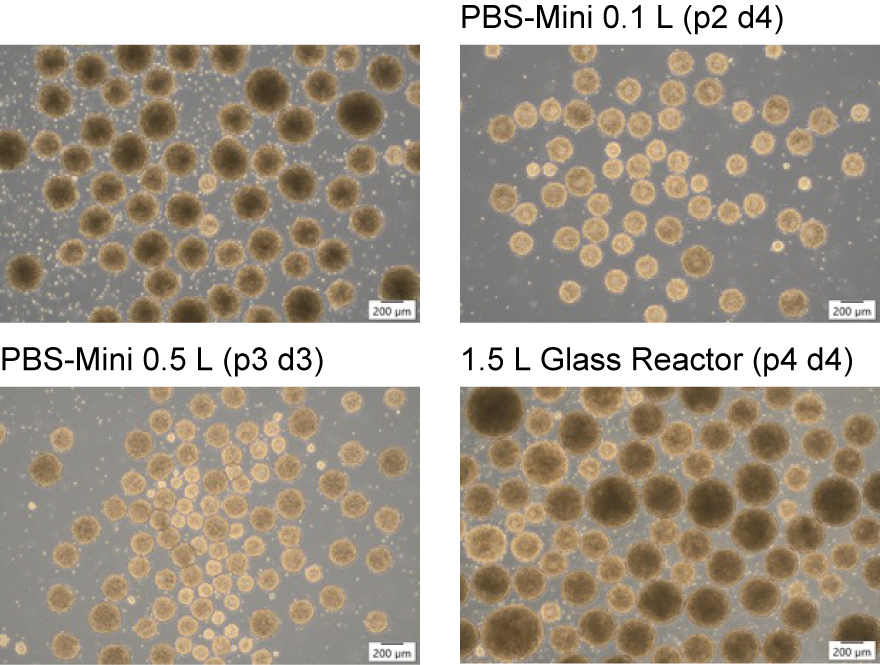
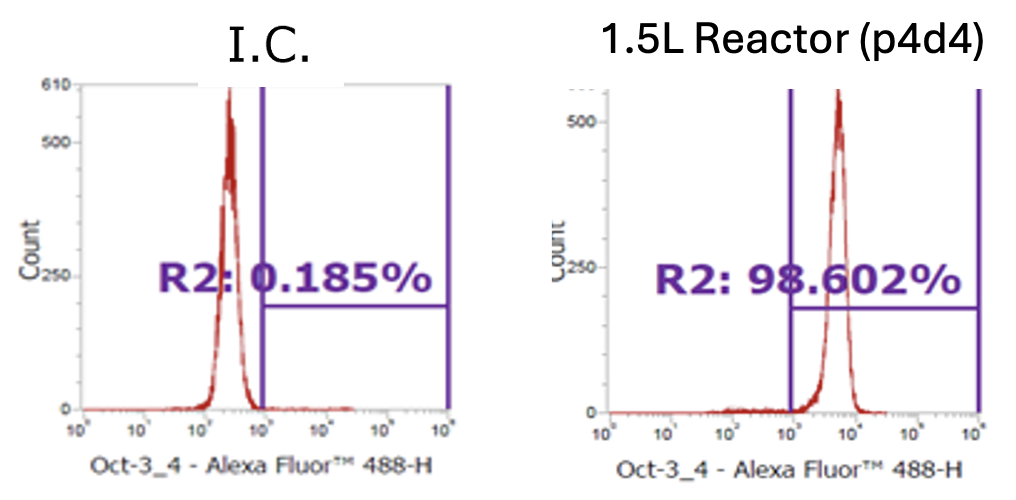
Expansion was approximately 3–7 fold per passage. Viable cell number increased from 6.0E6 to 1.2E9, approximately 200-fold, while aggregates remained relatively uniform and the final OCT4-positive fraction was 98.602%. The intermediate plotted outputs are 1.8E7–4.0E7, 9.0E7–9.9E7 and 2.2E8–3.2E8 cells. These are observed process-development results with the illustrated vessels and cell line.
Differentiation after suspension expansion
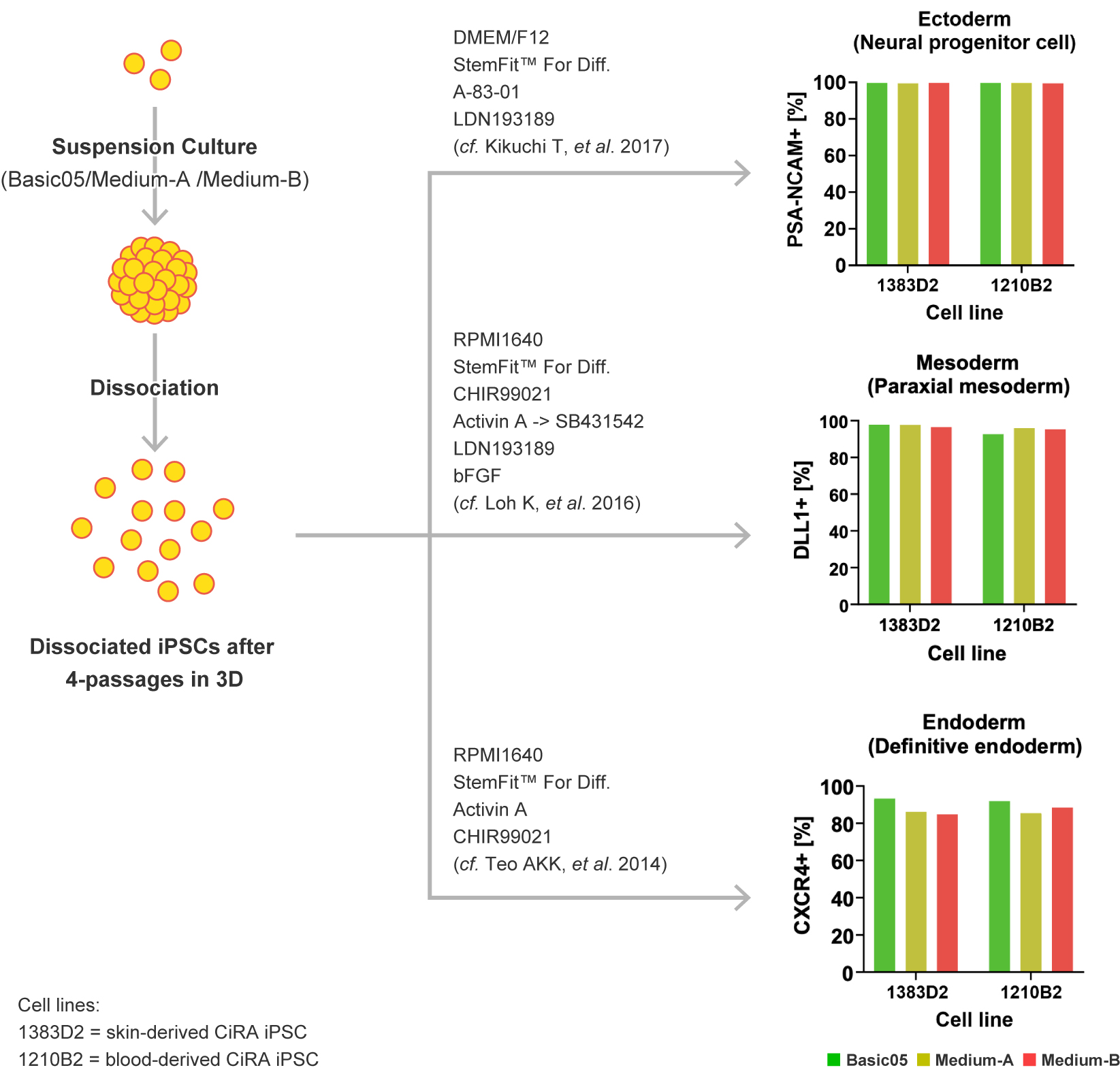
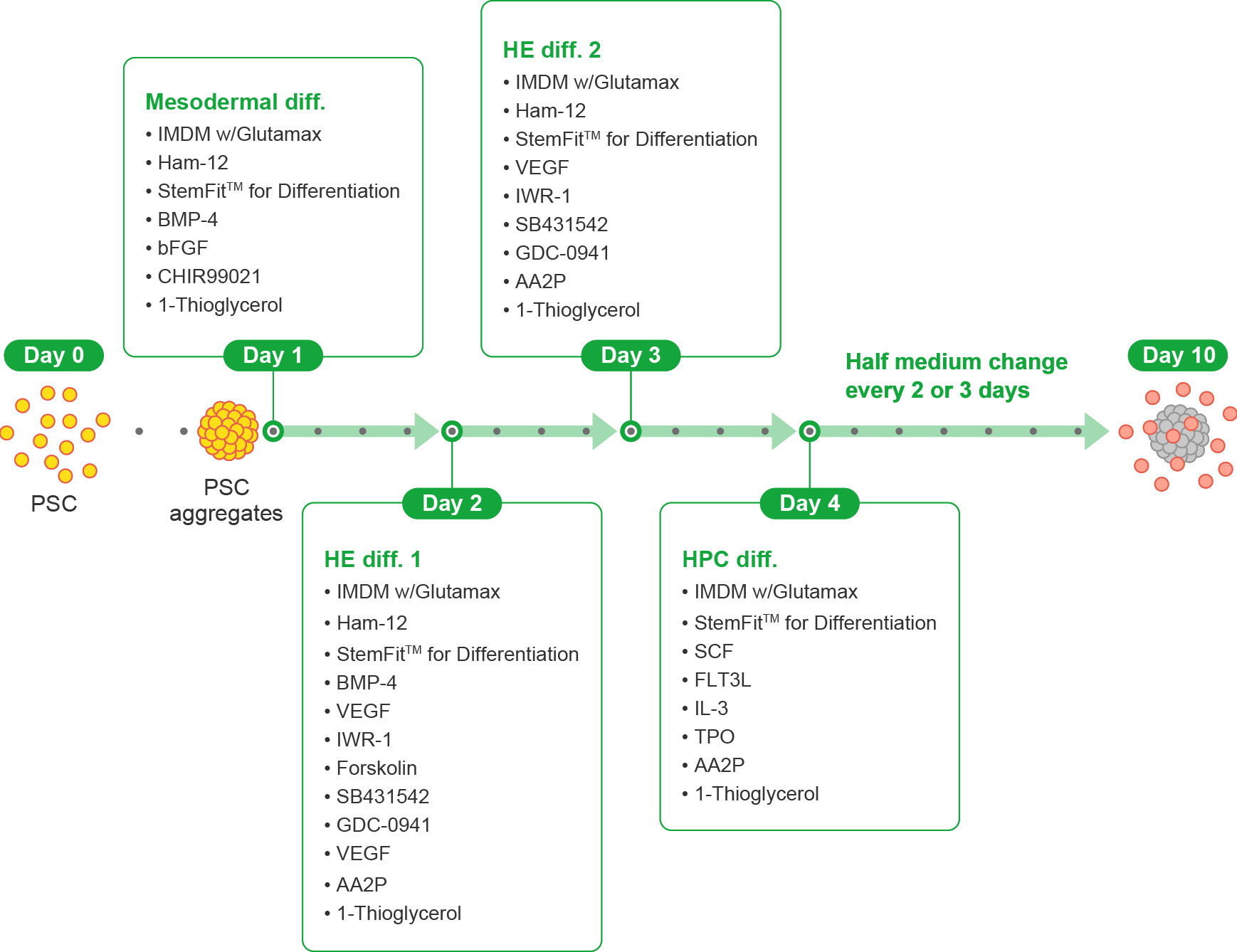
Both dissociation of spheroids before differentiation and direct differentiation from intact PSC aggregates have been evaluated. After 3D expansion, directed differentiation to ectoderm, mesoderm and endoderm was demonstrated. The 1383D2 and 1210B2 examples use PSA-NCAM, DLL1 and CXCR4 as lineage readouts. Direct transfer of expanded PSC aggregates into an HPC differentiation workflow is also illustrated, linking mesoderm, hemogenic endothelium and HPC stages.
Performance in 2D culture
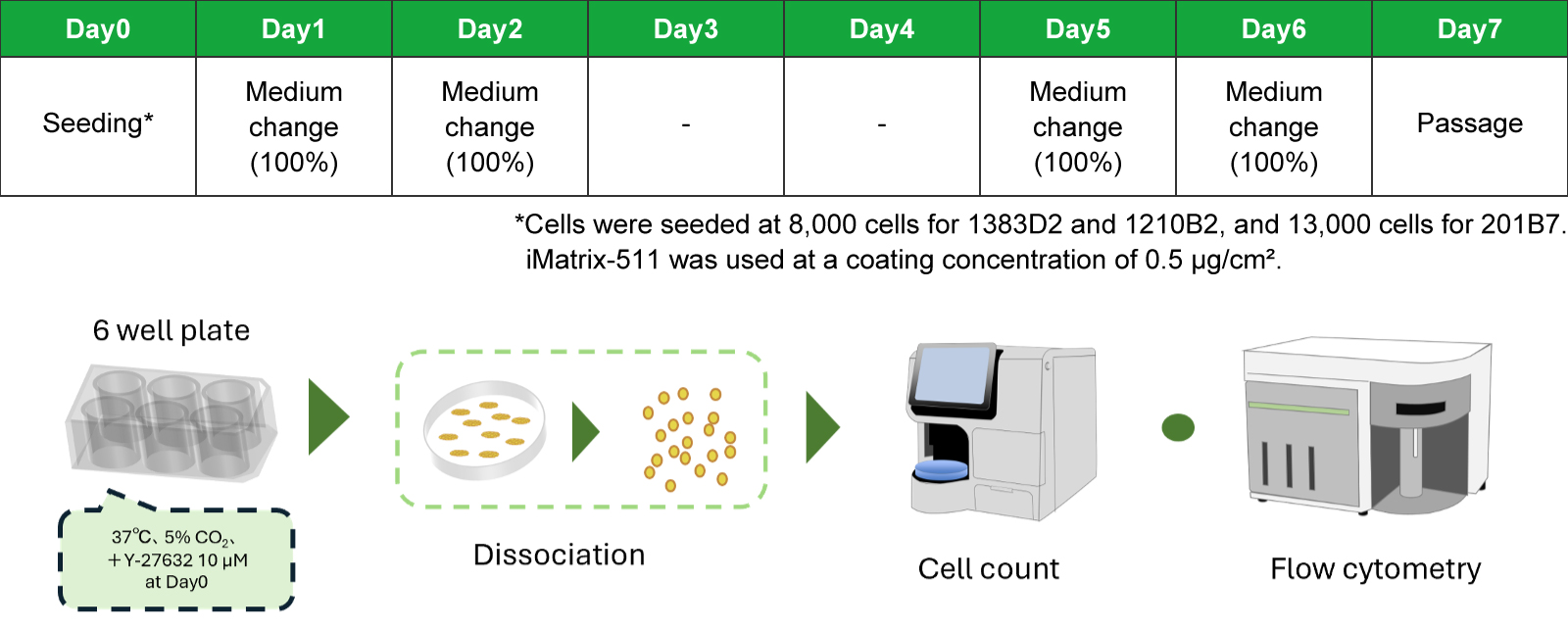
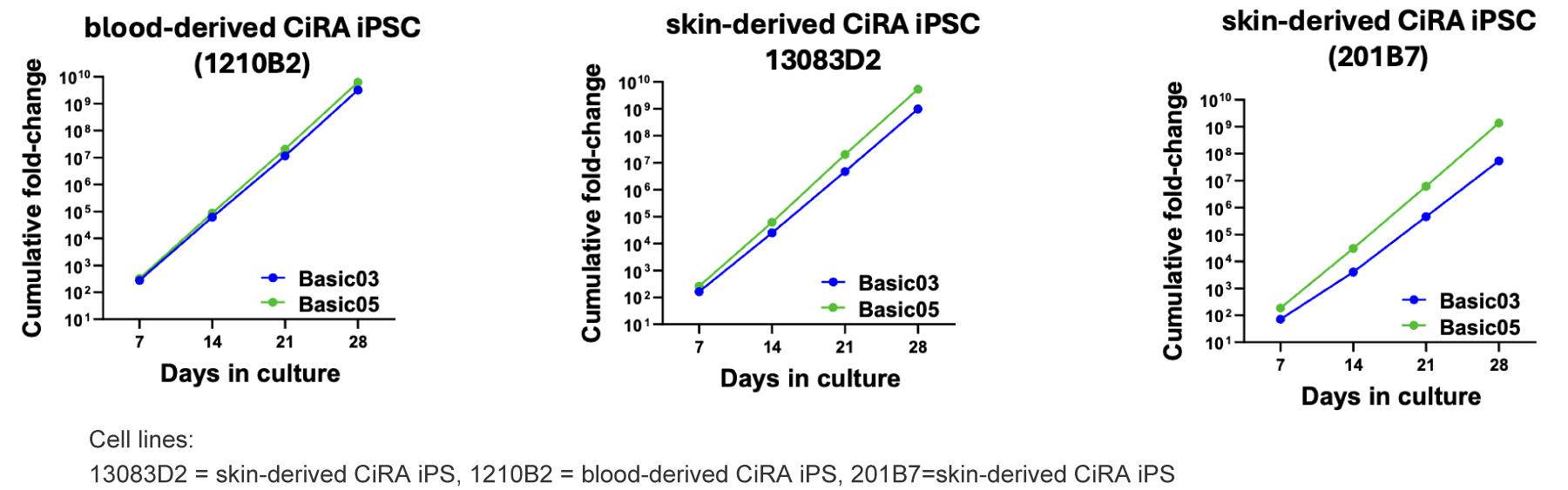
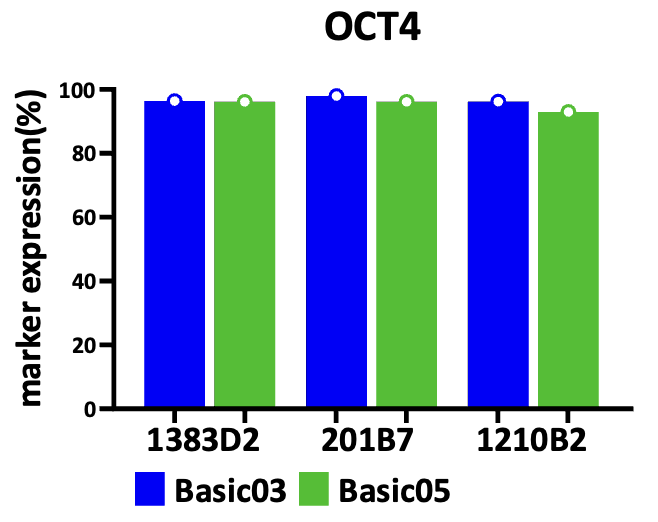
In the 2D evaluation, Basic05 supplemented with 100 ng/mL bFGF was tested over 4 passages of 7 days each using 1383D2, 201B7 and 1210B2. Cumulative expansion was comparable to or greater than Basic03 in the displayed comparisons, while OCT4 expression remained high after passage 4. The growth figure prints “13083D2”, whereas the method text and OCT4 panel identify “1383D2”; the growth panel label is inconsistent and is not evidence for a separate cell line.
Product documents
- Product information, version 1 (August 2026)
- Safety data sheet
- Brochure
The instruction manual is available on request. PG-011 product information is provided by PeptiGrowth.