
Technical column
Does Scale-Up Have to Hurt Your Cells? PBS Biotech's Vertical-Wheel Bioreactor Wins a 2026 Cell Therapy Product Development Award and Joins Organoid COMMONS: Low Shear and Linear Scale-Up for Industrializing Organoids and Cell Therapy
Cell therapy and organoid work has long faced a trade-off between scale and cell quality: conventional stirred tanks raise shear as they scale, often at the cost of cell viability and 3D structural integrity. On 21 July 2026 PBS Biotech received Life Sciences Review's "2026 Cell Products Development of the Year" award for its Vertical-Wheel bioreactor, and on 29 July it announced that it had joined the organoid industry consortium Organoid COMMONS. According to PBS Biotech, Vertical-Wheel shear stress is about one tenth that of conventional stirred tanks, with linear scale-up from 0.1 L; published studies show support for iPSC aggregate expansion, EV production from forebrain organoids (240–750 times static culture) and up to 90 days of cerebellar organoid maturation.
Definition
A Vertical-Wheel bioreactor uses a large-diameter vertical impeller in a U-shaped vessel to create a uniform, low-shear mixing field for suspension culture and scale-up of shear-sensitive systems such as iPSCs, MSCs, immune cells, islet cells and organoids.
In the second half of 2026, PBS Biotech, a long-established cell manufacturing technology company, announced two pieces of news in quick succession:
- On 21 July, for its Vertical-Wheel bioreactor technology, it received the "2026 Cell Products Development of the Year" award from international media outlet Life Sciences Review and was named among the top companies in cell and gene therapy [2];
- One week later, on 29 July, it announced that it had joined the organoid industry consortium Organoid COMMONS, becoming one of the equipment suppliers helping move organoid technology from the laboratory to industrial scale [1].
From industry recognition of its technology to taking part in building standards across the ecosystem, PBS Biotech is targeting a long-standing pain point in cell therapy and organoids: the apparent trade-off between scaled production and cell quality.
1. Behind the Award: Scale vs Cell Quality
As conventional stirred-tank bioreactors scale up, shear rises, often at the cost of cell viability and 3D structural integrity. According to the source material, this long-standing dilemma is what the award recognized.
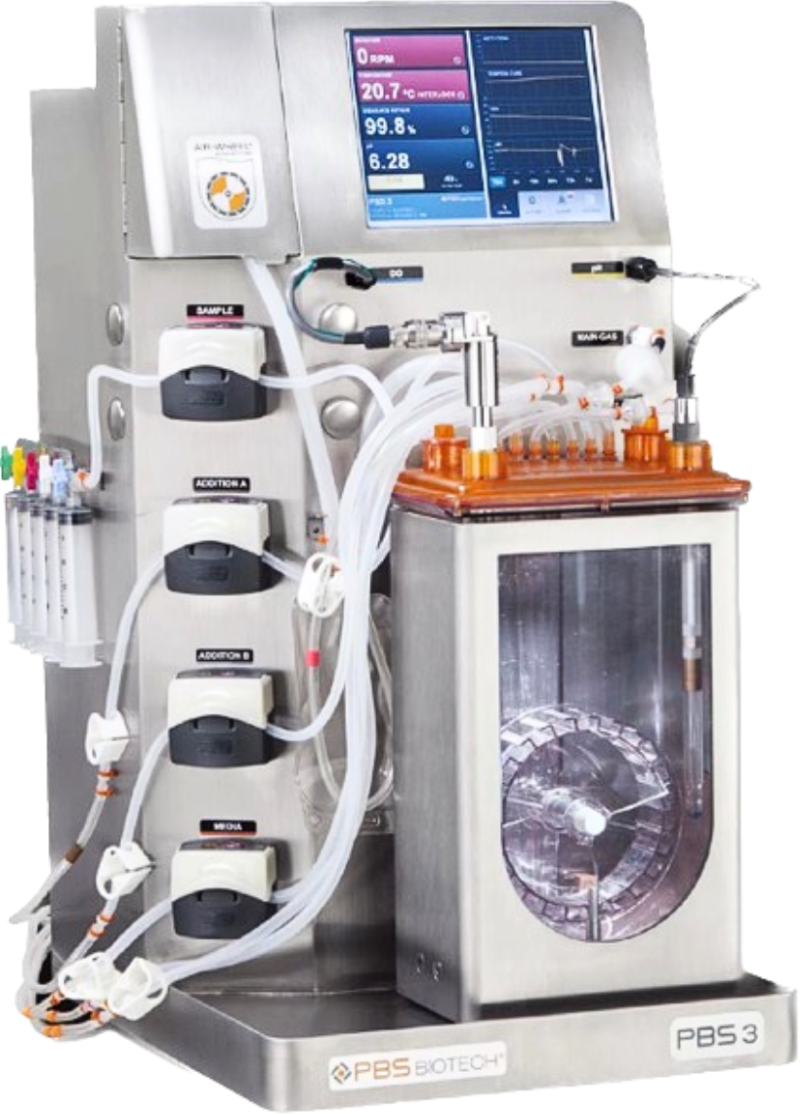
Figure 1. The PBS-3 Vertical-Wheel bioreactor
Unlike conventional stirred reactors, according to PBS Biotech, Vertical-Wheel technology is designed for scaled culture of sensitive cells:
- Low-shear environment: shear stress about one tenth that of a conventional stirred tank, suiting shear-sensitive systems such as iPSCs, MSCs, CAR-T/NK cells, islet cells and organoids [3];
- Linear scale-up: from 0.1 L laboratory scale to 500 L GMP production with transferable process parameters, shortening process development and lowering scale-up risk;
- Uniform flow with no dead zones: a large-diameter impeller and U-shaped vessel with strong bottom sweeping prevent particle settling, reducing batch-to-batch variation and stabilizing cell yield and viability.
As PBS Biotech CEO Martin Simonetti put it: "Cell therapies are transforming medicine, and manufacturers need technology that eliminates the trade-off between scale and cell quality." [2]
According to PBS Biotech, the technology is used in hundreds of research and industrial laboratories worldwide, covering stem cell expansion, organoid differentiation, extracellular vesicle production and immune cell culture. Three examples from published studies:
- iPSC aggregate expansion: the uniform, controllable flow environment favours scaled expansion of iPSC aggregates across a wide operating window; according to the source material, stemness and viability are markedly better than in other conventional systems, and aggregate size uniformity can be controlled to improve the efficiency and yield of downstream neural, islet and other differentiation [5][6];
- Forebrain organoid EVs: the PBS Mini bioreactor was used to produce extracellular vesicles (EVs) from human forebrain organoids, with EV yield 240–750 times that of static culture and the vesicles retaining neural-repair-related biological function [3];
- Cerebellar organoids: the PBS Mini bioreactor was used for scaled differentiation of human iPSC-derived cerebellar organoids, supporting up to 90 days of maturation culture and producing multiple neuronal subtypes including Purkinje and granule cells [4].
2. Joining Organoid COMMONS: Building Standards for Organoid Industrialization
On 29 July, PBS Biotech announced that it had joined Organoid COMMONS — according to the source material, a global industry consortium focused on standardizing and industrializing organoid technology [1]. Formed by biopharmaceutical companies, technology tool suppliers, regulatory experts and others, it aims to bridge the gap between academic innovation and industrial practice, establish new approach methodologies (NAMs), deliver highly reproducible and clinically relevant organoid models, and ultimately reduce the pharmaceutical industry's reliance on animal testing.
Figure 2. PBS Biotech joins the Organoid COMMONS consortium to accelerate industrialization and scaling of human-relevant models
As an equipment supplier member, PBS Biotech will contribute three key capabilities:
- Vertical-Wheel bioreactor systems: a uniform, controllable, low-shear dynamic culture environment to address uniformity, yield and viability bottlenecks in scaled organoid culture;
- Single-use closed processing: fully closed single-use vessels with a seal-free magnetic drive, suited to GMP-grade production;
- Bioprocess experience: developing standardized culture protocols with partners and building a shared process knowledge base.
"Joining Organoid COMMONS aligns closely with our mission: helping developers overcome manufacturing bottlenecks while preserving precious cell quality, aggregate integrity and biological function," said Martin Simonetti. "We look forward to defining industry benchmarks with the consortium members and driving the next generation of human-centred drug discovery and regenerative medicine." [1]
3. A Full Range from Research to the Clinic
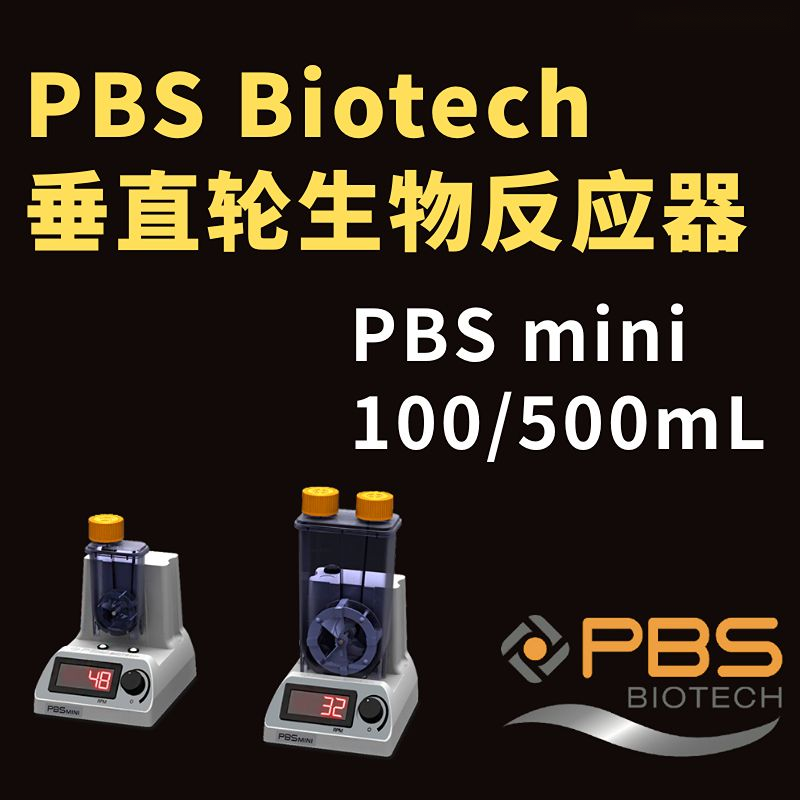
Figure 3. PBS Mini Vertical-Wheel bioreactors (0.1 L and 0.5 L early-research formats)
- Mini series (0.1 L / 0.5 L): compact enough to sit in an incubator, for laboratory process development and condition screening;
- PBS 3 L: integrated online pH, DO and temperature monitoring and control, for pilot scale-up and process verification;
- Production scale: 15–80 L commercial formats according to the source material, with linear scale-up supporting commercial manufacturing, completing a product range from early research to GMP commercial manufacturing [7].
Single-use vessels, sampling systems, perfusion modules and other consumables cover organoid culture, stem cell expansion, cell therapy production and EV manufacturing. Note that awards and consortium membership are industry recognition, not performance validation for a specific process, and choosing equipment does not by itself mean full process compliance or regulatory approval.
As cell therapy and organoid drug development keep accelerating, scaling and standardizing manufacturing processes has become a key hurdle for the industry.
Let TechWave Help You Plan the Path from Mini to Production
If you are expanding iPSC aggregates, differentiating organoids or producing EVs and want to move from static culture to a scalable dynamic suspension system, contact TechWave. We can help compare PBS Mini, PBS 3 L and larger Vertical-Wheel bioreactors and consumables, map a process development path for your cell type and scale-up goals, and arrange a demonstration and quotation.
References
- PBS Biotech Inc. PBS Biotech Joins Organoid COMMONS to Accelerate Industrialization and Scalability of Human-Relevant Models. PR Newswire, 2026-07-29.
- PBS Biotech Inc. PBS Biotech Wins 2026 Cell Products Development of the Year Award. PR Newswire, 2026-07-21.
- Liu C, Sun L, Worden H, et al. Profiling biomanufactured extracellular vesicles of human forebrain spheroids in a Vertical-Wheel Bioreactor. Journal of Extracellular Biology. 2024;3(9):e70002. doi:10.1002/jex2.70002
- Silva TP, Fernandes TG, Nogueira DES, et al. Scalable Generation of Mature Cerebellar Organoids from Human Pluripotent Stem Cells and Characterization by Immunostaining. Journal of Visualized Experiments. 2020;(160):e61143. doi:10.3791/61143
- Borys BS, Dang T, So T, et al. Overcoming bioprocess bottlenecks in the large-scale expansion of high-quality hiPSC aggregates in vertical-wheel stirred suspension bioreactors. Stem Cell Research & Therapy. 2021;12(1):1-19. doi:10.1186/s13287-021-02107-3
- Borys BS, So T, Colter J, et al. Optimized serial expansion of human induced pluripotent stem cells using low-density inoculation to generate clinically relevant quantities in vertical-wheel bioreactors. Stem Cells Translational Medicine. 2020;9(9):1036-1052. doi:10.1002/sctm.20-0084
- PBS Biotech Inc. Official Website.
Uses and applicable scenarios
- Scaled expansion of iPSC aggregates and downstream differentiation
- Organoid differentiation, maturation culture and scaled production
- Extracellular vesicle (EV) production from organoids and stem cells
- Scaling cell therapy from process development to GMP manufacturing
Limitations
- Awards and consortium membership are industry recognition, not performance validation for a specific process
- Shear and scale-up performance are manufacturer statements, and figures such as EV yield come from specific published studies; verify in your target process
- Choosing equipment does not by itself mean full process compliance or regulatory approval