
Technical column
The UK plans to cut dog and non-human primate use in PK studies by 35% by 2030: how organ-on-chip is reshaping drug development
The gap between animal models and human responses is now being addressed by policy and regulators at the same time: the UK has published a strategy to replace animal testing and committed £22 million, FDA CDER and 3RsC have launched a cross-brand liver MPS evaluation with a letter of intent under ISTAND, and CN Bio has won an Innovate UK grant to build human-relevant PK workflows. This article walks through the three signals and what organ-on-chip must deliver to become decision-grade data.
Definition
Organ-on-chip is an in-vitro model that uses microengineering and microfluidics to recreate part of human tissue and organ function under controlled conditions; it is a human-relevant model within New Approach Methodologies (NAMs).
For decades animal studies have been a pillar of drug development, from efficacy and safety to pharmacokinetics (PK). But one question is becoming impossible to avoid: do animal models really predict human responses? Species differences leave a persistent gap between animal results and human clinical outcomes.
That answer is now being written into policy and regulatory processes. The UK plans to cut the use of dogs and non-human primates in PK studies by 35% by 2030 and has committed £22 million to speed the phase-out of animal testing; FDA CDER and the 3Rs Collaborative have launched a cross-brand liver microphysiological system (MPS) evaluation; and CN Bio has won an Innovate UK grant to develop human-relevant PK workflows. Drug development is shifting from "animals predicting humans" to "human-relevant models predicting humans".
Video explainer
Where Feasible, the UK Plans 35% Fewer Dogs and Non-Human Primates in Some PK Studies by 2030
Watch on YouTube ↗Video transcript
For decades, animal studies have been a pillar of drug development. In our story, picture a judges' bench: a rat, a dog and a human. Now one of them will appear less often. The UK plans that by 2030, where scientifically feasible, dogs and non-human primates will be used less in some pharmacokinetic and cardiovascular safety studies. For PK studies the roadmap sets a 35% cut.
Why change? Species differences: there has always been a gap between what animals show and what happens in people. So the field is looking for approaches that better match human physiology: organs-on-chips, microphysiological systems, organoids and AI-assisted prediction models, together called new approach methodologies.
In November 2025 the UK government published a new strategy to reduce animal use in research: where reliable alternatives already exist, non-animal methods should be adopted faster. On 12 August 2026 the UK government announced 22 million pounds.
Twenty million goes to a new centre growing miniature organs from human tissue which, the announcement says, will help patients get the medicines they need sooner through more accurate testing. Another two million is split across nine projects, including beating heart cells grown in a dish, a lab-grown human ear model, and AI predicting how a drug moves through the body. Among them is CN Bio, whose systems we sell.
The second signal comes from regulators. The 3Rs Collaborative, with FDA CDER and partners, designed a cross-platform evaluation of liver microphysiological systems for drug-induced liver injury. It defines a single context of use: retrospectively interpreting liver enzyme elevations seen in early clinical trials.
The project has signed a letter of intent with the FDA's ISTAND programme. The limits matter: this is a design and process publication. It reports no liver-injury prediction results, and it says plainly that brands cannot be compared directly from it.
Per CN Bio, among the liver systems evaluated, PhysioMimix offers the most endpoints, while this study reported only one specific set of readouts. We sell this system. Per CN Bio, the framework's value is this: treat liver systems as a weight-of-evidence tool tied to a specific clinical question, not as a general replacement for animal studies.
That points to the next threshold: regulators care not only whether a model mimics human biology, but whether it yields stable, reliable data you can base development decisions on. Third signal: on 12 August 2026 CN Bio announced a 180 thousand pound Innovate UK grant, provided together with the UK's NC3Rs, supporting new approach methods for drug development.
The project aims to develop standardized workflows to predict drug behaviour more accurately and reduce animal testing, in line with the UK roadmap to cut dog and non-human primate use in PK studies by 35% by 2030. Per CN Bio, the PhysioMimix system we sell is a microfluidic organ-on-chip system that rebuilds human organs, tissues and biological processes in vitro, improving how well in vitro results translate to in vivo.
The manufacturer adds three points: 16 of the world's top 20 pharma companies use it; one system covers single-organ, multi-organ and higher-throughput work; and a simplified workflow makes it quick to start. The key to using such platforms: first define the context of use and the decision to be made, then build data credibility with local reproducibility and fit-for-purpose validation.
Hold on: the policy says reduce, not switch off overnight. The regulatory project covers one specific clinical question. Manufacturer descriptions apply to its own system. The shift has started, but how it proceeds depends on the data.
The full article and sources: the TechWave technical column at techwave.hk.
Fewer Dogs and Non-Human Primates in Some PK Studies by 2030: the UK Plan, Where Feasible
Watch on YouTube ↗Video transcript
For decades, animal studies have been a pillar of drug development. Picture a judges' bench: a rat, a dog and a human. The UK plans that by 2030, where scientifically feasible, dog and non-human primate use in some pharmacokinetic studies will fall by 35%.
Why? Species differences: there is always a gap between what animals show and what happens in people. The candidates: new approach methodologies — organs-on-chips, organoids and AI prediction models. In August 2026 the UK government announced 22 million pounds: 20 million for a new centre growing miniature organs from human tissue, and 2 million across nine projects.
On the regulatory side, the 3Rs Collaborative and FDA CDER designed a cross-platform evaluation of liver microphysiological systems. Hold on: the policy says reduce, not switch off. And that evaluation says plainly it cannot be used to compare brands directly.
Full article: the TechWave technical column at techwave.hk.
Produced by TechWave. For research reference only; not medical advice.
The next research paradigm: human-relevant New Approach Methodologies
To bridge species differences, drug development worldwide is exploring New Approach Methodologies (NAMs) that better reflect human physiology. Organ-on-chip, microphysiological systems (MPS), organoids and AI-assisted prediction models are becoming important directions for future drug development.
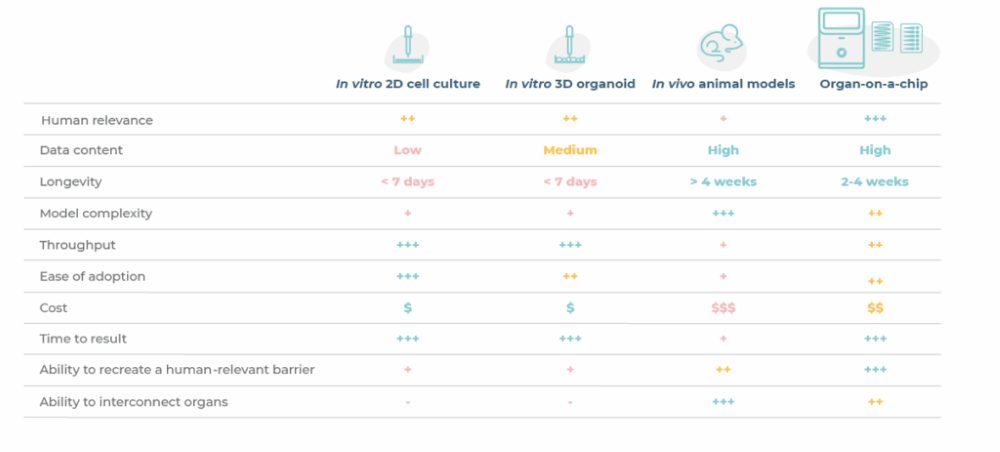
Figure 1: Comparison of organ-on-chip with 2D cell culture, 3D organoids and animal models
Signal one: the UK's strategy to replace animal testing accelerates NAMs
In November 2025 the UK government published a new strategy to reduce the use of animals in science, stating that non-animal methods (NAMs) should be adopted faster wherever reliable alternatives exist. It also proposed that, by 2030 and where scientifically feasible, the use of dogs and non-human primates in some pharmacokinetic (PK) and cardiovascular safety studies should be reduced.
On 12 August 2026 the UK government announced £22 million to accelerate the phase-out of animal testing in science by combining new technologies with research:
- A new £20 million centre will grow mini-organs from human tissue, helping deliver effective treatments to patients through more accurate testing;
- Research teams including CN Bio received £2 million for nine projects, including growing beating heart cells in a dish, a lab-grown human ear model and AI prediction of how drugs move through the body.
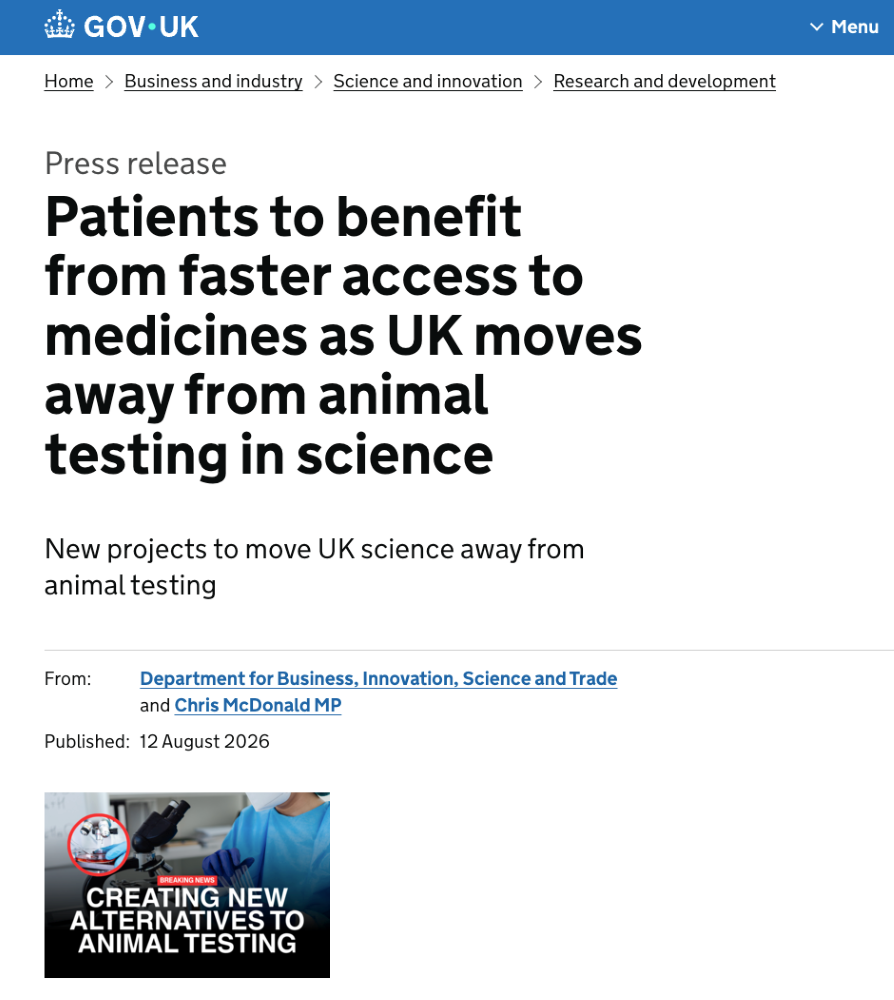
Figure 2: As the UK phases out animal testing, patients will benefit from faster access to medicines
Signal two: FDA CDER and 3RsC drive a cross-brand liver MPS evaluation
The 3Rs Collaborative (3RsC), FDA CDER and partners across the MPS ecosystem have jointly published a paper describing the design of a cross-brand evaluation of liver microphysiological systems for drug-induced liver injury (DILI). The project defines a single regulatory context of use — retrospective interpretation of liver-enzyme elevations in early clinical trials — and has signed a letter of intent with the FDA ISTAND program.
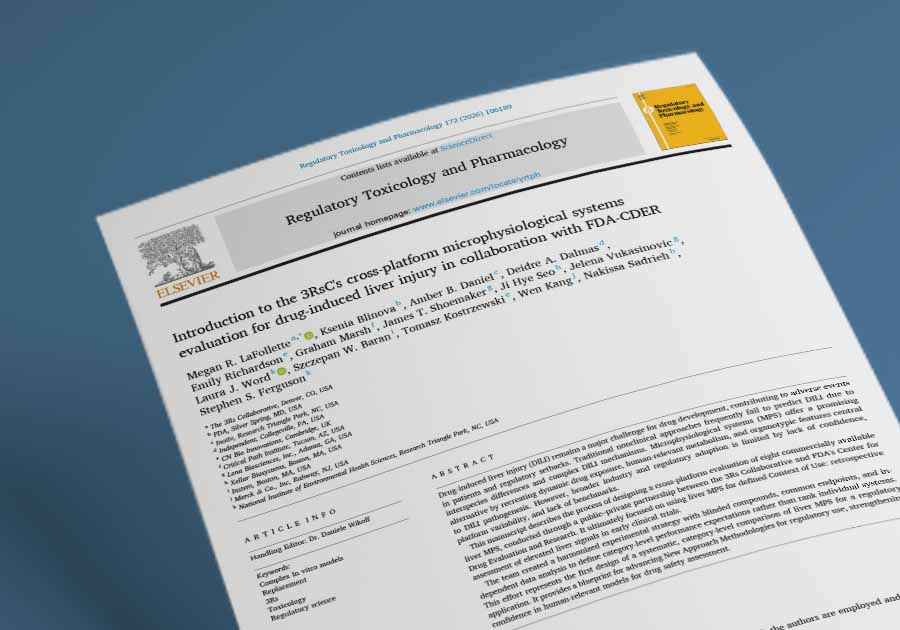
Figure 3: Cross-brand DILI microphysiological system evaluation by 3RsC in collaboration with FDA-CDER
This is a design and process publication: it does not report DILI prediction results (these will be published separately) and states explicitly that brands cannot be compared directly on this basis. According to CN Bio, among the liver MPS evaluated, PhysioMimix offers the largest number of endpoints, while this study reports only a specific subset of the available biochemical, functional and molecular readouts.
According to CN Bio, this is the first published design for a systematic, class-level comparison of liver MPS aimed at regulatory use, giving drug-safety teams a working template for what a NAM study meeting regulatory expectations should contain. Its value for regulatory strategy lies in the framework: it treats liver MPS as a weight-of-evidence tool tied to a specific clinical question rather than a general replacement for animal testing, and sets performance expectations at the level of the model class.
This also marks the next hurdle for organ-on-chip: regulators care not only whether organ chips can mimic the human body, but whether they can deliver stable, reliable data usable for development decisions.
Signal three: Innovate UK backs CN Bio's human-relevant PK research
CN Bio is an organ-on-chip (OOC) systems and solutions provider with more than a decade of technical experience, dedicated to accelerating drug discovery and development workflows. On 12 August 2026 CN Bio announced a £180,000 grant from Innovate UK:
- The grant is provided in partnership with the National Centre for the Replacement, Refinement and Reduction of Animals in Research (NC3Rs) to support NAMs for drug development, in line with the UK government's roadmap to reduce the use of dogs and non-human primates (NHPs) in PK studies by 35% by 2030;
- The project aims to develop standardized workflows that predict drug behaviour more accurately, reduce animal testing and streamline the development of safer, more effective medicines.
Figure 4: CN Bio receives Innovate UK support to advance human-relevant pharmacokinetic research
PhysioMimix: bringing human-relevant research into the lab
According to CN Bio, PhysioMimix is a microfluidic organ-on-chip system that recreates human organs, tissues and biological processes in vitro to improve the translational relevance between in-vitro and in-vivo results.
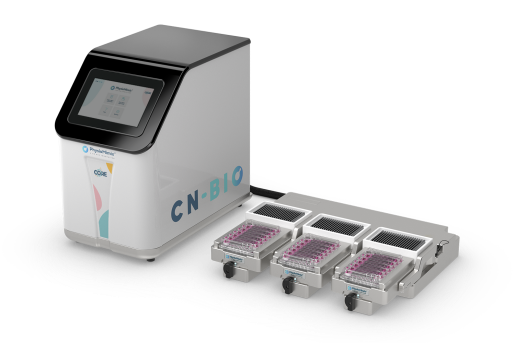
Figure 5: CN Bio PhysioMimix Core microfluidic organ-on-chip system
- Easy to deploy and scale: 16 of the top 20 global pharmaceutical companies already use it; the system has been validated for single-organ, multi-organ and high-throughput applications, so one system can serve different research needs;
- Quick to learn, stable results: a simplified workflow helps researchers get started quickly, and the flexible, scalable design supports stable and reliable physiological results;
- Close to human physiology: it closely mimics the human physiological environment and, by recreating human organs, tissues and biological processes in vitro, improves translational relevance between in-vitro and in-vivo results.
The key to using such platforms well is to bind the model to a clear research question: in line with the 3RsC evaluation, define the context of use and the decision first, then build data credibility through local reproducibility and fit-for-purpose validation.
Let TechWave help you evaluate an organ-on-chip approach
If your team is looking for evidence beyond animal studies for DILI, human-relevant PK or multi-organ drug research, contact TechWave. Based on your research question and context of use, we can help map out applications of CN Bio PhysioMimix, share application materials and arrange a quotation.
References
- UK Government. Animal testing to be phased out faster as UK unveils roadmap for alternative methods. Official Press Release, 11 November 2025.
- Department for Business, Innovation and Science, UK Government. Patients to benefit from faster access to medicines as UK moves away from animal testing. Official Press Release, 12 August 2026.
- CN Bio. Introduction to the 3RsC cross-platform liver microphysiological systems evaluation in collaboration with FDA CDER. Technical Resource Article.
- CN Bio. CN Bio awarded Innovate UK grant to reduce animal use in pharmacokinetic studies. Corporate News Release, 12 August 2026.
Uses and applicable scenarios
- Drug-safety research such as drug-induced liver injury (DILI)
- Development of human-relevant pharmacokinetic (PK) models
- Single- and multi-organ research on drug mechanism and efficacy
Limitations
- No single platform replaces all animal studies; a model's value depends on the specific research question and context of use
- The cross-brand evaluation design paper does not yet report DILI prediction results and cannot be used to compare brand performance