
Products
PG-009 Synthetic EGF (Human)
PG-009: full-length human epidermal growth factor (EGF) made entirely by chemical synthesis, not a small cyclic mimetic. EGFR phosphorylation and Vero-cell proliferation match recombinant EGF, with no batch-to-batch quality variation, no animal-derived raw materials and compatibility with GMP production.
Product information
- Brand
- PeptiGrowth
- Catalog no.
- PG-009
- Specification
- 100 µg / 1 mg
The same EGF molecule, a different production route
PG-009 differs from the rest of the series: it is not a small cyclic peptide that mimics a growth factor but full-length human epidermal growth factor (EGF) obtained by complete chemical synthesis. According to the manufacturer, compared with recombinant EGF produced in microorganisms or cells, PG-009 shows no batch-to-batch quality variation, contains no animal-derived raw materials and is compatible with GMP production. For culture protocols that need to keep the full-length EGF molecule while leaving biological expression systems behind, it is the most direct swap.
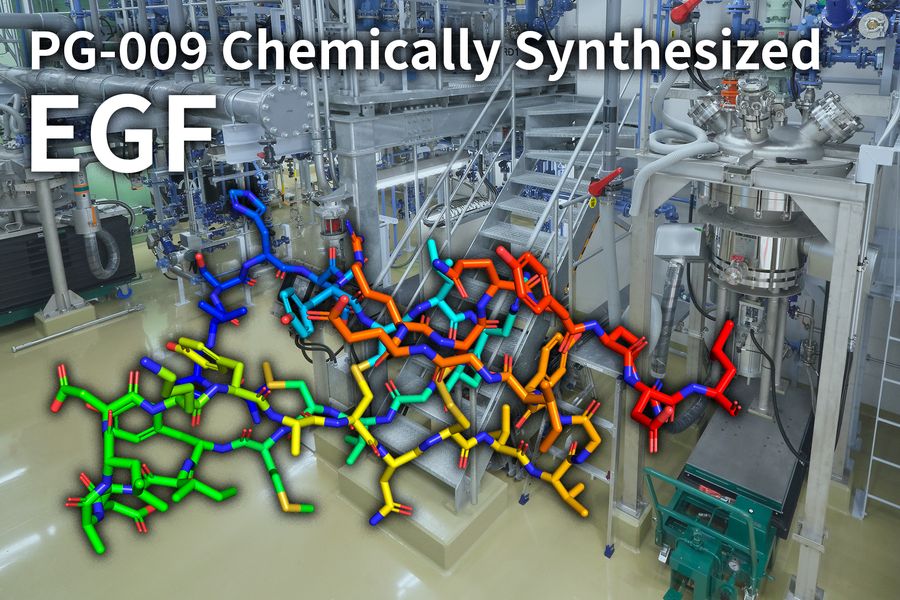
The human EGF structure shown is PDB ID 1JL9 (Lu H.S. et al., J. Biol. Chem. 2001;276:34913–34917, doi:10.1074/jbc.M102874200).
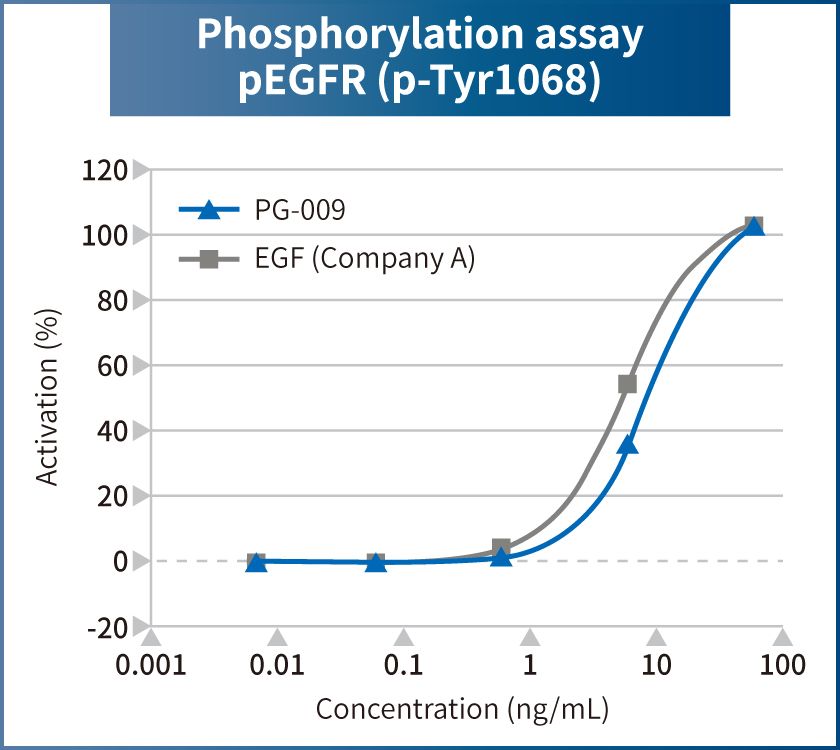
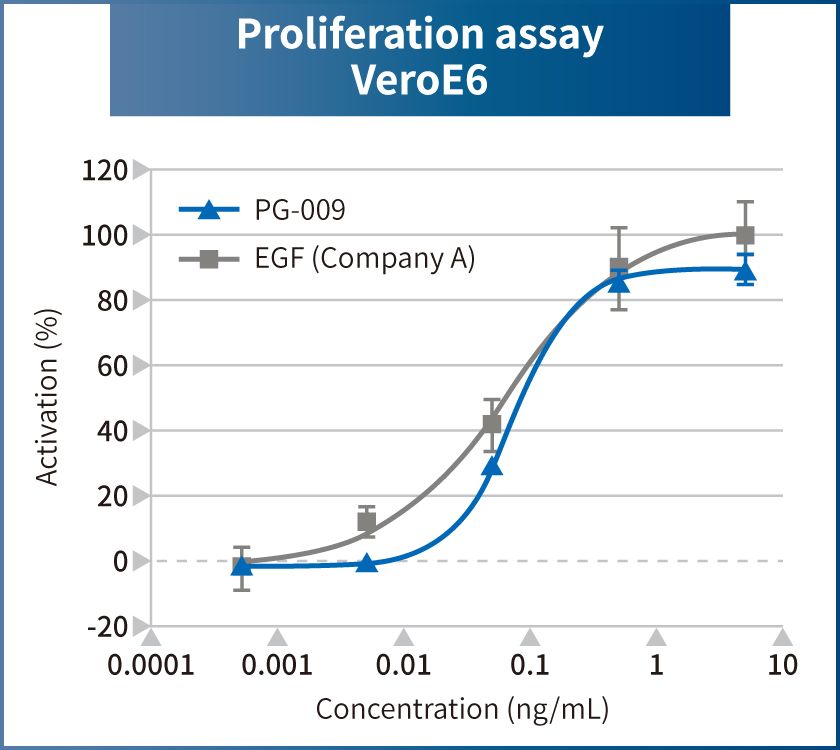
Manufacturer data: EGFR phosphorylation and cell proliferation equivalent to recombinant EGF
Synthetic EGF (PG-009) showed EGFR phosphorylation and Vero-cell proliferation activity equivalent to recombinant EGF. The information sheet evaluates activity by EGFR phosphorylation and by proliferation of VeroE6 and HaCaT cells, with an expected ED50 of 0.1–2 ng/mL.
Published application: patient-derived colonic organoids
In the colonic organoid culture method published by Institute of Science Tokyo in Stem Cell Research & Therapy (2026), 100 ng/mL PG-009 replaced EGF and, together with PG-001, PG-004 and PG-008, formed a culture system that is almost protein-free apart from R-spondin 1.
Specifications
| Item | Details |
|---|---|
| Catalogue number | PG-009 |
| Replaces | Recombinant EGF (full-length molecule, chemically synthesized) |
| Target | EGFR |
| Pack sizes | 100 µg, 1 mg |
| Formulation | Amorphous powder lyophilized from aqueous acetic acid solution |
| Purity | ≥95% (HPLC) |
| Molecular weight | 6215.90 |
| Storage | Both the undissolved compound and prepared solutions at −20 °C |
| Grade | Research use only (RUO); the manufacturer offers GMP-grade product and bulk supply on request |
Working concentration and reconstitution
- The manufacturer recommends testing PG-009 at the same concentration as recombinant EGF in your system.
- Open the vial carefully, add 100 µL PBS (pH 7.4) to the 100 µg vial and dissolve all contents thoroughly to obtain a 1 mg/mL solution; use promptly after opening and reconstitution.
Where it fits
- Xeno-free media for organoids, epithelial cells and other EGF-dependent cultures
- Process development that keeps the full-length EGF molecule and changes only its production source
- Combined with PG-001, PG-004 and PG-008 in a low-protein gastrointestinal organoid culture system
Ready to replace recombinant EGF in your medium with a synthetic version? Contact TechWave for PG-009 selection advice and a quotation.