
Technical column
Urinary Albumin Concentration Alone Cannot Tell Kidney Injury from Concentrated Urine: A Complete Mouse UACR Workflow with the Albuwell M Competitive ELISA and Creatinine Companion Modified Jaffe Assay, from Sampling to Data Interpretation
Mouse urine concentration varies with water intake, urine output, sampling time and method, so absolute urinary albumin concentration alone cannot distinguish kidney injury from concentrated urine. The urinary albumin-to-creatinine ratio (UACR) uses creatinine in the same sample as an internal reference and is especially suited to random and spot urine. This article breaks down the principles, sample collection and storage, key steps, UACR calculation and interpretation limits of Ethos Exocell Albuwell M (catalogue 1011, direct competitive ELISA, standard curve 0.156–10 μg/mL, 450 nm) and Creatinine Companion (catalogue 1012, modified alkaline picrate method, 1–10 mg/dL, dual reading at 500 nm).
Definition
The urinary albumin-to-creatinine ratio (UACR) is the ratio of urinary albumin concentration to urinary creatinine concentration in the same urine sample; creatinine corrects for urine concentration and dilution, so the ratio reflects albumin excretion per unit of creatinine.
In mouse studies of kidney injury, diabetic nephropathy, drug nephrotoxicity and inherited kidney disease, urine testing is non-invasive and allows the same animal to be followed over time, giving a dynamic view of glomerular filtration barrier function, protein excretion and the effect of interventions. Elevated urinary albumin usually indicates reduced selectivity of the glomerular filtration barrier and is one of the core indicators of kidney function change and model phenotype.
The problem is that urine concentration is not constant. Water intake, urine output, sampling time and sampling method (metabolic cage or spot urine) all strongly affect how concentrated or dilute the urine is, and therefore the actual analyte concentration. Measuring absolute urinary albumin concentration alone cannot tell "more protein excreted because of kidney injury" from "higher concentration because the urine is concentrated".
UACR: Using Creatinine to Correct for Urine Concentration and Dilution
The urinary albumin-to-creatinine ratio (UACR, also called ACR) measures urinary albumin and urinary creatinine in the same sample and uses creatinine as an internal reference to correct for concentration and dilution. It reflects albumin excretion per unit of creatinine and effectively improves comparability between samples. This normalization is especially valuable for random and spot urine samples.
Assay Principles: Two Independent Assays, One Ratio
UACR is calculated from two independent assays. According to the source material, the commercial combination widely used in mouse studies is Ethos Exocell's Albuwell M (urinary albumin assay, catalogue 1011) and Creatinine Companion (urinary creatinine assay, catalogue 1012). Both are in 96-well plate format, so the same batch of samples can be tested in parallel.
Urinary Albumin: Direct Competitive ELISA (Albuwell M)
Urinary albumin assays fall mainly into immunochemical methods and size-exclusion HPLC. Albuwell M is an immunochemical ELISA and, according to the source material, one of the more commonly used commercial options for mouse urinary albumin. It uses a direct competitive antibody-capture ELISA: the microplate is pre-coated with mouse albumin, and all reagents are ready-to-use liquids.
- Reaction mechanism: after the sample and a horseradish peroxidase (HRP)-labelled anti-mouse albumin antibody are added to the well, albumin in the sample (liquid phase) competes with the coated albumin (solid phase) for the labelled antibody. The higher the sample albumin concentration, the less labelled antibody binds to the solid phase.
- Colour development and quantification: after unbound material is washed away, tetramethylbenzidine (TMB) substrate is added; the reaction is stopped with sulfuric acid and absorbance is read at 450 nm. Absorbance is inversely proportional to the logarithm of albumin concentration in the liquid phase, and the standard curve is fitted semi-logarithmically.
- Standard curve range: 0.156–10 μg/mL (7 two-fold dilution points).
Method features: highly specific for mouse albumin and simple to run; plates can be washed with tap water, or with a dedicated TEA wash buffer where that is not suitable.
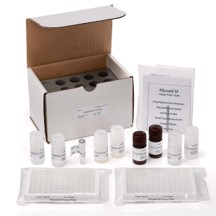
Figure 1. Albuwell M (Mouse Albumin ELISA) assay kit, catalogue 1011
Urinary Creatinine: Modified Alkaline Picrate Method (Creatinine Companion)
Creatinine Companion is a modification of the classic Jaffe alkaline picrate method. It calculates the absorbance difference between readings taken before and after acid addition, correcting for interference from non-creatinine chromogens. According to the source material, its accuracy is better than the traditional single-endpoint Jaffe method; compared with HPLC it is cheaper and simpler, and suits large sample batches.
- Reaction mechanism: under alkaline conditions, creatinine reacts with picrate to form a coloured complex; after acid reagent is added, this complex decomposes specifically while colour from non-creatinine chromogens is unaffected. The absorbance difference before and after acid therefore reflects creatinine concentration specifically.
- Standards: creatinine standards at 1, 3 and 10 mg/dL; linear range 1–10 mg/dL (10–100 μg/mL).
Method features: a chemical colorimetric method that needs no antibody and is quick to run; the difference reading effectively reduces the effect of interfering substances in urine.
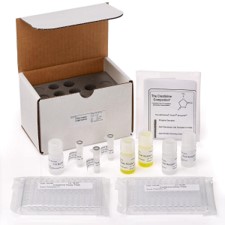
Figure 2. The Creatinine Companion assay kit, catalogue 1012
The Complete Workflow
Step 1: Sample Collection and Storage
Sampling methods:
- 24-hour urine: collected in a metabolic cage, recording total excretion completely; results are relatively accurate, but handling is more complex;
- Random/spot urine: can be collected by abdominal massage or by placing the mouse over a 96-well plate; simple, but strongly affected by concentration and dilution, so creatinine correction is required;
- Strictly avoid contamination with food and faeces during sampling; do not use samples contaminated with blood or semen, because albumin concentration in blood is about 2000 times that of normal urine and would bias results severely upward.
Sample processing and storage:
- Add no preservative after collection; clarify by centrifugation if needed;
- Short-term storage: up to 1 week at 4 °C;
- Long-term storage: up to 2 months at -60 °C; thaw naturally at room temperature, never with heat;
- Bring samples to room temperature and mix thoroughly before testing.
Step 2: Urinary Albumin ELISA
- Reagent preparation: bring all reagents and samples to room temperature in advance.
- Standard dilution: use NHEBSA diluent to make 7 successive 1:2 dilutions of the MSA standard, giving a standard series of 0.156, 0.313, 0.625, 1.25, 2.5, 5 and 10 μg/mL.
- Urine dilution: a routine 1:21 dilution is recommended (10 μL sample + 200 μL diluent); when first running the assay, test neat, 1:21 and 1:81 in parallel to find the dilution that falls in the linear range of the standard curve; use a new tip for every sample to avoid cross-contamination.
- Loading and incubation: include negative and positive controls, run standards in duplicate and samples preferably in duplicate; add labelled antibody to every well except the negative control, seal the plate and incubate for 30 minutes at room temperature.
- Washing and colour development: wash for 10 cycles with tap water or wash buffer; add TMB developer and develop for 5–10 minutes at room temperature; after adding stop solution, read absorbance at 450 nm using the negative control well as the blank.
- Calculation: fit a semi-logarithmic linear regression with log₁₀(albumin concentration) on the x-axis and mean absorbance on the y-axis; substitute sample absorbance into the equation, take the antilog to get the diluted concentration, and multiply by the dilution factor to get the original urinary albumin concentration.
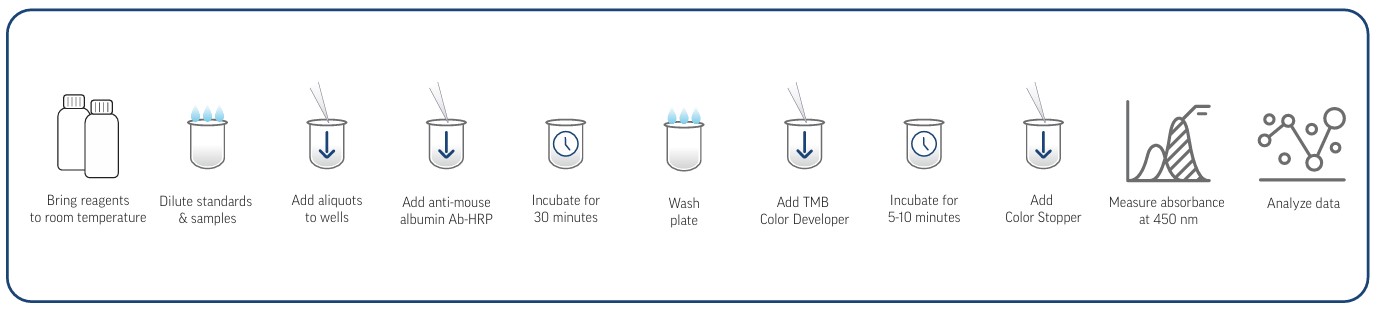
Figure 3. Urinary albumin ELISA workflow
Step 3: Urinary Creatinine Assay
- Reagent preparation: before the assay, mix 0.5 M NaOH with picrate reagent in the specified ratio to make the alkaline picrate working solution; prepare it fresh.
- Sample dilution: a 1:20 dilution in distilled water is recommended, adjusted to the actual sample concentration so that results fall within the linear range.
- Loading and reaction: include blank wells, the three standard concentrations in duplicate and samples in duplicate, adding 20 μL of standard or sample per well; add 100 μL of alkaline picrate working solution per well, stand for 10 minutes at room temperature and read the first absorbance at 500 nm; then add 100 μL of acid reagent per well, stand for 5 minutes at room temperature and read the second absorbance at the same wavelength.
- Calculation: for each well, ΔAbs = first absorbance (alkaline) − second absorbance (after acid); fit a linear regression with creatinine concentration on the x-axis and ΔAbs on the y-axis, substitute sample ΔAbs to get the diluted concentration, and multiply by the dilution factor to get the original urinary creatinine concentration.
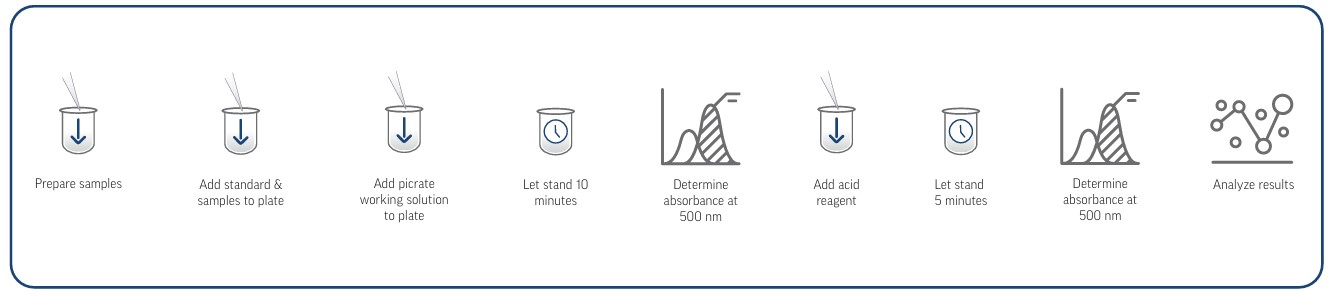
Figure 4. Modified Jaffe colorimetric workflow for urinary creatinine: readings at 500 nm before and after acid
Step 4: Calculating UACR
Divide the urinary albumin concentration by the urinary creatinine concentration of the same sample, after converting to consistent units, to get UACR. Common units are μg/mg and mg/g, which are numerically equal (1 mg/g = 1 μg/mg).
Interpreting the Data: What UACR Can and Cannot Tell You
Limitations and Precautions
- Strain and individual differences: urinary creatinine excretion differs markedly with mouse strain, sex, age, body weight and muscle mass. UACR is therefore suited to group comparisons within one model system and longitudinal follow-up of the same animals, not to bare numerical comparison across strains or outside the model context.
- Agreement with 24-hour urinary albumin: spot-urine UACR in mice is not fully consistent with 24-hour urinary albumin excretion, a difference related to strain-specific creatinine excretion. The Animal Models of Diabetic Complications Consortium (AMDCC) therefore recommends reporting both 24-hour urinary albumin excretion and UACR.
- Interfering factors: pathological states such as urinary tract infection, marked hyperglycaemia, severe hypertension and congestive heart failure, and physiological factors such as exercise, water loading and sampling posture, all affect albumin and creatinine excretion and must be considered in interpretation.
- Method limitations: the urinary albumin ELISA cannot use samples containing sodium azide, an HRP inhibitor that interferes with colour development; heavily microbially contaminated samples also reduce accuracy.
Principles for an Overall Kidney Function Assessment
UACR reflects only the relative level of urinary protein excretion and cannot be the sole basis for assessing kidney function. A complete kidney disease phenotype should combine:
- Absolute urinary albumin concentration and total 24-hour urinary albumin excretion;
- Glomerular filtration rate (GFR): preferably by inulin clearance, transcutaneous FITC-sinistrin measurement or iohexol clearance; creatinine clearance markedly overestimates GFR because of tubular creatinine secretion (which can account for up to 50% in some strains) and is not recommended as the reference standard;
- Kidney histopathology: morphological indicators such as mesangial matrix expansion, glomerular basement membrane thickness, podocyte number and tubulointerstitial fibrosis;
- Tubular injury markers, inflammation and fibrosis molecular markers, and the overall metabolic phenotype.
Summary
The core value of UACR is a standardized way to normalize urinary albumin data. It is especially suited to group comparisons of random and spot urine samples and is a convenient tool for longitudinal kidney function monitoring in mice. According to the source material, the combination of the Albuwell M competitive ELISA and the Creatinine Companion modified Jaffe method is the commercial solution widely used in research in this field. Keep sampling, pre-treatment, dilution and incubation strictly consistent during the experiment, and when interpreting data, recognize the method's limitations and judge from multiple indicators together.
Let TechWave Help You Set Up Mouse UACR Testing
If you are running mouse kidney disease, diabetic nephropathy or drug nephrotoxicity studies and want to measure albumin and creatinine in the same urine sample and calculate UACR, contact TechWave. We can help you learn about Ethos Exocell Albuwell M (1011), Creatinine Companion (1012) and companion assay materials, discuss an assay plan for your sample numbers and sampling method, and arrange a quotation.
Uses and applicable scenarios
- Longitudinal kidney function monitoring in mouse kidney injury and diabetic nephropathy models
- Assessing urinary albumin excretion in drug nephrotoxicity studies
- Phenotyping mouse models of inherited kidney disease
- Group comparisons of random and spot urine samples
Limitations
- Urinary creatinine excretion varies with strain, sex, age, body weight and muscle mass, so UACR should not be compared across strains outside the model context
- Spot-urine UACR is not fully consistent with 24-hour urinary albumin excretion
- UACR cannot be the sole basis for assessing kidney function; combine it with GFR, histopathology and other markers
- Samples containing HRP inhibitors such as sodium azide, or with heavy microbial contamination, interfere with the assay
Frequently asked questions
Why measure UACR in mouse kidney studies instead of urinary albumin concentration alone?
Because absolute urinary albumin concentration cannot tell whether a rise comes from kidney injury increasing protein excretion or from more concentrated urine. UACR uses creatinine from the same sample as an internal reference, correcting for concentration differences caused by water intake, urination, sampling time and method. This normalisation is especially valuable for random and spot urine samples.
UACR is reported in μg/mg or mg/g. Do the numbers differ?
No, they are numerically equal (1 mg/g = 1 μg/mg). UACR is the urinary albumin concentration divided by the urinary creatinine concentration of the same sample; the key is to convert both results to consistent units before dividing.
Which mouse urine samples are unsuitable for the urinary albumin ELISA?
Samples contaminated with blood or semen cannot be used: albumin in blood is about 2000 times that of normal urine and would bias results severely upward. Samples containing sodium azide are also unsuitable, as this HRP inhibitor interferes with colour development, and heavy microbial contamination reduces accuracy too. Avoid food and faecal contamination during sampling.
Can UACR values be compared directly between mouse strains?
It is not recommended. Urinary creatinine excretion differs markedly with strain, sex, age, body weight and muscle mass, so UACR is better suited to comparing groups within one model system and following the same animals over time. Spot-urine UACR is also not fully consistent with 24-hour urinary albumin excretion, which is why AMDCC recommends reporting both.
Can UACR alone be used to judge mouse kidney function?
No; UACR only reflects the relative level of urinary protein excretion. A full assessment combines absolute urinary albumin and 24-hour total excretion, glomerular filtration rate (GFR), kidney histopathology and markers of tubular injury and fibrosis. For GFR, creatinine clearance markedly overestimates it because of tubular secretion and is not recommended as the reference standard.