
Technical column
What Stalls Cultured-Meat Scale-Up Is Not the Cells but the Culture System: Qkine FG Food-Grade Animal-Free Growth Factors, 27 Catalogue Items Across Bovine, Porcine, Poultry, Fish and More, with HACCP and Full Food-Grade Documentation
As cellular agriculture moves from the laboratory to pilot and commercial scale, conventional research-grade culture systems hit three bottlenecks: animal-origin risk, batch variation and failure to meet food regulatory requirements. Through animal-free protein production, a food-grade manufacturing system (HACCP, ISO 9001:2015, end-to-end traceability, endotoxin and contamination control, CoA/CoO and regulatory support documents) and batch consistency built for scale-up, Qkine supplies FG food-grade growth factors for bovine, porcine, poultry, fish and seafood cellular agriculture systems: 27 catalogue items including activin A, EGF, multi-species FGF-2, FGF2-G3, HGF NK1, IGF-1, NRG-1, PDGF-BB, TGF-β and vitronectin.
Definition
Food-grade (FG) growth factors are recombinant proteins produced under a quality and documentation system aimed at food manufacturing, combining animal-free production, HACCP hazard analysis, batch traceability and documents such as CoA, CoO, allergen and composition statements, for use as raw materials in serum-free media for cellular agriculture.
As cellular agriculture and future foods develop rapidly, one conclusion keeps being confirmed: what really limits industrialization is often not the cells themselves but the industrial-grade reliability of the culture system.
As the industry moves from the laboratory to pilot and commercial production, conventional research-grade culture systems start to show clear bottlenecks: batch variation, animal-origin risk, regulatory uncertainty and quality standards that cannot meet food-system requirements. This invisible but decisive foundational problem is what Qkine is trying to solve.
Video explainer
Lab-Grown Meat's Real Bottleneck Isn't the Cells. It's What They Eat
Watch on YouTube ↗Video transcript
Making cultivated meat, we learned to keep the cells alive long ago. What really holds it back is the food we give those cells. Cultivated meat starts with a few cells taken from an animal. They are grown in a tank until they become meat.
To divide and grow, the cells depend on the nutrients and signals they take in at every step. Taking this food from the lab to the factory means clearing three hurdles. First, remove animal serum. Second, make every batch the same.
Third, get the paperwork that food production requires. Hurdle one. In the lab, the go-to all-purpose supplement is fetal bovine serum. Cells love it, but it comes from the blood of calf fetuses collected at slaughter. Cultivated meat is meant to move away from animals, so depending on an animal product for its food makes no sense.
Serum also varies from batch to batch, and it can carry pathogens of animal origin. So the field turned to serum-free media: sugars, amino acids, vitamins and salts make the base, plus a few growth factors. Growth factors are proteins that tell cells when to divide and when to grow.
Here's the catch. Growth factors are used in tiny amounts, yet they are among the most expensive parts of a serum-free medium. Several industry analyses name them as a major obstacle to scale-up. In the lab, a bottle of medium holds a few hundred milliliters.
In a factory, one tank holds thousands of liters. When the portion grows thousands of times, every spoonful of growth factor has to keep up. Hurdle two: make every batch the same. The bigger the tank, the more a bad batch costs.
If growth factor activity drops a little, the cells grow a little slower, and the whole tank may fail its specification. Hurdle three: the paperwork food production requires. Ingredients usually need to be traceable, covered by hazard analysis and critical control points, known as HACCP, and declared for allergens.
High-grade materials made for cell therapy come with drug paperwork, and that cannot simply stand in for food paperwork. To be clear: food-grade ingredients only meet a precondition of food production. Whether cultivated meat reaches the market is decided by regulators, product by product, place by place.
So where do things stand? As of November 2026, according to the Good Food Institute, cultivated meat can be sold in Singapore, the United States and Australia, and at least 11 countries or regions, these three included, are reviewing new products.
At least 7 US states have also passed laws to ban or pause its sale. So, to move from the lab into the factory, the cells' food must do three things at once: no animal serum, every batch the same, and paperwork that food production accepts.
For how to choose a culture system and the details of food-grade growth factors, see the article on our website. The sources for this video are listed in the description.
Produced by TechWave. For research reference only; not medical advice.
Why the Cultured-Meat Industry Is Stuck on the Culture System
Whether for cultured meat, fat and dairy, or other cellular agriculture applications, the industry generally relies on growth factors and protein factors to maintain cell state. Conventional systems have three core problems:
- Animal-origin risk: animal serum components such as FBS bring batch variation, potential contamination risk and food-compliance obstacles.
- Batch consistency that is hard to industrialize: research-grade reagents are designed to "work in experiments", not for "long-term stable production"; industrialization requires every batch to be consistent.
- Difficulty meeting food-grade regulatory requirements: once cellular agriculture enters the food system, raw materials must offer traceability, a HACCP (Hazard Analysis and Critical Control Points) system and food-safety regulatory support. A research-grade supply chain is no longer enough.
What Qkine Does: Not Just Selling Proteins, but Setting Food-Grade Raw Material Standards
According to Qkine's public information, it positions itself not only as a recombinant protein supplier but as a provider of standardized food-grade biological raw materials for cellular agriculture, with core capabilities in three areas.
Animal-Free System Design
According to Qkine, all its key proteins and growth factors are produced in animal-free systems. The value of this design lies not only in research but in industry:
- Lower food regulatory risk;
- Meeting future "clean label" requirements;
- Supporting regulatory submissions for cellular agriculture products.
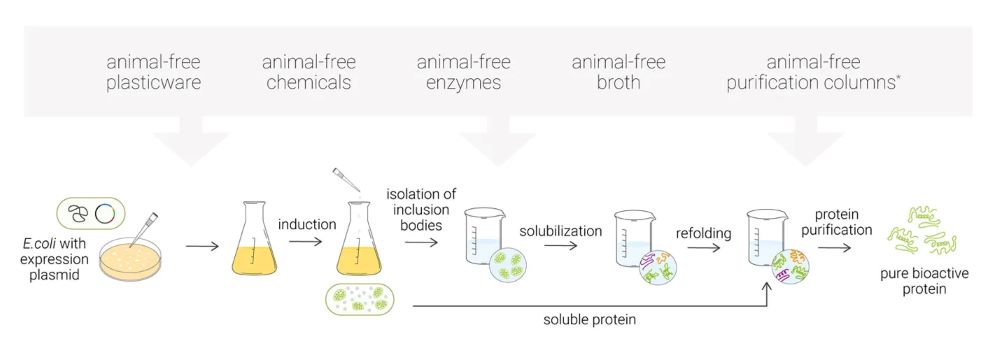
Figure 1. Qkine food-grade process control: standard operating procedures (SOPs) are used at every step of animal-free protein production.
Food-Grade Manufacturing System
According to Qkine, the company has built a quality system that meets food manufacturing requirements, including:
- A HACCP food-safety system;
- An ISO 9001 quality management system;
- End-to-end traceability;
- Endotoxin and contamination control standards;
- Complete CoA/CoO and regulatory support documents.
In Qkine's words, this means its products are not only "usable" but raw materials that can enter food regulatory review.
BSI ISO 9001 quality management mark from Qkine materials, certificate number FS 747253.
According to the source material, Qkine holds ISO 9001:2015 certification for the development of proteins and related products. 2015 is the version of the standard; projects should still verify the certificate scope and validity.
Batch Consistency Built for Industrialization
One major risk in scaling cellular agriculture is this: small change in protein → large change in cell behavior. Qkine emphasizes:
- Highly consistent expression systems;
- Reproducible production batches;
- Stable biological activity.
This matters greatly for scale-up.
Qkine Addresses the Industry's "Hidden Bottleneck"
As the industry moves from "can we make it" to "can we produce it at scale", the logic of development changes. The focus used to be cell lines, scaffold materials and differentiation efficiency; now the keys are:
- Stability of the culture system;
- Compliance of raw materials;
- Standardization of the supply chain.
The source material places Qkine at the core of this shift: an "infrastructure-layer" supplier for cellular agriculture.
Why This Stage Is Especially Critical
According to the source material's analysis, global cellular agriculture is reaching three turning points:
- Moving from the laboratory to factory production;
- Food-grade approval standards becoming clearer;
- Raw materials having to be standardized, substitutable and verifiable.
At this stage, the core competitive advantage is no longer a single technology but whether you have a regulatable biological raw material system.
Which FG Food-Grade Proteins Are Available Now
If you work in any of these areas:
- Cultured meat;
- Cellular agriculture;
- Development of food-grade cell culture systems;
- Serum-free medium optimization;
- Industrial-scale scale-up research;
Qkine offers an FG food-grade growth factor range for bovine, porcine, poultry, fish and seafood. According to the source material, it is becoming an important raw material choice for multiple new-food development projects worldwide.
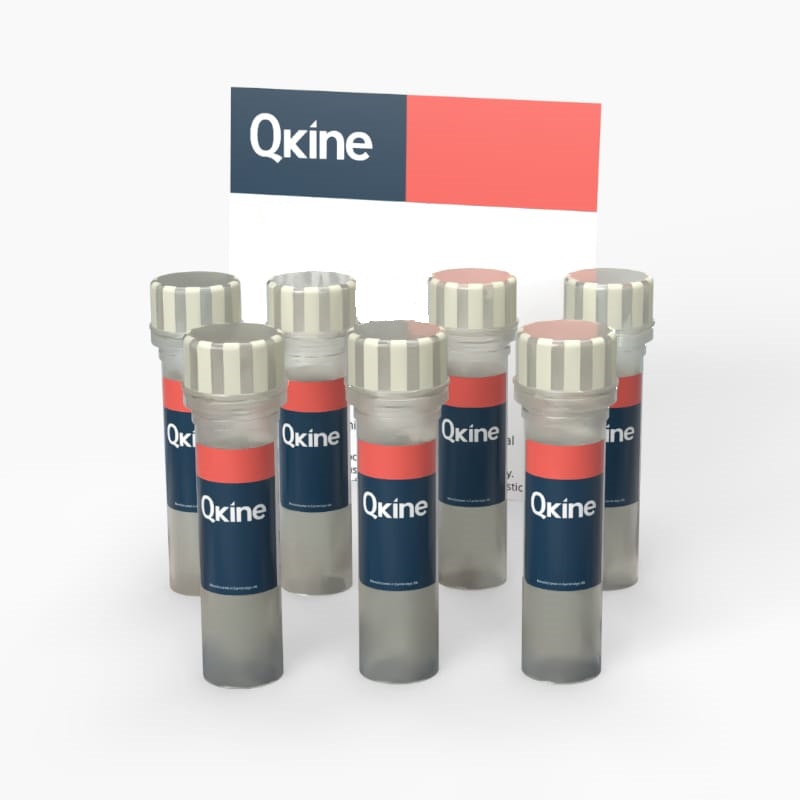
Recombinant growth factor formats for food-manufacturing use.
These factors come with complete food-grade documentation, including a material safety data sheet (MSDS), HACCP information, allergen statement, animal origin free (AOF) statement, toxicity and β-lactam statements, certificate of analysis (CoA), certificate of origin (CoO) and composition statement.
| Catalogue no. | Protein |
|---|---|
| Qk108-FG | Recombinant bovine/porcine activin A |
| Qk109-FG | Recombinant bovine/porcine activin A PLUS |
| Qk110-FG | Recombinant bovine/porcine follistatin-resistant activin A (FRACTA) |
| Qk064-FG | Recombinant porcine EGF |
| Qk040-FG | Recombinant bovine/porcine FGF-2 (145 aa) |
| Qk030-FG | Recombinant chicken/duck FGF-2 (145 aa) |
| Qk056-FG | Recombinant bovine/porcine FGF-2 (154 aa) |
| Qk102-FG | Recombinant salmon FGF-2 (145 aa) |
| Qk103-FG | Recombinant salmon FGF-2 (154 aa) |
| Qk104-FG | Recombinant tuna FGF-2 (145 aa) |
| Qk105-FG | Recombinant tuna FGF-2 (154 aa) |
| Qk106-FG | Recombinant eel FGF-2 (145 aa) |
| Qk107-FG | Recombinant eel FGF-2 (154 aa) |
| Qk116-FG | Recombinant zebrafish FGF-2 |
| Qk080-FG | Recombinant bovine/porcine FGF2-G3 (145 aa) |
| Qk081-FG | Recombinant bovine/porcine FGF2-G3 (154 aa) |
| Qk060-FG | Recombinant bovine HGF NK1 |
| Qk061-FG | Recombinant porcine HGF NK1 |
| Qk113-FG | Recombinant bovine/porcine IGF-1 |
| Qk114-FG | Recombinant bovine/porcine IGF-1 LR3 |
| Qk115-FG | Recombinant bovine NRG-1 |
| Qk079-FG | Recombinant bovine PDGF-BB |
| Qk111-FG | Recombinant bovine/porcine TGF-β1 PLUS |
| Qk112-FG | Recombinant bovine/porcine TGF-β2 |
| Qk084-FG | Recombinant porcine TGF-β3 |
| Qk121-FG | Recombinant bovine vitronectin |
| Qk122-FG | Recombinant porcine vitronectin |
When selecting, note that similarly named items cannot be swapped directly: the catalogue lists both 145 aa and 154 aa FGF-2 versions, and amino-acid length, species sequence and stabilizing design all affect medium formulation, so re-confirm the dose by biological activity when changing catalogue numbers. Also, "food grade" means the manufacturing and documentation system is aimed at food use; it does not mean the product is automatically approved in every market or every cultured-meat end product. Final suitability depends on the target market, use level, residues, allergens and end-product assessment.
Beyond Food Grade: Qkine Also Offers Cell-Therapy-Grade Products
In addition to FG food-grade products, Qkine offers cell and gene therapy grade (CGT) products with more comprehensive quality testing and documentation.
Let TechWave Help You Build a Cellular Agriculture Raw Material Plan
If you are developing cultured meat, cellular agriculture or food-grade serum-free media and want to move from research-grade raw materials to animal-free growth factors backed by food-grade documentation, contact TechWave. Based on your species, cell type and scale-up stage, we can help you work through the Qkine FG food-grade growth factor list and its documentation, introduce Qkine CGT-grade products, and arrange a quotation.
Uses and applicable scenarios
- Cell proliferation and differentiation for cultured meat
- Developing fat, dairy and seafood cell systems in cellular agriculture
- Formulation optimization of food-grade serum-free media
- Scaling cellular agriculture processes from pilot to industrial scale
Limitations
- "Food grade" means the manufacturing and documentation system is aimed at food use; it does not mean automatic approval in every market or end product
- Species fit, dose and potency must be verified in the target cells and process, and similarly named catalogue items cannot be swapped directly
- Certificate scope and validity should be checked against current official documents
Frequently asked questions
Does using "food-grade" growth factors for cultured meat mean the raw material is already approved?
No. "Food grade" means the manufacturing and documentation system is aimed at food use; it does not mean automatic approval in every market or every cultured-meat end product. Final suitability depends on the target market, use level, residues, allergens and end-product assessment.
Why are research-grade culture reagents not enough when cellular agriculture scales to pilot production?
Three bottlenecks: animal-derived components such as FBS bring batch variation, potential contamination and food-compliance obstacles; research-grade reagents are designed to work in experiments, while industrial production needs every batch to be the same; and once in the food system, raw materials need traceability, a HACCP system and food-safety regulatory support. A small change in protein can cause a large change in cell behaviour, so batch consistency matters especially for scale-up.
What documentation comes with Qkine FG food-grade growth factors?
They come with complete food-grade documentation: MSDS, HACCP information, allergen statement, animal origin free (AOF) statement, toxicity and β-lactam statements, certificate of analysis (CoA), certificate of origin (CoO) and composition statement. According to the source material, Qkine holds ISO 9001:2015 certification; projects should still verify the certificate scope and validity.
FGF-2 comes in 145 aa and 154 aa versions. Can they be swapped directly?
Not directly. Amino-acid length, species sequence and stabilizing design all affect medium formulation, and similarly named catalogue items cannot be swapped either. When changing catalogue numbers, re-confirm the dose by biological activity and verify species fit and potency in the target cells and process.
Which species do Qkine FG growth factors cover for cellular agriculture?
Bovine, porcine, poultry, fish and seafood cellular agriculture systems, across 27 catalogue items. FGF-2 is offered in bovine/porcine, chicken/duck, salmon, tuna, eel and zebrafish versions, alongside activin A, EGF, FGF2-G3, HGF NK1, IGF-1, NRG-1, PDGF-BB, TGF-β and vitronectin. Besides FG food grade, Qkine also offers cell and gene therapy grade (CGT) products with more comprehensive quality testing and documentation.