
Technical column
Polysaccharide Vaccines Fail Infants Because of the Immune Mechanism: Routine Hib Conjugate Vaccination Cut Severe Infection by Over 90%, and CRM197's G52E Genetic Detoxification Leaves Less Than a Millionth of the Native Toxin's Toxicity
Polysaccharide antigens are T cell-independent and induce mainly IgM, so they rarely generate high-affinity IgG or immune memory and offer limited protection in infants. Conjugating polysaccharide to a carrier protein brings in T cell help: after the Hib conjugate vaccine was approved in 1987, routine immunization reduced the incidence of severe Hib infection by more than 90%. Approved conjugate vaccines use five classes of carrier protein. CRM197 is a G52E point mutant of diphtheria toxin, about 58 kDa, with less than one millionth of the toxicity of the native toxin. Because it is detoxified genetically rather than with formaldehyde, its structure is more uniform and its T cell epitopes stay native; other work notes that its B fragment degrades more readily in vivo, so carrier choice still depends on the specific antigen and conjugation system.
Definition
CRM197 is a genetically detoxified G52E point mutant of diphtheria toxin, about 58 kDa, which retains the immunological characteristics of the native toxin but loses catalytic activity, and is used as a carrier protein in polysaccharide conjugate vaccines to bring T cell help to polysaccharide antigens.
What a conjugate vaccine has to solve is not merely getting the immune system to recognize a polysaccharide antigen, but getting it to build high-affinity antibodies and lasting memory. That distinction explains what carrier proteins such as CRM197 actually do in a vaccine.
Video explainer
Sugar Needs a Partner: Why Plain Polysaccharide Vaccines Underperform in Infants
Watch on YouTube ↗Video transcript
Some vaccine components are seen by the immune system but are hard for it to remember. One of them is the bacterial capsular polysaccharide. Call it the sugar chain. The fix is surprisingly simple: give it a partner. Link the sugar to a protein, and the immune response changes completely.
That is a conjugate vaccine. On its own, the sugar chain is recognised by B cells. Polysaccharides are T cell-independent antigens, so they stimulate B cells directly. But it stops there. The antibodies produced are mainly IgM: lower affinity, and hard to upgrade.
More importantly, without T cell help, B cells struggle to complete affinity maturation and to leave lasting immune memory. The gap is clearest in infants. In young children this T cell-independent pathway is not yet mature, so plain polysaccharide vaccines offer limited protection in that age group.
To be clear, plain polysaccharide vaccines are not useless. The safety and protection of the 23-valent pneumococcal and quadrivalent meningococcal polysaccharide vaccines were established long ago. What drove the development of conjugate vaccines was mainly their limited protection in young children.
With the protein attached, the first step changes: sentinel cells carry the whole package into the lymph node. Here is the key step. The B cell still recognises the sugar, but it presents a short piece of the protein to a T cell.
The T cell recognises that piece, and agrees to help. With that help, the B cell proliferates and goes through affinity maturation. In plain terms, the antibodies get better round after round. Finally it differentiates into two things: plasma cells secreting high-affinity IgG, and memory B cells.
The memory is what a conjugate vaccine is really for. It works. In 1987 the Haemophilus influenzae type b conjugate vaccine was approved. After that, routine immunisation reduced the incidence of severe Hib infection by more than 90%.
That figure is an epidemiological statistic from an immunisation programme: a change in incidence in a population over time, not a promise about any individual. If you need a partner, you have options. Approved conjugate vaccines use five main classes of carrier protein.
Three come from toxoid proteins: tetanus toxoid, diphtheria toxoid, and today's subject, CRM197. The other two are bacterial membrane proteins: protein D and the outer membrane protein complex. These are not interchangeable raw materials.
Differences in structure and modification affect how they conjugate and how immunogenic the result is. CRM197 is a single point mutant, about 58 kDa. It is used as the carrier in pneumococcal, meningococcal, Hib and other conjugate vaccines.
Some studies consider CRM197 more uniform in structure, with T cell epitopes kept in their native state and immunogenicity easier to control between batches, giving a better carrier effect compared with diphtheria toxoid.
But hold the conclusion. Other work takes a different view: compared with diphtheria toxoid, the B fragment of CRM197 degrades more readily in the body, which may affect its immunogenicity. So carrier selection cannot rest on uniformity alone.
It has to be judged together with the specific antigen, the conjugation system and the observed immune response. That is episode two of Changing of the Guard. The point is not just being recognised, but leaving high-affinity antibodies and lasting memory.
With a partner, the sugar gets there.
Why Plain Polysaccharide Vaccines Underperform in Infants: A Missing Partner
Watch on YouTube ↗Video transcript
Some vaccine components are seen by the immune system but are hard for it to remember. B cells recognise it, but the antibodies are mainly IgM: lower affinity, hard to upgrade. Without T cell help there is little lasting memory. The gap is clearest in infants.
The fix is a partner. Once linked to a protein, the B cell presents a short piece of it to a T cell, and the T cell agrees to help. With that help the antibodies improve round after round, and memory B cells remain. That is a conjugate vaccine.
In 1987 the Hib conjugate vaccine was approved; routine immunisation then cut the incidence of severe Hib infection by over 90%. That is a population statistic, not an individual promise. Full article on our site.
Produced by TechWave. For research reference only; not medical advice.
1. The Limits of Polysaccharide Vaccines: Why Infants Are Underprotected
Bacterial capsular polysaccharides are key surface antigens of pathogens and were the basis of early antibacterial vaccines. A quadrivalent pneumococcal polysaccharide vaccine was reported as early as 1945, and the 23-valent pneumococcal and quadrivalent meningococcal polysaccharide vaccines followed into use, with their safety and protective effect established.
But polysaccharide antigens are T cell-independent: they stimulate B cells directly and induce mainly an IgM response, without activating B–T cell cooperation, so high-affinity IgG antibodies and immune memory are hard to generate. In infants the T cell-independent immune mechanism is not yet mature, so polysaccharide vaccines protect young children only to a limited extent — which is the main reason conjugate vaccine technology was developed.
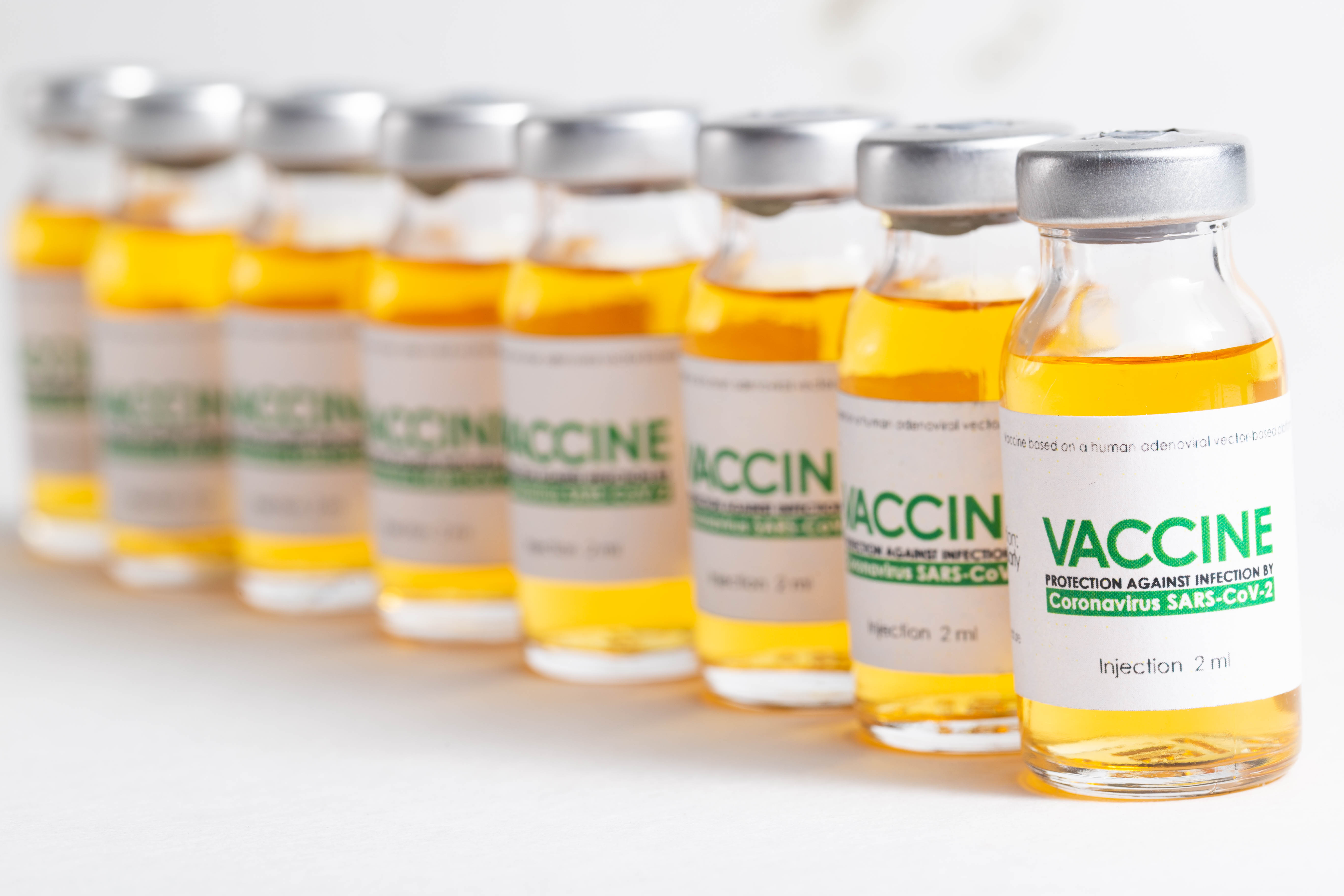
Figure 1. Vaccine vials; the labels show an unrelated vaccine product, not a CRM197 conjugate vaccine.
2. How Conjugate Vaccines Work: Bringing In T Cell Help
Conjugating polysaccharide antigen to an immunogenic carrier protein was the key advance in polysaccharide vaccine technology. The Haemophilus influenzae type b (Hib) conjugate vaccine was approved in 1987, and routine immunization reduced the incidence of severe Hib infection by more than 90%.
Once in the body, a conjugate vaccine activates the complete T cell-dependent pathway:
- Dendritic cells take up the vaccine and transport it to lymph nodes, where T cell epitopes on the carrier protein drive germinal centre formation;
- Polysaccharide-specific B cells bind and internalize the antigen through surface receptors and present carrier-protein peptides to follicular helper T cells;
- The B cells that receive help proliferate and undergo somatic hypermutation and affinity maturation;
- They finally differentiate into memory B cells and antibody-secreting plasma cells, producing high-affinity IgG and long-term immune memory.
3. Five Carrier Classes: Compare Origin, but Compare Immune Role More
Approved conjugate vaccines use five main classes of carrier protein: three toxoid proteins derived from toxins and two bacterial membrane proteins. They are not interchangeable raw materials, and differences in structure and modification affect both conjugation behaviour and vaccine immunogenicity.
| Carrier | Characteristics | Typical applications |
|---|---|---|
| Tetanus toxoid (TT) | Prepared from tetanus toxin by formaldehyde detoxification | Hib and multivalent meningococcal conjugate vaccines |
| Diphtheria toxoid (DT) | Prepared from diphtheria toxin by formaldehyde detoxification | Hib and quadrivalent meningococcal conjugate vaccines |
| CRM197 | Genetically detoxified mutant of diphtheria toxin | Pneumococcal, meningococcal, Hib and other conjugate vaccines |
| Protein D (PD) | Highly conserved surface lipoprotein of Haemophilus influenzae | Acts as a carrier and can provide cross-protection against non-typeable H. influenzae |
| Outer membrane protein complex (OMPC) | Outer membrane protein complex from group B meningococcus | Hib conjugate vaccines |
Tetanus toxoid, diphtheria toxoid and CRM197 are the three most widely used carriers, and their structural differences and modification methods directly affect conjugation processes and vaccine immunogenicity.
4. The Molecular Structure and Detoxification Mechanism of CRM197
Basic Molecular Features
CRM197 is a G52E point mutant of diphtheria toxin, isolated from a lysogenic Corynebacterium diphtheriae mutant strain. Its physicochemical properties closely resemble those of native diphtheria toxin, both are about 58 kDa, and their immunological characteristics show no obvious difference, yet its toxicity is less than one millionth that of the native toxin.
Diphtheria toxin natively contains three domains: a receptor-binding domain (R), a translocation domain (T) and a catalytic domain (C). The native toxin binds a cell-surface receptor through the receptor-binding domain; after endocytosis, the acidic environment triggers a conformational change, the translocation domain inserts into the endosomal membrane, and the catalytic domain is released into the cytosol, where it ADP-ribosylates elongation factor EF-2, inhibiting protein synthesis and producing toxicity.
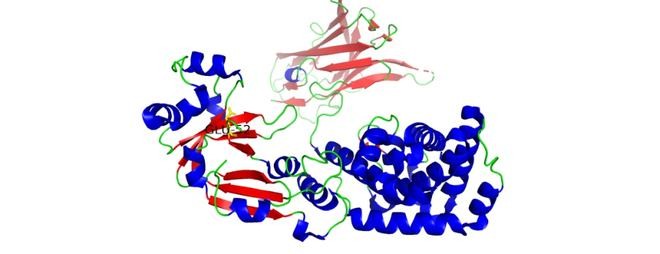
Figure 2. Structure of the CRM197 protein.
The Structural Basis for Loss of Enzymatic Activity
The loss of toxicity in CRM197 comes from the substitution of glycine by glutamate at position 52 (G52E). The mutation does not directly change the structure of the active centre; instead it affects the conformation of the active-site loop (CL2, residues 38–49), weakening the protein's ability to bind NAD.
In native diphtheria toxin, that active-site loop is ordered without bound NAD and becomes disordered once NAD binds; in CRM197 the loop is in a disordered, flexible conformation whether or not NAD is present, so NAD cannot bind stably and the protein loses catalytic activity and cytotoxicity while retaining its immunological characteristics.
5. CRM197 as a Carrier: Technical Advantages and the Debate
Structural Uniformity
Compared with diphtheria toxoid prepared by formaldehyde detoxification, CRM197 is detoxified by a genetic point mutation with no chemical treatment, so no random chemical modification or intramolecular crosslinking is introduced. The protein structure is more uniform, all T cell epitopes remain in their native state, and immunogenicity is easier to control between lots. Some studies hold that this more uniform structure gives CRM197 a better carrier effect than diphtheria toxoid.
The Other View
Other work takes a different position: formaldehyde modification can stabilize the B fragment of diphtheria toxin (which contains the receptor-binding and translocation domains), making it more resistant to proteolytic degradation in vivo, whereas the B fragment of CRM197 degrades more readily in vivo, which may affect its immunogenicity.
Carrier selection therefore has to weigh the specific antigen, conjugation system and immune performance together, rather than judging the final outcome on structural uniformity alone. This difference also points to a direction for carrier protein process optimization.
6. Summary
As a genetically detoxified carrier protein, CRM197 is used in pneumococcal, meningococcal, Hib and other conjugate vaccines thanks to its uniform structure and stable immunogenicity. A detailed understanding of its molecular structure and detoxification mechanism provides a theoretical basis for conjugation process optimization and new carrier development, and in turn for better lot consistency and immune performance in conjugate vaccines.
Let TechWave Support Your Carrier Protein Selection
If your project focuses on pneumococcal, meningococcal or Hib conjugate vaccines, needs to evaluate CRM197 against TT, DT, PD and OMPC in a specific system, or is preparing carrier protein documentation for conjugation process development, contact TechWave. We can provide technical discussion around the application position, documentation needs and selection questions for CRM197 carrier protein, and arrange a quotation.
Uses and applicable scenarios
- Development of pneumococcal, meningococcal, Hib and other polysaccharide conjugate vaccines
- Comparison and selection of conjugate vaccine carrier proteins
- Conjugation process optimization and lot-consistency studies
Limitations
- Carrier choice depends on the specific antigen, conjugation system and immune performance
- The effects of structural uniformity and in vivo B-fragment stability must be assessed together in the specific vaccine