
Products
PG-011 FGF2 Alternative Peptide (FGFR1c Agonist)
PG-011: a fully chemically synthesized FGF2 (bFGF) alternative peptide that binds and activates FGFR1c. It matches FGF2 in MSC proliferation at about 1/3 of the mass concentration, about 30 ng/mL maintains undifferentiated iPSCs as well as 100 ng/mL FGF2, and it keeps its activity after 4 days at 37 °C.
Product information
- Brand
- PeptiGrowth
- Catalog no.
- PG-011
- Specification
- 10 µg / 100 µg / 1 mg / 10 mg
Stop chasing FGF2 with medium changes: an FGFR1c agonist that stays active at 37 °C
Recombinant FGF2 has very low stability and readily degrades and loses activity under culture conditions, so it is used at high concentrations with frequent medium changes, which weighs on both cost and workload. PeptiGrowth's PG-011 is a dimer of cyclic peptides that bind human FGFR1c; by binding FGFR1c it acts as an agonist and activates signalling in many cell types. According to the manufacturer, it matches FGF2 in cell proliferation and iPSC maintenance with better stability, allowing fewer medium changes and lower usage concentrations.
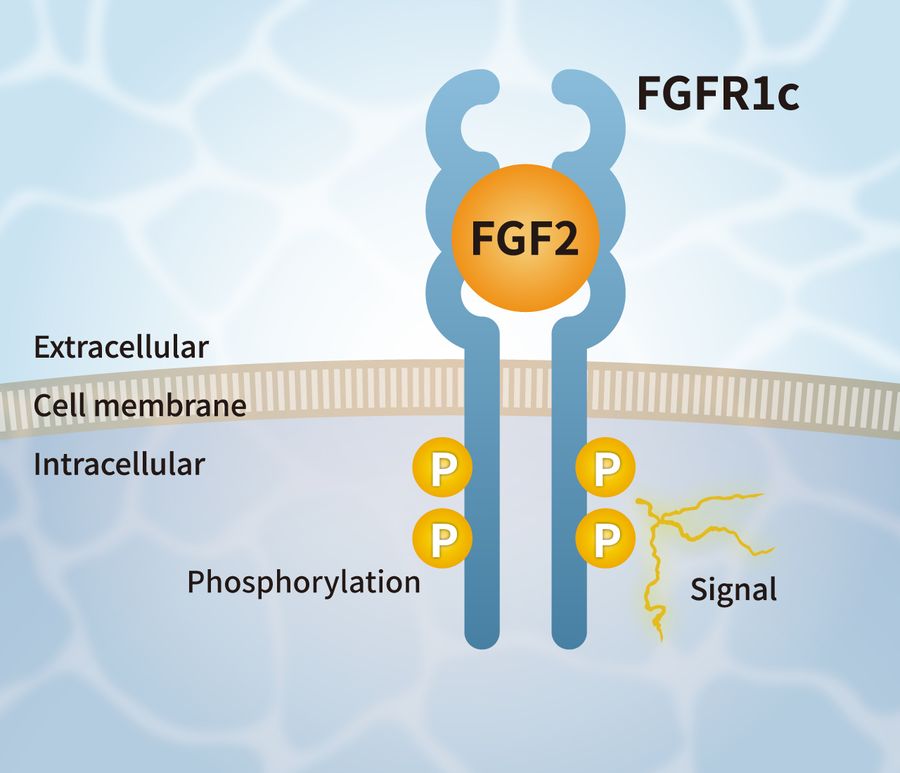
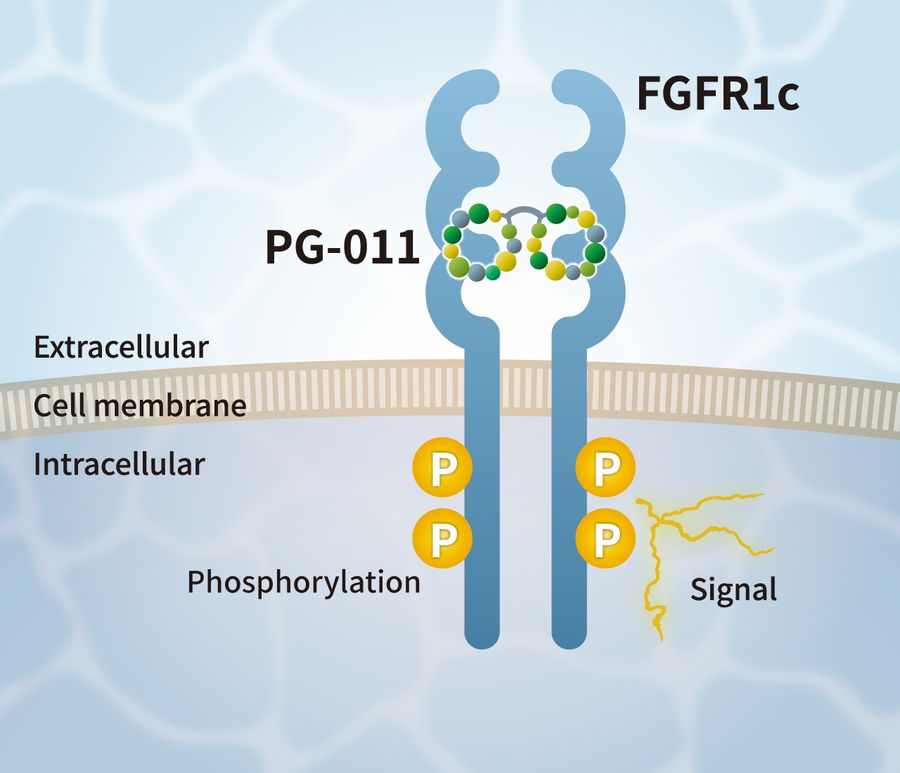
Manufacturer data: human MSC proliferation
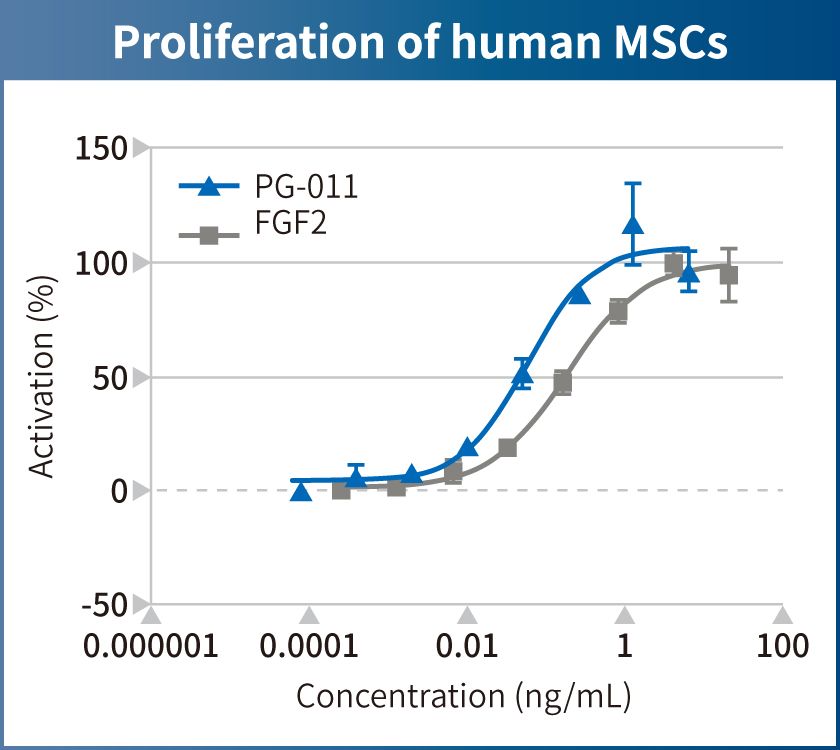
The manufacturer compared the proliferation activity of PG-011 and FGF2 on bone marrow-derived human MSCs: the two were comparable, and on a mass basis (ng/mL) PG-011 reached equivalent activity at about one-third of the FGF2 concentration. The information sheet's activity assays are FGFR1c phosphorylation in BaF3 cells overexpressing human FGFR1c in the presence of 1 U/mL heparin, and proliferation of bone marrow-derived human MSCs without heparin, with an expected ED50 of 0.1–1.5 ng/mL.
Manufacturer data: maintaining undifferentiated iPSCs
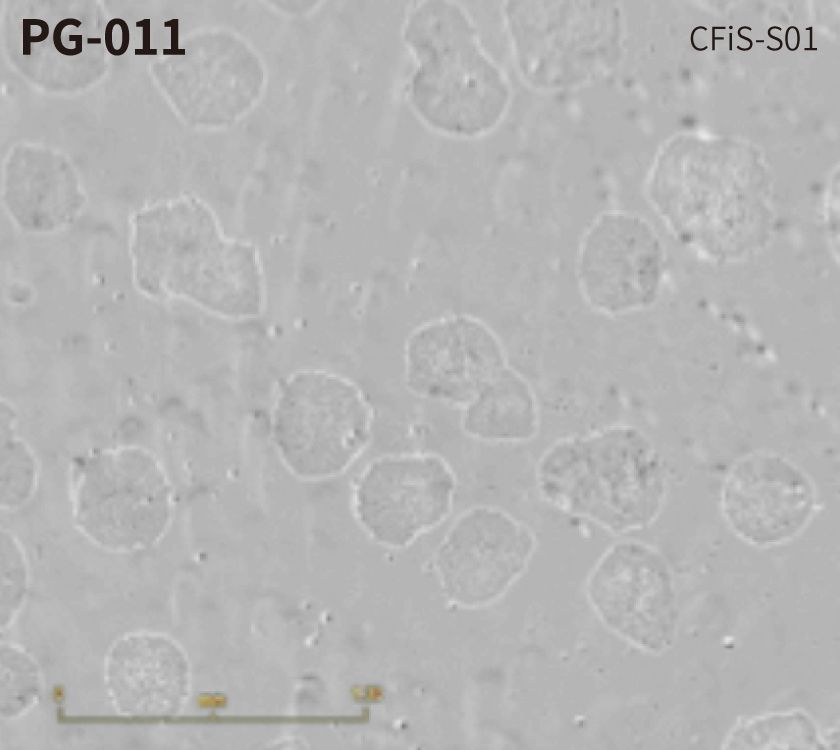
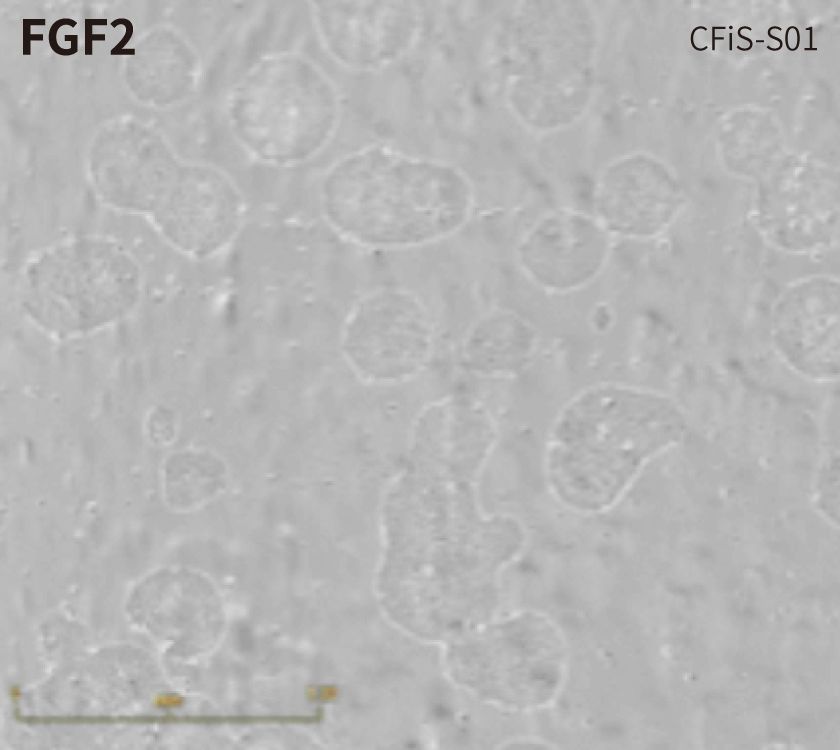
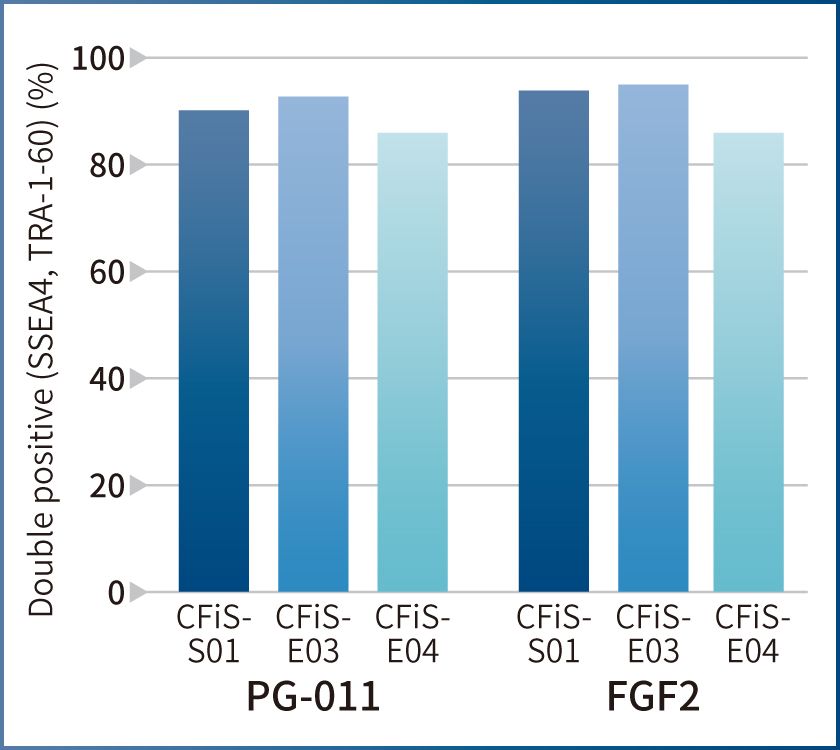
With the CiRA Foundation, PeptiGrowth evaluated how well PG-011 maintains the undifferentiated state of human iPSCs. Three iPSC lines were cultured for 7 days in medium containing FGF2 (100 ng/mL, about 5.9 nM) or an equimolar concentration of PG-011 (about 30 ng/mL) and then passaged, for three rounds. After the third passage the iPSCs looked almost identical under both conditions, and flow cytometry on day 7 showed similar positivity for the undifferentiated markers SSEA4 and TRA-1-60 with PG-011 and FGF2 in all three lines.
Manufacturer data: stability at 37 °C and bovine muscle satellite cells
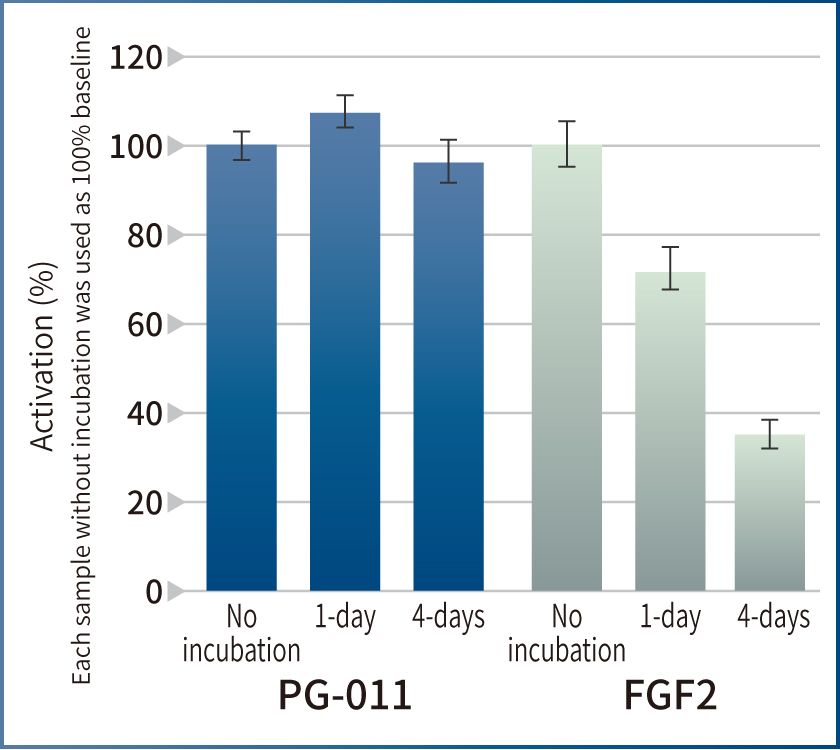
- Stability: PG-011 and FGF2 were incubated at 37 °C in serum-free medium for 1 and 4 days, and remaining activity was measured by MSC proliferation (0.06 nM). FGF2 lost activity over the incubation time, while PG-011 kept its activity even after 4 days.
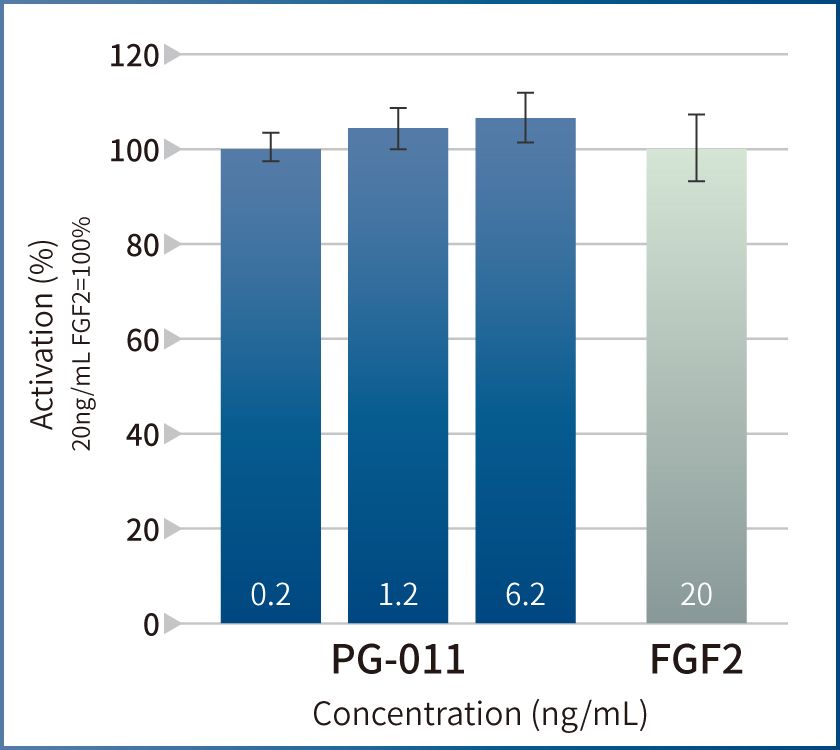
- Bovine muscle satellite cells: PG-011 showed proliferation activity even at 0.2 ng/mL. The manufacturer sees potential applications not only in regenerative medicine and cell therapy but also in cultured-meat production.
Specifications
| Item | Details |
|---|---|
| Catalogue number | PG-011 |
| Replaces | FGF2 (bFGF, basic fibroblast growth factor) |
| Target | FGFR1c (agonist) |
| Pack sizes | 10 µg (equivalent to rFGF2 30 µg), 100 µg (equivalent to rFGF2 300 µg), 1 mg (equivalent to rFGF2 3 mg), 10 mg (equivalent to rFGF2 30 mg) |
| Formulation | Lyophilized from 0.2 µm-filtered DMSO solution |
| Purity | ≥95% (HPLC) |
| Molecular weight | 5127.81 (acetate) |
| Storage | Unopened vial at −20 °C or below |
| Grade | Research use only (RUO), available with an animal component-free (ACF) certificate; the manufacturer offers GMP-grade product and bulk supply on request |
Starting concentration and reconstitution
- The manufacturer expects PG-011 to match recombinant FGF2 at 1/3 of its mass concentration and gives a direction for each use: for MSC or fibroblast proliferation, test several points around 1/3 of rFGF2; for iPSC maintenance, start at 1/3 and test higher concentrations; for differentiation induction, start at 1/3 and test lower concentrations.
- Reconstitute at 100–200 µg/mL in DMSO: centrifuge the vial before opening and rinse the inside thoroughly with DMSO. For example, 10 µg in 100 µL DMSO gives 100 µg/mL. For further dilution use a buffered solution (such as PBS) with a carrier component, and use the peptide promptly after opening and reconstitution.
Pairing with StemFit Basic05
Ajinomoto's StemFit™ Basic05 is an animal-origin-free medium for human pluripotent stem cell expansion that contains no bFGF in the bottle; its product information recommends adding bFGF or PG-011, with PG-011 at a final 10–30 ng/mL.
Where it fits
- iPSC maintenance and differentiation protocols that need FGF2
- Proliferation of MSCs and fibroblasts
- Long-term culture and scale-up that aim for fewer medium changes and lower FGF2 usage; proliferation studies for cultured-meat cells
Maintaining iPSCs or expanding MSCs with FGF2? Contact TechWave for PG-011 selection advice, concentration-design support and a quotation.