
Products
PG-010 TPO Alternative Peptide (TPOR Agonist)
PG-010: a fully chemically synthesized TPO alternative peptide that binds the thrombopoietin receptor (TPOR) and induces its dimerization. Activity is nearly equal to TPO per mole at about 1/2.6 of the recombinant TPO mass concentration, and it is used in an application note that differentiates iPSCs into NKT cells through HSPCs.
Product information
- Brand
- PeptiGrowth
- Catalog no.
- PG-010
- Specification
- 10 µg / 100 µg / 1 mg
Swap the TPO in hematopoietic differentiation for a cyclic peptide
PeptiGrowth's PG-010 consists of a cyclic peptide that binds the thrombopoietin receptor (TPOR) and acts as a growth factor alternative peptide with agonist activity at TPOR: like TPO it induces TPOR dimerization and exerts similar biological activity.
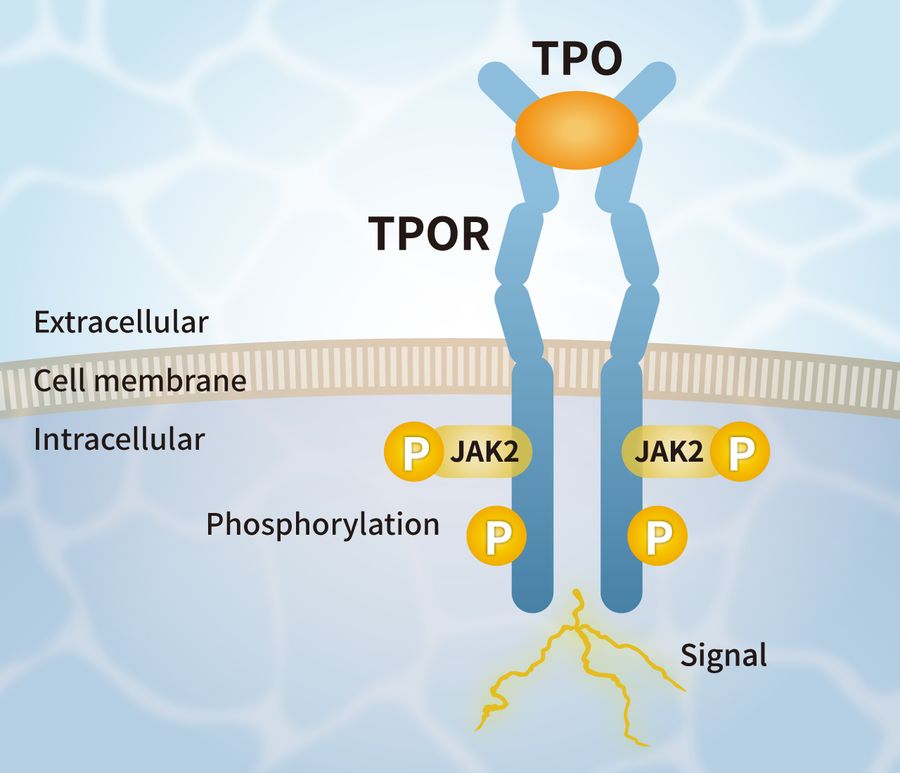
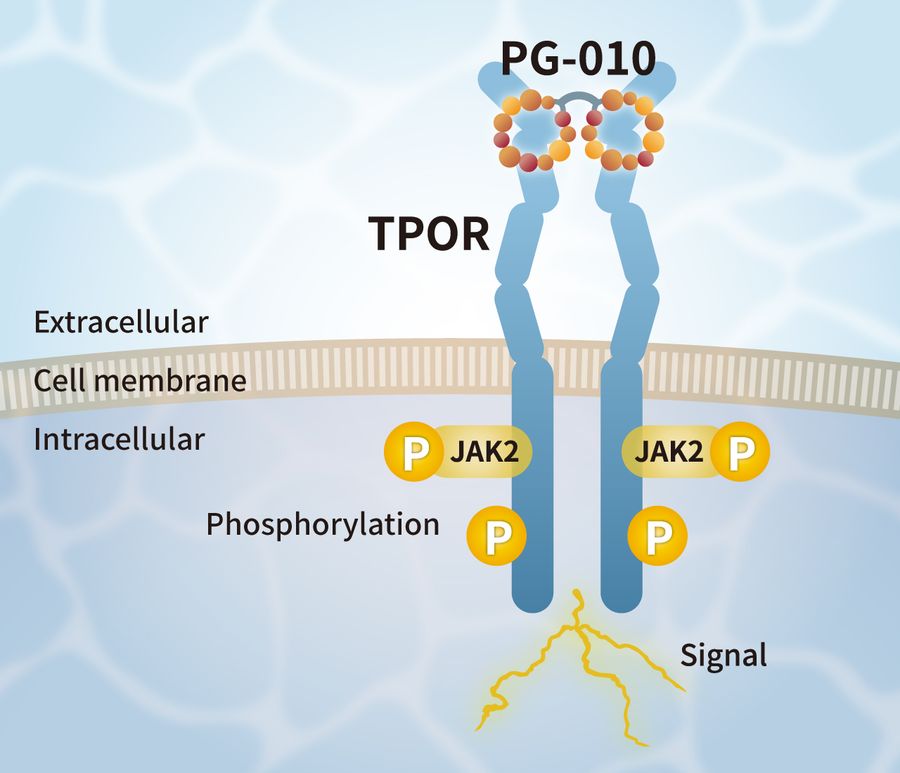
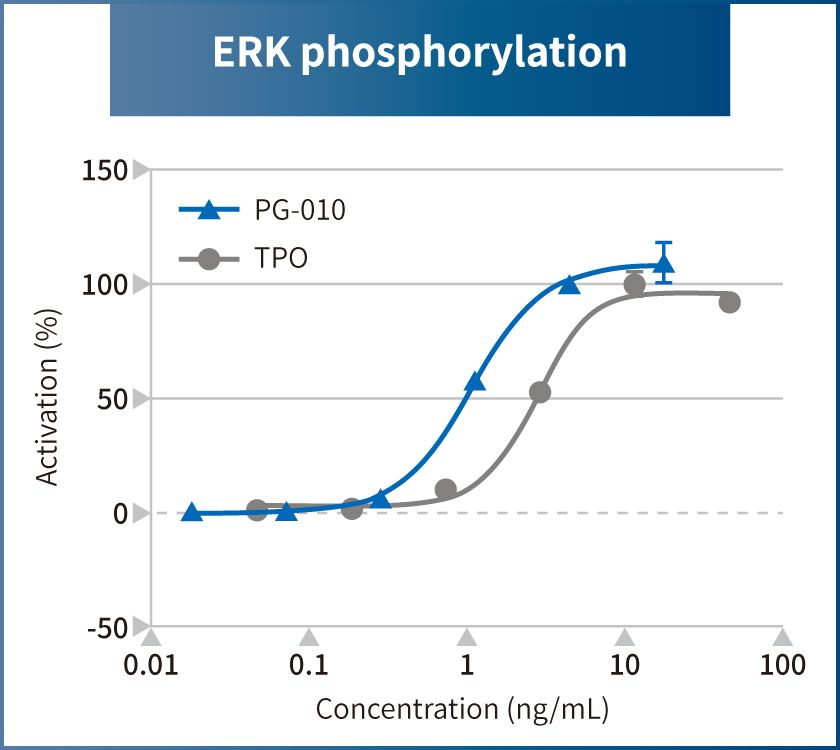
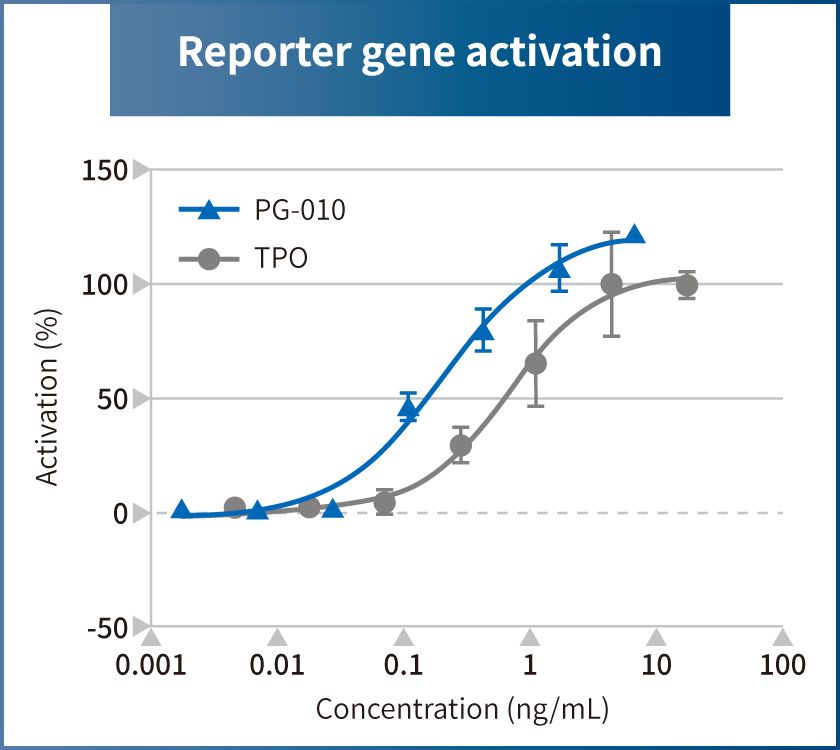
Manufacturer data: ERK phosphorylation and JAK2–STAT5 reporter
The manufacturer compared recombinant TPO and PG-010 using ERK phosphorylation and reporter-gene activation in the JAK2–STAT5 pathway: per mole, PG-010 was nearly equivalent to TPO, and on a mass basis (ng/mL) it showed similar activity at about 1/2.6 of the recombinant TPO concentration. The information sheet gives an expected ED50 of 0.25–1.5 ng/mL.
Application note: three PG peptides take iPSCs to NKT cells
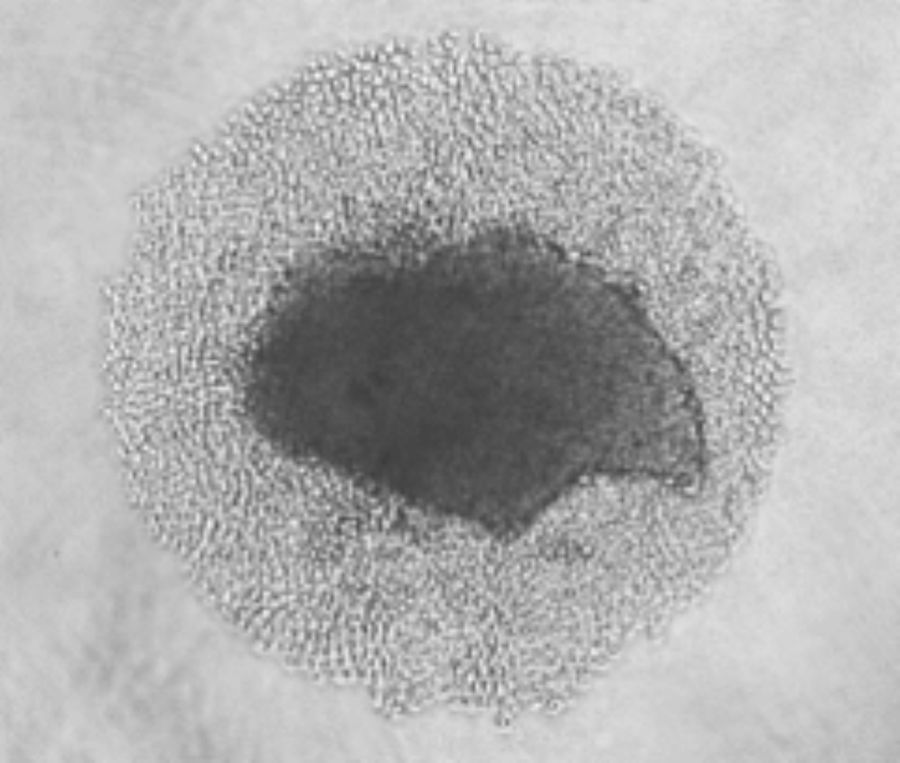
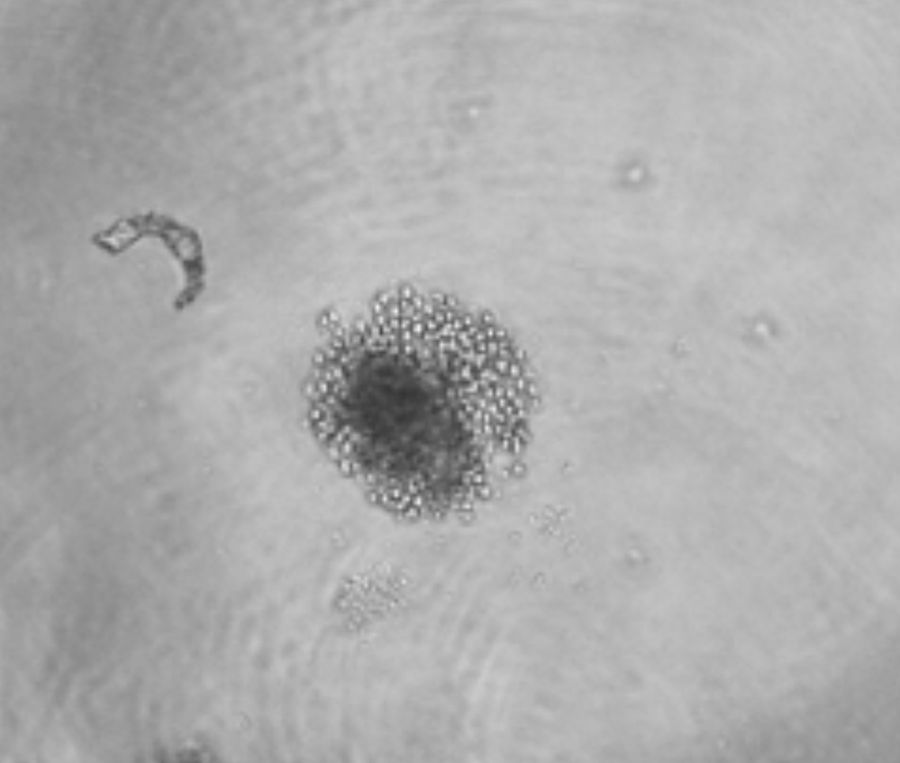
PeptiGrowth used PG-007, PG-008 and PG-010 to differentiate iPSCs into NKT cells through a hematopoietic stem and progenitor cell (HSPC) stage, and compared HSPC and NKT-cell productivity and NKT-cell function with a control condition using VEGF, CHIR99021 (Wnt3a agonist) and TPO. The images show the day-9 stage of iPSC differentiation into HSPCs.
Specifications
| Item | Details |
|---|---|
| Catalogue number | PG-010 |
| Replaces | TPO (thrombopoietin) |
| Target | TPOR (agonist) |
| Pack sizes | 10 µg (equivalent to rTPO 26 µg), 100 µg (equivalent to rTPO 260 µg), 1 mg (equivalent to rTPO 2.6 mg) |
| Formulation | Lyophilized from 0.2 µm-filtered DMSO solution |
| Purity | ≥95% (HPLC) |
| Molecular weight | 7148.02 (acetate) |
| Storage | Unopened vial at −20 °C or below |
| Grade | Research use only (RUO); the manufacturer offers GMP-grade product and bulk supply on request |
Starting concentration and reconstitution
- The manufacturer expects PG-010 to match recombinant TPO at about 1/2.6 of its mass concentration. Start at 1/2.6 of rTPO and test several points around it, including 1× and 2.5× the rTPO concentration.
- Reconstitute at 100–200 µg/mL in DMSO: centrifuge the vial before opening and rinse the inside thoroughly with DMSO. For example, 10 µg in 100 µL DMSO gives 100 µg/mL. For further dilution use a buffered solution (such as PBS) with a carrier component, and use the peptide promptly after opening and reconstitution.
Where it fits
- iPSC differentiation into hematopoietic stem and progenitor cells and downstream immune cells
- Other hematopoiesis-related differentiation research that needs TPO signalling
- Combined with PG-007 and PG-008 to replace VEGF, CHIR99021 and TPO in hematopoietic differentiation
Moving a hematopoietic differentiation protocol from recombinant factors to synthetic peptides? Contact TechWave for PG-010 and combination advice and a quotation.