
Products
PG-002 TGFβ1 Inhibitor (TGFβ1 Binding Peptide)
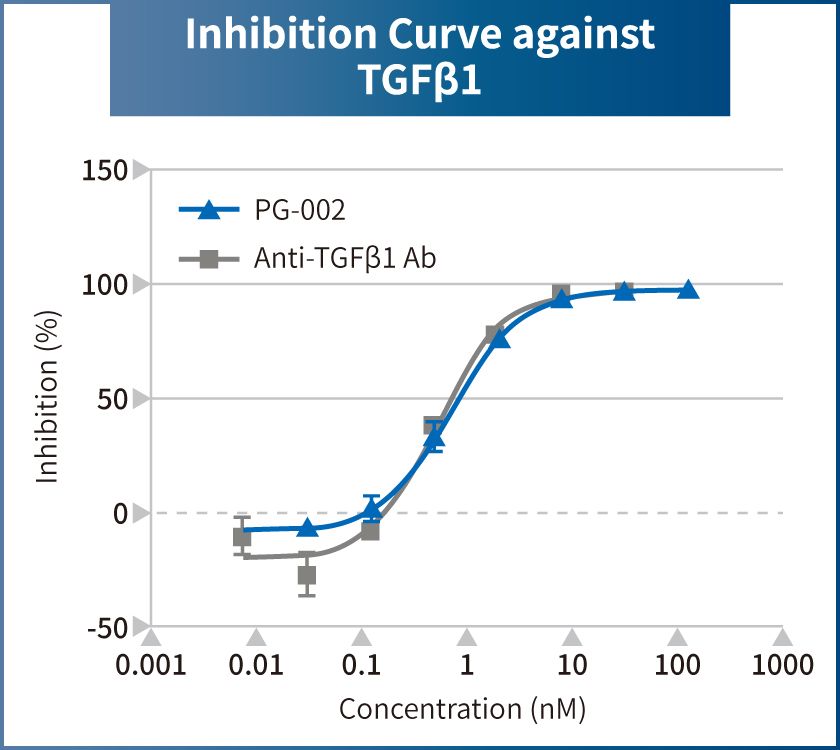
PG-002: a fully chemically synthesized cyclic peptide that binds the TGFβ1 ligand outside the cell and blocks its signal. At 10 nM it fully inhibits the SBE reporter response to 0.13 nM TGFβ1, with an inhibition curve comparable to a neutralizing antibody, and it can be supplied with an animal-free certificate.
Product information
- Brand
- PeptiGrowth
- Catalog no.
- PG-002
- Specification
- 10 µg / 100 µg
Stop TGFβ1 outside the cell: no cell entry, no antibody
The two usual ways of blocking TGFβ1 signalling both have weaknesses. Small-molecule kinase inhibitors have limited specificity and must enter the cell to act; neutralizing antibodies are costly and hard to prove animal-free. PeptiGrowth's PG-002 is a special cyclic peptide that binds the TGFβ1 ligand directly outside the cell, so it can no longer engage its receptors, and inhibits the signal at its source. PG-002 is made by complete chemical synthesis, and the manufacturer can provide an animal-free certificate.
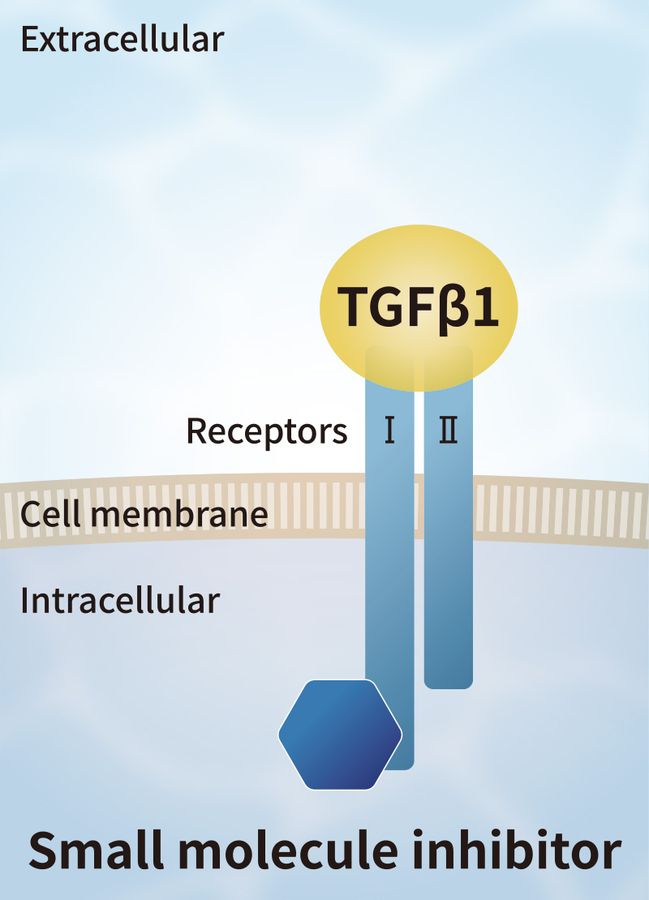
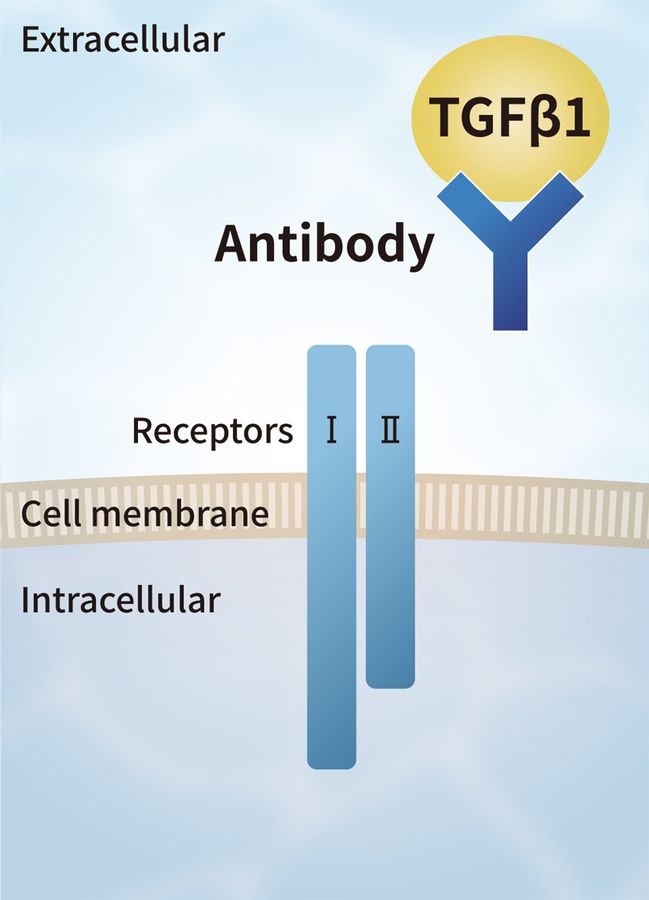
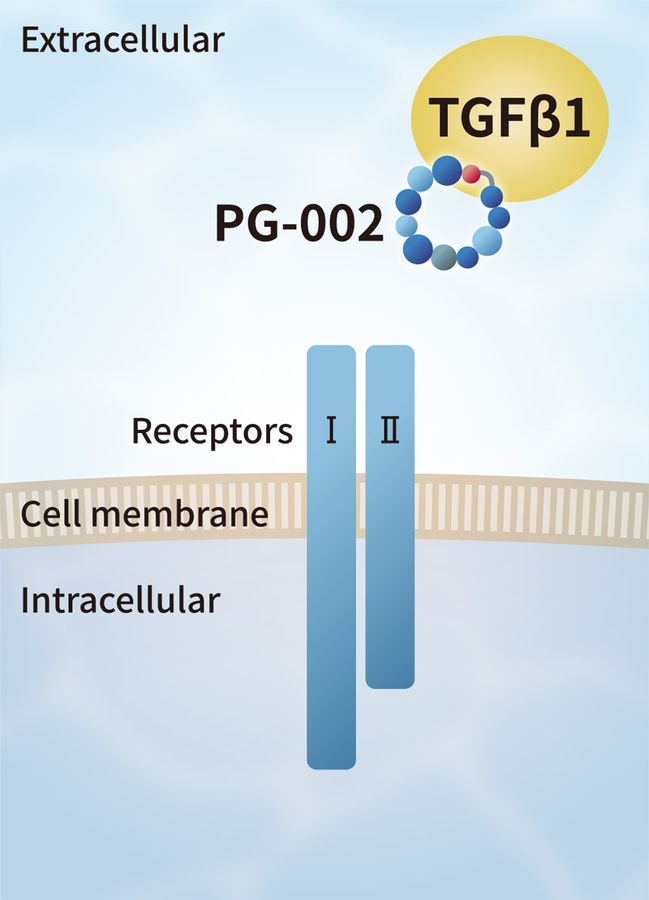
Manufacturer data: inhibition equivalent to a neutralizing antibody
The manufacturer measured inhibition of TGFβ1 with an SBE reporter assay: against 0.13 nM TGFβ1, PG-002 showed 100% inhibition at 10 nM, with an inhibition curve comparable to an anti-TGFβ1 antibody. The information sheet gives an expected IC50 of about 1.2 nM. A signalling-pathway panel assay confirmed that PG-002 does not inhibit other signalling pathways.
Stability: at least 80% remaining after 14 days at 37 °C
PG-002 has a cyclic monomer structure. The manufacturer added PG-002 (100 nM final) to commercially available DMEM/F-12, held it at 37 °C for 14 days and measured relative concentration by LC/MS on days 0, 1, 3, 7 and 14: at least 80% remained after 14 days (N=3). The application note also cites reports that inhibiting TGFβ may suppress the differentiation of several stem cells into mesenchymal cells.
Specifications
| Item | Details |
|---|---|
| Catalogue number | PG-002 |
| Mode of action | TGFβ1-binding inhibitor (not a TGFβ1 agonist) |
| Target | TGFβ1 ligand (extracellular) |
| Pack sizes | 10 µg, 100 µg |
| Formulation | Lyophilized from 0.2 µm-filtered DMSO solution |
| Purity | ≥95% (HPLC) |
| Molecular weight | 2587.90 (acetate) |
| Storage | Unopened vial at −20 °C or below |
| Grade | Research use only (RUO); the manufacturer offers GMP-grade product and bulk supply on request |
Working concentration and reconstitution
- The manufacturer expects PG-002 to be active within 1–50 nM; determine the optimum within this range.
- Reconstitute at 50–500 µM in DMSO: centrifuge the vial before opening and rinse the inside thoroughly with DMSO. For example, 10 µg in 38.6 µL DMSO gives 100 µM. For further dilution use a buffered solution (such as PBS) with a carrier component, and use the peptide promptly after opening and reconstitution.
Where it fits
- Differentiation and culture studies that need to block TGFβ1 outside the cell without relying on small molecules, which have limited specificity and must enter the cell
- Xeno-free systems that replace neutralizing antibodies with a chemically synthesized component supplied with an animal-free certificate
- Combined with the BMP inhibitor peptides PG-004, PG-005 and PG-006 to control separate branches of the TGFβ superfamily
Need to hold TGFβ1 signalling down reliably in a differentiation protocol? Contact TechWave for PG-002 selection advice, concentration-design support and a quotation.